Two spans, not one, make up the Delaware Memorial Bridge, and keeping that twin crossing open is the most visible thing the Delaware River and Bay Authority does. The bridge links Delaware and New Jersey across the mouth of the Delaware River, carrying a heavy stream of Northeast Corridor traffic every day, one deck running in each direction. It is the sort of infrastructure people use constantly and rarely think about until it closes.
The Delaware River and Bay Authority exists because a single state could not run a crossing that belongs to two of them. It is a bi-state public agency, created by an interstate compact between Delaware and New Jersey, which means the two states jointly charter and oversee it. That shared arrangement lets one body run assets that straddle the state line, and it shapes everything the agency operates.
What the compact agency operates
The portfolio is wider than the bridge. The Delaware River and Bay Authority runs five regional airports spread across Delaware and New Jersey, a ferry operation on the bay, its participation in the E-ZPass toll network, and its own police force. For a body most people associate with one river crossing, that is a broad remit, and it makes the organisation a general transportation operator rather than a single-asset toll authority.
Transportation is the common thread. Every asset the Delaware River and Bay Authority holds moves people or freight around the Delaware River and Bay region. The Delaware River and Bay Authority frames its mission plainly as connecting people and places in the Northeast Corridor. That corridor, the dense band of road, rail and air routes running up the eastern seaboard, is the context the whole operation sits inside.
The mix is deliberate. A bridge, a ferry, a cluster of airports and an electronic toll account all answer the same question for a traveler: how to get across or around the Delaware River and Bay without a long detour. Gathering them under the Delaware River and Bay Authority puts one operator in charge of the whole regional crossing, instead of leaving it to a patchwork of separate bodies each guarding its own turn.
The twin spans of the Delaware Memorial Bridge
The Delaware Memorial Bridge is the flagship. Two parallel spans carry traffic each way, which is why the crossing keeps moving even when one deck needs maintenance. Keeping a structure of that size open is a constant job of inspection and repair, and running two decks gives the operator room to work on one without shutting the route. The Delaware River and Bay Authority also maintains a Veterans Memorial Park at the bridge, a dedicated space and not a stretch of ground given over to it in passing.
That combination, a working toll crossing and a place of commemoration on the same ground, is a little unusual, and a traveler pausing at the park gets something a plain highway interchange never offers.
Ferries, airports and the E-ZPass network
The Cape May-Lewes Ferry is the best known of the water services, carrying passengers and vehicles across the bay between New Jersey and Delaware, a route that turns a long drive around the shoreline into a short crossing. Between the ferry and the bridge, a driver heading up or down the coast has two ways across the water. The five airports sit lower in the public eye but fill out the Delaware River and Bay Authority's transportation picture, catching the smaller aviation traffic that never routes through a major hub.
Through E-ZPass, the Delaware River and Bay Authority ties its tolling into the same electronic system used across the northeastern states, so a transponder that works on the turnpike works at its crossings too. These are practical services, described in practical terms, which suits a user who wants to know whether a route will work, not to be sold on it.
Who the agency serves
Three groups turn up in how the Delaware River and Bay Authority describes its work: the traveling public, regional commuters, and commercial or freight operators. It is an odd fit next to a shop or a diner in a business directory, since none of these three groups is choosing the crossing over a rival's.
The bridge and the ferry serve the first two directly, day in and day out. Freight and commercial transport lean on the crossing as a link in the wider chain between the mid-Atlantic and the northeast, where a closed bridge means a long and costly detour.
None of these users has much choice in the matter, which is the quiet reality of a monopoly crossing: the bridge is the road, and one body keeps it open.
Roughly sixty years of operation sit behind the Delaware River and Bay Authority, and that longevity is part of the pitch. A public body that has run the same crossing for six decades has settled into a steady, institutional rhythm, and the site reads that way: informational, matter-of-fact, aimed squarely at people who need to get somewhere. There is no salesmanship in it, which is appropriate for an agency whose customers have few alternatives.
A police department of its own
One detail sets the Delaware River and Bay Authority apart from a plain toll operator. It runs its own police department, responsible for its bridges, ferries and facilities. A dedicated force is a marker of scale: an agency that patrols its own crossings is operating well above the level of a single booth on a highway, with the responsibilities of a small public-safety operation attached.
For a traveler, it also means a clear line of authority if something goes wrong mid-crossing, from a breakdown to an emergency. Running that function in-house, where a lot of operators would outsource it, says something about how the organisation reads its own duties.
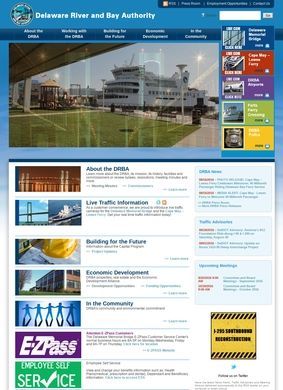
The website mirrors the organisation. It is built to inform: it lays out what the Delaware River and Bay Authority runs and how each piece works, and it does that job cleanly enough without much flourish. As a reference, the Delaware River and Bay Authority site is functional and factual: genuinely useful to someone crossing the bridge, booking the Cape May-Lewes Ferry, or sorting out E-ZPass, and not much use to anyone who is not. It does what a public agency's site should do and little more, which for this kind of institution may be exactly the right ambition.