An anti-money-laundering course aimed squarely at jewelry store staff is buried in the Canadian Jewelers Association's education catalog, and that single detail says something useful. AML 101 exists because the trade in precious metals and stones carries real compliance risk, and a national body that builds training for it is doing the unglamorous work the industry actually needs. That seriousness carries through most of what the organization puts in front of retailers, suppliers, and the service firms that orbit them.
The Canadian Jewelers Association is Canada's trade body for the jewelry and watch sector, and its scope covers the full supply chain: the store on the corner, the wholesaler shipping to it, and the appraisers and repair specialists who keep the whole thing running. Membership is the foundation of the operation. It comes with discounts on education and technology tools the association produces, which is an honest framing. This is a body built for people inside the trade first, with a separate set of services pointed at the public.
Professional Jewellery Appraiser designation
Education is where the most substance sits. The headline credential is the Professional Jewellery Appraiser designation, a formal qualification that means something in a field where "I think it's worth this much" carries real financial consequences for buyers and insurers alike. Around it the Canadian Jewelers Association runs JETS, an online learning platform, plus gem identification workshops for staff who need to tell one stone from another with confidence. The PJA designation in particular shows the association cares about a documented standard rather than attendance certificates, and an appraiser who carries it has gone through something structured enough to be externally verified.
Events and summits for members
The events calendar is dense and specific, which is more telling than any mission statement. Expo Prestige 2026 lands in Montreal on the 23rd and 24th of August, alongside the CJA Industry Summit, a Toronto Workshop Series devoted to diamonds and gemstones, and the JVC Security Summit. Security gets its own line item for good reason: jewelry retail is a high-risk target, and a dedicated summit on it shows the Canadian Jewelers Association is tracking the practical dangers its members face alongside the glossy commercial side. The Toronto sessions on diamonds and gemstones suggest a steady drumbeat of regional learning, not one annual showpiece and silence the rest of the year.
Finding certified jewelers and appraisers
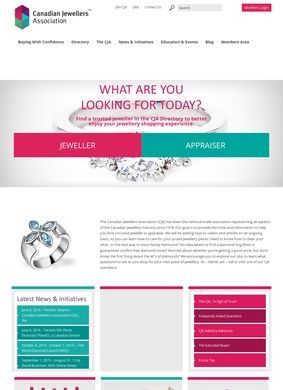
Most of what the association does is built for the trade, but two programs reach consumers directly. The first is a public business directory of certified jewelers and appraisers. The second is "Shop with Confidence," a consumer guidance program that helps buyers find accredited professionals. Together they answer a question that genuinely matters when you are spending real money on a ring or having an heirloom valued: how do you know the person across the counter has been vetted by anyone outside their own marketing?
That directory is the quiet workhorse of the whole site. A buyer can use it to check whether a jeweler or appraiser is connected to the Canadian Jewelers Association, which is a far better check than a polished storefront. The "Shop with Confidence" framing makes the intent plain. For a category like jewelry, where the gap between the informed and the trusting customer is wide and expensive, having an independent place to confirm credentials is a concrete public good. A consumer who never reads another word about the organization can still get something real out of that one tool.
The association also runs the annual CJA Awards, which recognize excellence across the industry, and it publishes ongoing news and updates. Awards programs can drift into self-congratulation, but in a trade context they function as a reputation currency, and the news stream keeps members current on the things that shift under their feet: regulation, security trends, market changes. For anyone using a listing like this to gauge whether the organization is active, the combination of dated events, fresh news, and recurring programs answers the question without guesswork.
Membership benefits and value
A retailer is the obvious beneficiary. Membership bundles education discounts, access to JETS, the workshops, and compliance training. For a small or mid-size store that cannot build any of this in-house, the math is straightforward. Suppliers and service providers get the network, the events, and a seat at an industry that organizes around shared standards. The PJA path gives an appraiser a portable credential. None of this is flashy, and that is exactly the point. The Canadian Jewelers Association is selling competence and connection.
What members gain from staying engaged?
The membership proposition rewards people who stay engaged. A store owner who attends the Toronto workshops, sends staff through AML 101, and watches the news feed gets a return that compounds over a year. The calendar of summits and expos gives members repeated reasons to come back. A jeweler who joins, earns the credential, and ignores everything else is leaving most of the value unspent.
Member-only resources versus public access
It is worth being clear-eyed about the limits. The bulk of the offering is gated behind membership and a login portal, so a curious outsider sees the shape of the programs without the contents. AML 101, JETS, the workshop materials: these are member benefits, and a non-member browsing the public pages gets the brochure version. That is normal for a trade association and not a flaw, but it does mean the public-facing value narrows to the certified directory and the "Shop with Confidence" guidance once you strip away the parts that require a paid account.
Outside reputation is limited. A search returns no significant volume of third-party reviews for the Canadian Jewelers Association itself as an organization, which is typical for a B2B trade body. The Canadian Jewelers Association is not a consumer-facing retailer, so the absence of Yelp-style ratings is expected. Most members are businesses evaluating whether the education and network justify the fee, and that conversation happens inside the industry, on trade forums and word of mouth, not on consumer review platforms.
What holds the whole picture together is consistency of purpose. Every program the Canadian Jewelers Association lists points back to the same two jobs: raise the competence of people working in the trade, and give the buying public a way to find those competent people. The PJA designation, the gem workshops, the AML training, the security summit, the certified directory, and the "Shop with Confidence" program are all variations on that theme. There is no padding, no scattershot diversification into unrelated territory, and that focus is its own kind of credibility.
A working jeweler, supplier, or appraiser will likely find membership pays for itself through education discounts and the credential alone, with events providing reason to stay engaged year-round. A shopper does not join, but can lean on the directory and the consumer program before a significant purchase. Set against something like the Better Business Bureau, the difference is depth versus breadth. The BBB covers complaints across every conceivable industry. The Canadian Jewelers Association covers whether a jeweler or appraiser meets the standards of their own field, set by people who understand stones, settings, and valuations from the inside. For a jewelry purchase specifically, that narrower trade-literate vetting is the more useful check, and the organization fills that niche with enough structure to back it up.