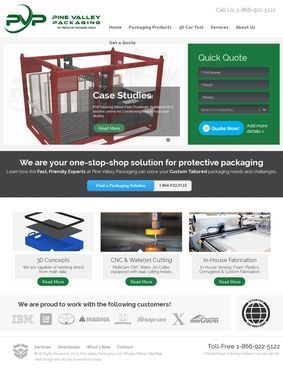
A Tier 1 automotive supplier with a fragile electronic assembly that has to survive a few hundred kilometres of truck vibration, then get shipped back empty and used again, has a specific shopping list: a container engineered to fit the part, proven to protect it, and durable enough to make the return trip worthwhile. Pine Valley Packaging Group, trading as PVP, builds for exactly that customer. The Uxbridge, Ontario manufacturer has been at custom protective packaging since 1985, incorporated the following year, and covers both expendable and returnable solutions under one roof.
Custom protective packaging since 1985
The automotive work sits at the centre of what PVP does, aimed at OEMs and the Tier 1 and Tier 2 parts makers who feed them. Outside that, the same shop serves industrial, electronic, medical, and specialty sectors, which tells you the engineering approach travels across material types and fragility levels. The product range is concrete enough to picture: returnable plastic and foam products for parts that cycle through a plant repeatedly, expendable paper products for one-way shipments, and sewn vinyl products built for racks and bulk bins. There is also a line called Uniflex Shelters, described as industrial isolation screens, which is the sort of niche item a general packaging vendor usually does not carry.
Product lines for automotive and industrial parts
Where PVP gets more interesting is in how a container gets made. The site lists custom design and engineering using UNI Graphics 3D drawing, water jet cutting, an in-house process called FLEXLine Assembly, and 3D concept modelling done before anyone commits to a prototype or a production run. That last step matters in practice, because a packaging error caught at the model stage costs a fraction of one caught after tooling. Backing it is a fully equipped design lab and a 30,000 square foot outdoor compound, which reads like a company that tests and stores at scale instead of contracting it out. Modelling first is how serious engineering shops work, and the sequence here follows that logic.
Engineering process from concept to prototype
Beyond the physical product, PVP stretches into the logistics that surround it. Pack leasing arrangements let a customer use returnable containers without buying a fleet outright, and Just-In-Time storage means the packaging shows up when the line needs it rather than clogging a warehouse months early. Large file sharing is on offer too, a quiet indicator that PVP expects to trade heavy CAD and drawing files with client engineering teams. None of these are headline features, but together they point to a vendor that thinks past the box itself and into how the box moves through a supply chain.
Managing logistics beyond the box
Credentials get a fair amount of weight on the site, and a few of them hold. The ISO 9001:2000 certification points to a documented quality system, close to a baseline expectation in automotive supply but worth confirming all the same. The corporate structure is notable: PVP is a subsidiary of the Japanese Konoike Group and runs a PVP Mexico division alongside the Canadian operation. That backing is meaningful for a buyer worried about whether a packaging partner will still be solvent and supplying in five years, and the Mexico arm hints at cross-border manufacturing reach that matters to any OEM running plants on both sides of the border.
Corporate backing and quality certification
For anyone evaluating PVP without picking up the phone, the site does some of the homework for you. Downloadable company brochures and printable spec sheets are available directly, so a procurement engineer can pull the technical details into a comparison without waiting on a sales call. That kind of self-serve documentation is genuinely useful and not as common as it should be among industrial manufacturers, many of whom still gate everything behind a contact form. Putting the spec sheets out in the open is a point in the company's favour. It also makes the company easier to find through a business directory search, since the published product categories map cleanly onto the search terms an industrial buyer would use.
Reaching PVP is straightforward. A toll-free number is posted on the site, the full Uxbridge address is given down to the postal code, and there is a quote request page for anyone who wants to start a project conversation. For a B2B manufacturer where most real business begins with a custom quote anyway, that combination covers the bases without making a prospect dig.
Checking spec sheets and contact details
The thinner spot is outside validation. A search across the usual review platforms, Google, Trustpilot, Yelp, the BBB, turns up no customer-facing reviews at all. The only third-party signal is a single employer review on Indeed rated five stars, which speaks to the workplace and not to whether a shipment of foam inserts arrived correct and on time. That absence is not unusual for a custom industrial supplier, since automotive buyers tend to vet vendors through audits, references, and trial orders rather than star ratings, but it does mean a new customer has little public feedback to lean on and would be smart to ask PVP directly for client references.
Weighing it as a whole, PVP is a focused engineering-led manufacturer with a deep automotive specialty, real fabrication capability, and corporate backing that lowers the continuity risk a smaller shop carries. The forty-year history and the multi-sector spread suggest accumulated know-how that is genuinely hard to replicate from scratch. The published spec sheets and the open contact details make the early evaluation easy, and the leasing plus JIT options show a vendor comfortable with the operational side of packaging as much as with the production side.
What a prospective buyer is left to verify on their own is the part the site cannot supply: how the work performs in the field. The ISO certification, the Konoike ownership, and the breadth of PVP's product lines all add up to a credible picture, yet the silence on the customer-review platforms means proof of delivery quality has to come through references and a trial run. For an automotive or industrial procurement team that prefers to qualify a packaging partner through direct technical conversation, PVP gives plenty to start with. The spec sheets are right there on the page, ready to download.