Radio-Locator is a free web search engine for finding AM and FM radio stations, run from a plain, function-first site at radio-locator.com. It indexes more than 17,200 station websites and around 12,300 audio streams, and the whole thing is built around one job: type where you are or what you want to hear, and get back a list of stations you can tune into or open in a stream.
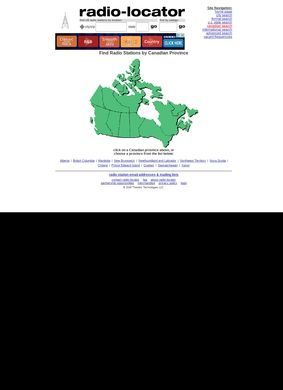
The Radio-Locator provs page, which lists stations grouped by U.S. state and Canadian province, is a good window into how the tool thinks. There is no visual flash here, just a directory of the American and Canadian airwaves, sorted so a person can walk through it.
What follows is a look at what the tool does well, where it asks a little patience, and whether Radio-Locator still earns a bookmark next to the streaming apps most people already have on their phones.
How the station search works
The core of the site is search, and it comes in several flavours that suit different starting points. Some people know exactly which station they want and just need the frequency or the stream link. Others know only that they are in a particular city and want to see everything broadcasting nearby. Radio-Locator handles both without forcing anyone through a single rigid path.
Search by location and call letters
The location search accepts a U.S. city, a state, or a ZIP code, and returns the stations that reach that spot on the map. This is the feature most casual visitors will reach for first, and it is the one that justifies the site's existence. Punch in a ZIP and the airwaves around it become a readable list.
Alongside that sits a call-letters search, aimed at the listener who already knows the station identifier and simply wants its page, its frequency, or a way to stream it. It is a smaller, sharper tool than the location lookup. For anyone who grew up with a favourite station and moved away, it is the fastest route back to that signal. The two searches cover the two honest ways people actually go looking for radio: by place, and by name.
Format and genre browsing
Not everyone starts with a location or a call sign. Plenty of people just want jazz, or news, or sports, or classic rock, and do not much care which specific station delivers it. Radio-Locator answers that need with a browse-by-format option that groups stations by genre, so the search runs on taste instead of geography.
This is where the size of the index pays off. A format search is only as good as the pool it draws from, and with over 17,200 stations catalogued, the genre lists have real depth behind them. The presentation stays utilitarian throughout. Anyone hoping for album art, listener counts, or a slick now-playing bar will not find it, and that trade is deliberate: the tool spends its effort on coverage, not decoration.
Reach beyond U.S. AM and FM
A lot of station finders stop at the domestic dial. Radio-Locator pushes well past it in two directions that give the site a wider usefulness than its homepage first suggests.
International and provincial coverage
The international search spans more than 100 countries, which turns Radio-Locator from a U.S. utility into something an expatriate or a curious listener abroad can lean on. Someone in Chicago who wants to catch a station from home in another country has a genuine starting point here, and that is not a common feature among free finders.
Closer to home, the browse-by-state and browse-by-province structure, the one on display on the provs page, lays out American and Canadian broadcasting region by region. It reads like a well-kept index. You pick a province, you get its stations, and you move on. There is a quiet competence to how completely North America is mapped out, and it holds up whether you are hunting a big-city signal or something out on the rural edge of the band.
Vacant channels and advanced finder
Two features here point at an audience beyond the casual listener. Radio-Locator maintains a listing of vacant or available broadcast channels, aimed squarely at people in or near the broadcast industry who track where the open frequencies sit. Few free finders bother with something this specialised.
There is also an advanced search and finder tool for people who want to narrow results more tightly than the basic boxes allow. Most visitors will never open it. The ones who do tend to be the ones who care most, and having that depth available quietly raises the credibility of everything else on the site. A tool that serves both the person tuning a car radio and the person studying open channels is doing more than it lets on.
The store, reaching the operators, and how it is regarded
Beyond the search functions, Radio-Locator runs a small online store selling Radio-Locator branded merchandise, which is a modest commercial sideline more than a reason to visit. It sits off to the side of the main purpose and does nothing to get in the way of the free tools, which is the right call. The FAQ and about pages fill in the company background for anyone who wants to know who is behind Radio-Locator and how the index is kept current.
Finding a way to reach the people who run it takes one extra step. The provs page and homepage show no phone number, email, or street address up front. A Contact Us link lives in the navigation and leads to a dedicated page, so a route exists, it just is not sitting in plain sight the way some visitors would prefer. For a free reference tool that most people use and leave without ever needing support, that is a minor thing. It is worth naming plainly, though, because the contact details ask for a click rather than announcing themselves.
On reputation, the honest answer is that the formal picture is quiet. No ratings on Google, Trustpilot, Yelp, or the BBB turned up for the actual website, so there is no star count to lean on. The name muddies the water too: several unrelated mobile apps also called Radio Locator exist, built by other developers, and their store ratings have nothing to do with the Radio-Locator website.
What does exist is informal and reasonably warm. On a RadioDiscussions forum thread and on Reddit the site gets mentioned in passing, and one Reddit comment calling it useful picked up eleven upvotes. That is word-of-mouth, not a review score, and it should be read as exactly that: a handful of people who reach for Radio-Locator and vouch for it in conversation.
Take that for what it is. The absence of formal reviews here reads less like a warning and more like the fate of a functional, long-standing utility that people quietly use and rarely think to rate. The site describes itself as the most trusted of its kind, which is the sort of claim any tool can print about itself, but the depth of the index and the technical extras give it more grounding than a bare slogan would.
So where does the site land against the obvious alternative? Most people reaching for radio online now open TuneIn, which wraps stations in a polished app with playback, favourites, and podcasts built in. For pure listening comfort, TuneIn wins easily. But Radio-Locator is answering a different question. It is a finder, strongest when you want to know precisely what is broadcasting at a given ZIP code, or which frequencies sit vacant, or what reaches a small town that a big streaming app never bothered to list.
For that kind of lookup, the older, plainer tool is often the one that actually has the answer, and that is a fair reason to keep Radio-Locator a click away.