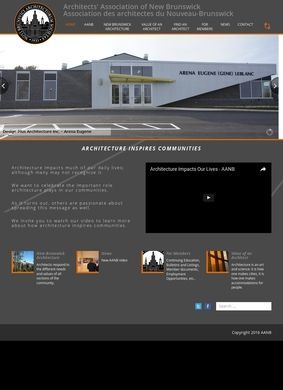
Probably the most useful thing on the site is the searchable directory of licensed practitioners: 194 architectural firms and 432 members in total, all current on their licensing, all working somewhere in New Brunswick. That is what most people actually need when they are starting a building project. Who in this province is allowed to call themselves an architect, and where can they be reached? The Architects' Association of New Brunswick lets a visitor look that up directly, removing a layer of guesswork before any contracts are signed. The roster is kept current, so what a searcher finds reflects who holds a valid licence right now, not a stale list from years past.
Finding licensed architects in New Brunswick
The Architects' Association of New Brunswick has been doing this since 1933, and its role is regulatory, not promotional. It is the self-governing body for the profession in the province, meaning it sets the bar for who may practice and then enforces it. In Canada, architecture is a regulated title, and a homeowner or developer cannot always tell the difference between a designer and a fully licensed architect from a business card alone. The Architects' Association of New Brunswick exists to close that gap. When it lists a firm, the body is vouching that the people behind it have met the education, training, and examination requirements, and that they remain accountable to a professional standard.
Regulatory authority since 1933
That accountability is worth more than any marketing a private firm could produce. The fact that the Architects' Association of New Brunswick has held this role continuously for so many decades tells you the profession here has long preferred a single recognised authority over a free-for-all of self-declared titles.
Guidance for hiring an architect
For the general public, the offering is fairly narrow, and that narrowness is sensible. There is guidance on how to hire an architect, which is genuinely useful to anyone starting their first significant building project. What does an architect do versus a contractor? What should a fee arrangement look like? The site answers those questions plainly. There is also an awards program that recognises notable work in the province, giving the public a way to see what good architecture in New Brunswick looks like when it is done well. Beyond those two threads, the public-facing material does not try to be a glossy gallery of buildings, and that restraint suits a body whose real job is oversight. The Architects' Association of New Brunswick exists to make sure the profession runs cleanly, and the website reflects that priority honestly.
Professional services for members
The deeper substance sits on the professional side. The Architects' Association of New Brunswick administers the continuing education requirements that keep licensed architects current, so a member cannot simply qualify once and coast for the rest of a career. It manages the membership and licensing processes end to end, from application through to maintenance of good standing.
Published decisions and complaint handling
It publishes regulatory decisions too, which is worth noting: a regulator that handles complaints quietly, behind closed doors, is harder to trust than one that puts its rulings on record. Making those decisions visible is a sign the Architects' Association of New Brunswick takes its accountability seriously and expects the same of its members. For a client who has had a poor experience with a designer, knowing that a body with real authority can investigate and publish the outcome changes the calculation of risk considerably.
Supporting interns and new professionals
Support for people entering the field is another substantial thread. The Architects' Association of New Brunswick works with intern architects, who occupy that long and demanding stretch between graduating and full licensure, and it engages with architecture students who are still earlier in the journey. Anyone who has watched someone train for this profession knows how many years and how much supervised experience the path demands, and a regulator that actively supports interns is investing in the future supply of qualified architects in the province. There is also an employment listing on the site, connecting firms that need staff with graduates looking for positions. That is a concrete service that keeps talent circulating within New Brunswick. The Architects' Association of New Brunswick treats intern support as a core function, not an optional extra.
One feature deserves particular mention because it speaks to how seriously the Architects' Association of New Brunswick takes its gatekeeping role. The body facilitates professional mobility for foreign-trained architects. Canada draws skilled people from around the world, and credentials earned abroad do not automatically translate to a licence here. A clear pathway for internationally educated architects to have their qualifications assessed and to integrate into the provincial profession is both fair to those individuals and good for the province. Handling that process through the Architects' Association of New Brunswick means it is done consistently and with proper scrutiny, instead of leaving it to ad hoc arrangements between individual firms and prospective hires.
The site also carries a members-only login portal, which is exactly what you would expect of a working professional body. Behind that login is the machinery members use to manage their licences, log continuing education hours, and handle the administrative side of staying in good standing. For a casual visitor this part is closed off, and rightly so, but its presence confirms that the website is a functioning operational tool for the profession. The Architects' Association of New Brunswick clearly runs real administrative work through this platform, and that operational depth shows.
Taking the whole thing together, the Architects' Association of New Brunswick does what a provincial regulator should do, and it does the public-facing portion of that job without padding. The licensing directory alone makes the site worth bookmarking for anyone in the province who is contemplating a building project, because it is the authoritative answer to whether a given practitioner is qualified and accountable. The hiring guidance is a sensible companion to that directory, walking a first-time client through decisions they may not know they need to make. The professional services, from continuing education to intern support to credential recognition, form the substantive core that keeps the local profession functioning to a consistent standard.
If there is a limitation, it is simply that the public will find a smaller slice of the site relevant than members will, and that is by design. A homeowner planning a renovation does not need the regulatory decision archive or the continuing education modules, and the Architects' Association of New Brunswick does not pretend otherwise. The material aimed at the public is concentrated and to the point, which beats a site that buries its useful directory under layers of promotional content. The Architects' Association of New Brunswick knows what it is for, and the website is shaped around that knowledge.
Confirm the licence through the Architects' Association of New Brunswick directory first, read the hiring guidance second, and you will have avoided the most common and most expensive mistake in any building project: handing work to someone not actually qualified to hold the title.