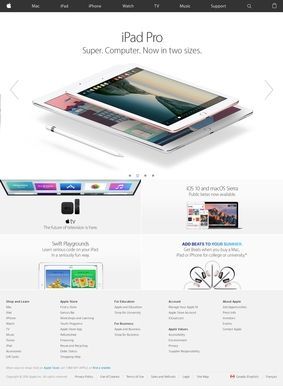
What can a Canadian shopper actually buy and arrange through apple.com/ca? Considerably more than people typically picture when they think of it only as a phone store. Apple Canada is the full Canadian storefront for Apple Inc., running the entire hardware catalogue alongside the software and service layer that sits on top of those devices. iPhone leads the page, currently the iPhone 17 line, but the rest of the range is right there: the M5 MacBook Air, the MacBook Pro, iMac, Mac mini, Mac Pro and Mac Studio on the computer side, plus the M4 iPad Air, iPad Pro, iPad mini and the standard iPad.
Wearables and home devices
Beyond the headline machines, Apple Canada gives wearables and home gear their own proper space. Apple Watch comes in the Series 10, the Ultra 2 and the cheaper SE. AirPods split into the Pro, the fourth generation, and the over-ear Max. There is Apple Vision Pro for anyone curious about the headset, the HomePod for audio around the house, Apple TV 4K for the living room, and AirTag for keeping track of luggage and keys. Accessories cover every one of those product lines, so a case, cable or charger is rarely more than a couple of clicks from the device it belongs to.
Trade-in and financing options
The purchasing side is where the store does more than display a catalogue. You can buy outright, or send in an old device through the trade-in program and knock the credit off the new one. Financing is offered on Apple Canada where available, through installment plans and the Apple Card route, and there are gift cards for people who would rather hand over the choice. The certified refurbished section is worth knowing about: it puts checked, warrantied devices at a lower price than new, a practical option that a lot of other storefronts bury or skip entirely.
Pricing in Canadian dollars
Pricing on Apple Canada is in Canadian dollars, not a converted US figure, and the seasonal promotions are tied to the local calendar. Anyone comparing across borders will find the listed cost is the actual cost, with no currency guesswork involved. The store carries through to the services layer as well, so a purchase does not end at the hardware.
Streaming subscriptions and platform tools
On services, the spread is wide. Apple One bundles several subscriptions together, and the individual pieces are all sold on their own: Apple TV+, Apple Music, Apple Arcade, Apple Fitness+, Apple News+, Apple Podcasts and Apple Books, with the App Store underneath all of it. The infrastructure that ties a person's devices together also lives on the site, namely iCloud, Apple ID, Apple Pay and Apple Wallet, which is the part most owners interact with daily without thinking of it as a product.
Booking Genius Bar support
The in-store experience gets real estate on the site too, and it is not an afterthought. The Genius Bar handles technical support and repairs, Today at Apple runs free educational sessions, and Apple Camp is aimed at younger users over the summer. These are booked and explained through the site even though they happen in a physical store, which makes the online presence the front door to the retail one.
Serving different buyer segments
One thing worth noting is how many distinct audiences Apple Canada carves out. Individual consumers are the obvious group, but there are dedicated purchasing sections for university and K-12 students and institutions under education pricing, plus separate tracks for business customers, healthcare organizations and government entities. Each gets its own pricing structure and its own entry point, so a school board procuring a hundred iPads is not pushed through the same flow as someone buying a single Watch. That segmentation is quietly one of the more useful things Apple Canada does, and it reflects how broad the customer base really is.
Education pricing for students
Education pricing on Apple Canada in particular is easy to overlook and genuinely valuable. A student or faculty member sees a different number on the same Mac, and the path to prove eligibility is part of the store rather than a phone call to a sales rep. Business and government buyers get volume-oriented options that a regular checkout would not surface. None of it is locked behind a sales conversation as a first step.
Comparing MacBook Air versus Pro
For all the breadth, Apple Canada keeps the structure legible. Hardware, services, support and the various buyer types each have a clear lane, and the catalogue is current, with discontinued items pulled rather than left up to fill space. Someone arriving to compare a MacBook Air against a MacBook Pro finds both, with the specs and the Canadian price, and can move into trade-in or financing without leaving the flow. The refurbished store and the trade-in program together mean the site is doing more than pushing the newest and most expensive option, which gives Apple Canada credibility as a place to actually buy.
Checking repair costs online
The repair and support angle deserves more attention than people usually give it. Booking a Genius Bar slot, checking what a fix might cost, and reading the support documentation all happen through Apple Canada before anyone sets foot in a store. For a country where the nearest physical location can be a long drive, having that triage available online is the difference between guessing and arriving with an appointment.
If there is a fair word of caution about Apple Canada, it is that the sheer size of the offering can take a moment to navigate on a first visit. The product menu is deep, the services list is long, and the buyer-type sections sit alongside the main consumer store, so a newcomer might click around before landing on the exact page they want. That is a consequence of scope, not poor design, and a returning customer who already knows the Apple Canada layout moves through it quickly.