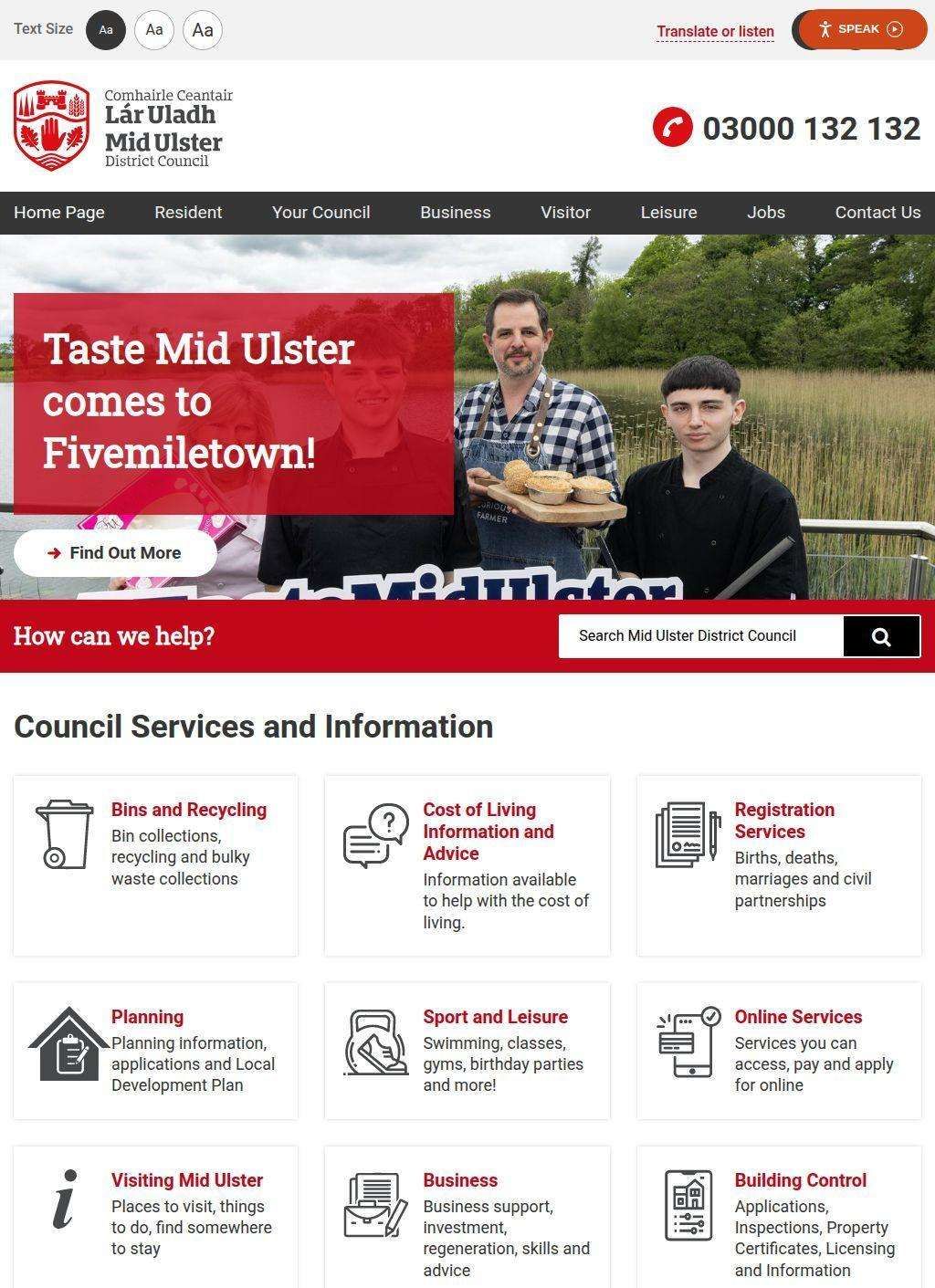
A missed bin collection, a planning question about an extension, a birth that needs registering before a deadline: these are the moments when someone in Cookstown, Dungannon or Magherafelt goes looking for their council online, usually in a hurry and usually wanting one specific answer. Mid Ulster District Council is the body that handles all of it, and its website is built around getting people to the right service without forcing them through a maze first. The split into resident, business and visitor sections is the first useful decision, because the person reporting a fly-tipping problem and the person scouting an investment site are not after the same thing, and the site does not pretend they are.
Waste collection and civil registration
Waste management is the area most households will touch, and it is treated as the workhorse it is. Bin collections, recycling guidance and bulky waste arrangements all sit here, the kind of recurring, unglamorous service that a council either makes simple or makes infuriating. Alongside it, the registration function covers births, deaths, marriages and civil partnerships, the legal paperwork of ordinary life that nobody enjoys arranging but everyone eventually needs. Having these grouped clearly is useful, because a person registering a death is rarely in the mood to hunt around.
Local development plan submissions
The statutory machinery is extensive, and the planning section shows it. Residents and developers can submit applications and read into the Local Development Plan, which is the document that quietly shapes what can be built and where across the district. It is not light reading, but it is the right thing to publish openly, and putting application submission online removes a layer of friction that used to mean a trip to an office.
Reviewing building control requirements
Building Control runs in parallel, handling applications, inspections and property certificates. For anyone extending a home, converting a loft or buying a property that needs its paperwork confirmed, this is the function that signs off on safety and compliance, and the site lays out what it covers. Together with planning, it gives a fairly complete picture of how the council regulates construction in the area, which is exactly the information a homeowner or a small builder turns up looking for. Animal services sit a little apart but are covered with the same matter-of-fact clarity: dog licensing and welfare programmes, a statutory duty that catches a lot of residents out, so its presence here is sensible.
Leisure facilities for residents
Recreation and leisure get genuine room on the site, and this is where Mid Ulster District Council moves beyond pure obligation into the services that make a district pleasant to live in. Sport facilities, swimming pools and organised classes are listed for residents who want to use what their rates pay for. Parks and leisure extends that outdoors, covering open spaces, playgrounds and the green areas that families rely on without thinking about who maintains them. For a rural district with three main towns and a lot of countryside between them, that provision adds up over time.
Investment and skills development
The business strand is more substantial than a token mention. Mid Ulster District Council covers investment, regeneration and skills development, the levers a local authority can pull to keep an area economically alive. None of this is flashy, but it tells a business reader that the council sees itself as more than a service desk, and that there is a route to talk about setting up or expanding locally.
Cost of living support
Two additions push the site above the bare statutory minimum. Cost-of-living support resources are gathered by Mid Ulster District Council in one place, a practical response to a real pressure that many residents are feeling, and pulling that signposting together centrally saves people from chasing it across separate agencies. Visitor information for tourists rounds things out, pointing people passing through toward what the area has to offer. The online service portals tie much of this together, letting people transact instead of merely read, which is the difference between a Mid Ulster District Council site that informs and one that does work.
Breadth handled without clutter is the thing worth saying about Mid Ulster District Council as a whole. A local authority has to be everything to everyone in its patch, from the grieving family to the property developer to the parent looking for a swimming class, and the temptation is to let that sprawl into confusion. The audience separation keeps it navigable, and the heavy regulated functions are given the prominence they need without burying the everyday ones.
Where to start with council business
If you live in or near Cookstown, Dungannon or Magherafelt and have a specific piece of council business to handle, whether sorting a bin schedule, lodging a planning application or registering a life event, the Mid Ulster District Council site is the place to start; going straight to the relevant resident, business or visitor section will get you there fastest. Property owners weighing an extension should check the Local Development Plan and the Building Control pages before drawing up final plans, since that is the homework that prevents a rejected application. The business support pages are the door to knock on for anyone researching regeneration or skills funding in the district.
Business address
Mid Ulster District Council
Circular Road,
Dungannon,
County Tyrone
BT71 6DT
United Kingdom
Contact details
Phone: 03000 132 132