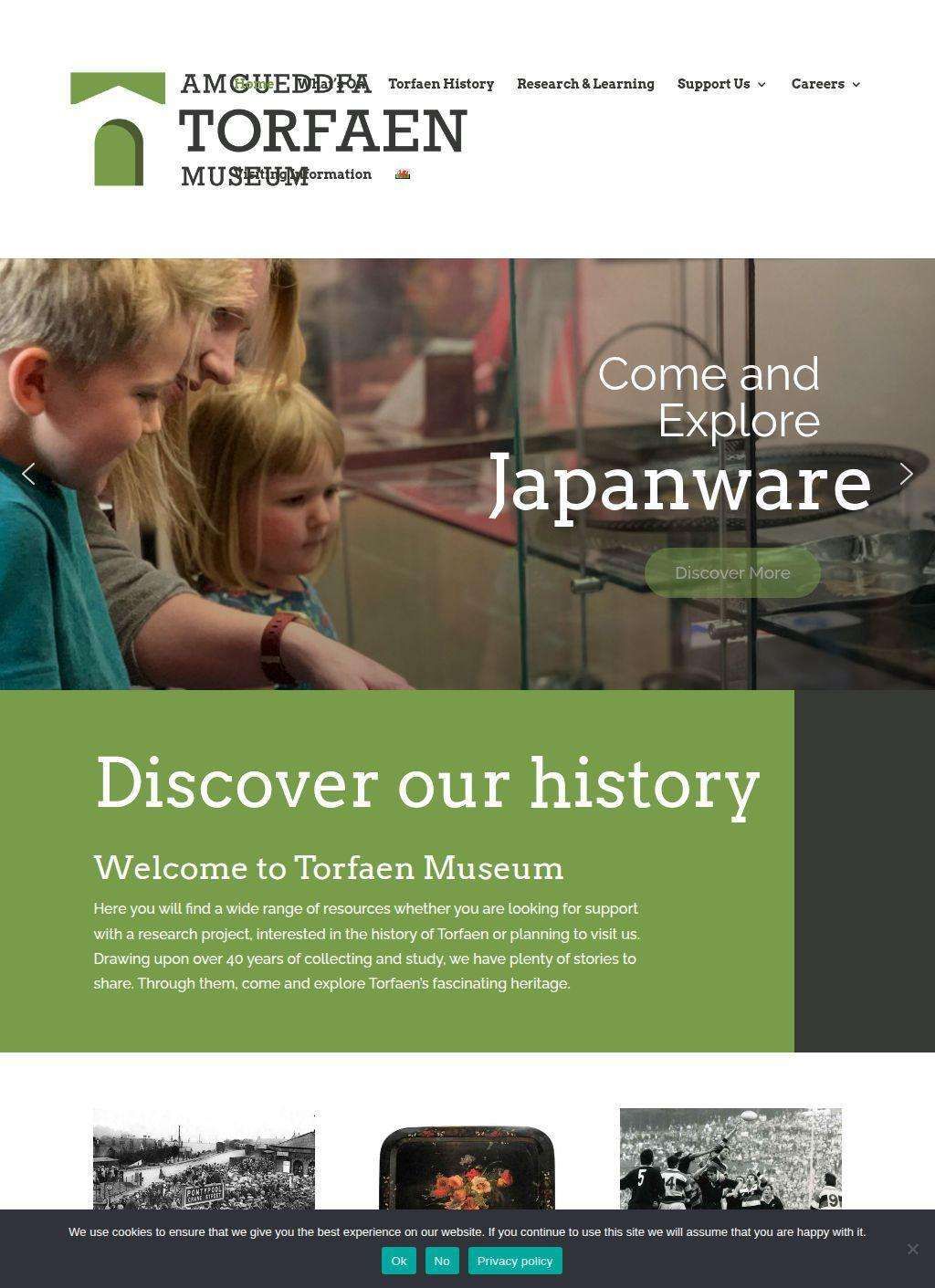
Torfaen Museum sits inside a Georgian stable block on the edge of Pontypool Park, and the building itself carries part of the appeal: cobbled courtyard, period architectural detail kept rather than stripped, and the sense that the surroundings were chosen for their fit rather than retrofitted after the fact. The museum occupies a particular niche in the South Wales heritage landscape, and understanding that niche is probably the most useful thing to know before visiting. The collections cover the area's history from medieval fragments through to household objects ordinary enough two generations ago that nobody thought to preserve them, and now genuinely strange to younger visitors.
Pontypool Japanware collection
The headline draw, for anyone who knows the region, is the Pontypool Japanware. This is the lacquered, decorated metalware that the town gave its name to, and Torfaen Museum keeps trays, teapots, candlesticks and related pieces stretching back to the seventeenth century. It is a genuinely local speciality, the sort of thing you cannot see assembled in one place anywhere else, and it anchors the whole collection. I spent longer than I expected reading about how these objects were made and why Pontypool became known for them. That body of detail is what separates a good specialist collection from a shelf of labelled curiosities.
Medieval artefacts and social history
Beyond the Japanware, the holdings spread out in directions that reward an unhurried visit. There are medieval artefacts recovered from the Llantarnam Abbey and Cwmbran areas, tying the displays back to the deeper past of the borough. The focus then shifts to social history from the nineteenth and twentieth centuries, with a real emphasis on childhood, toys, and a run of household items from the 1950s. A historic Blaenavon fire engine sits among the larger pieces. A permanent art gallery rounds out what is on view, so the offer extends well past glass cases of small objects.
Industrial heritage, decorative arts, archaeology
For a museum of this size, the mix is unusually varied for a single stable-block site: industrial heritage, decorative arts, archaeology and everyday domestic life all share the space. Families tend to gravitate to the toys and the fire engine, while visitors with an interest in craft history will linger over the Japanware and the gallery. The 1950s household material has a quiet pull for people old enough to recognise the objects and young enough to find them strange. Torfaen Museum delivers depth over scale, and that is the right trade for a collection of this kind.
Research, learning, temporary exhibitions
It helps that the place does more than display. Torfaen Museum runs research and learning resources, offers guided visits, and rotates temporary exhibitions alongside the permanent ones, so a return trip is rarely a repeat of the last. That programme of change keeps a local museum alive and active, and it points to an institution that treats its collection as something to be worked with, explained, and kept in active use. The learning side in particular makes Torfaen Museum a practical stop for schools and for anyone researching the area's past in detail.
Volunteer programmes and membership schemes
There is also a participatory layer worth knowing about. Torfaen Museum supports volunteer programmes and membership schemes, and it accepts donations toward its work. Those routes matter for a charity-run operation, and they give people who care about Torfaen's history a way to be more than passive visitors. Registered as a charity, Torfaen Museum leans on community involvement in a way that larger, fully funded institutions rarely need to, and that involvement is visible in how the place presents itself and maintains its collections.
Opening hours and gallery access
Planning is where a little care pays off, because the opening pattern is narrower than many visitors will assume. Wednesday gives the fullest day, with Torfaen Museum open from mid-morning through to late afternoon. Saturday opens only in the afternoon. Tuesday mornings are open too, but the art gallery is closed on Tuesdays, so anyone whose main reason for coming is the gallery should avoid that slot. The hours are limited enough that arriving on the wrong day is a real risk, and checking before you set out is the difference between a good trip and a locked door.
Georgian stable block setting
The Georgian setting deserves a second mention because it shapes the experience. A converted stable block in a public park is an atmospheric place to house local history, and the decision to retain the cobbles and period detail gives the displays a context that a purpose-built modern unit would lose. The building and the collection comment on each other, both products of the same corner of Wales over a long stretch of time. That pairing makes a visit feel grounded in place in a way that a generic exhibition hall cannot replicate.
Limited online reviews and visitor feedback
Torfaen Museum does not appear prominently in the major review platforms: a search across TripAdvisor and Google Maps returns only a handful of entries, not enough to draw conclusions about visitor satisfaction in aggregate. That is partly a function of the audience this kind of institution draws. Local residents and specialist visitors do not always leave digital footprints, and the absence of a large review count does not tell you much about the quality of the experience. What is on the site and in the printed materials is detailed and specific enough to assess independently.
Within those limits, Torfaen Museum is honest about what it is. It does not pretend to be a national collection. It concentrates on what it can genuinely claim, the Japanware above all, and builds a credible local story around it. A visitor expecting a polished, hours-long blockbuster experience will be better served elsewhere. A visitor who wants something specific and tied to one place will find the trip worthwhile, and the modest scale becomes a virtue: you can see it properly in a single visit. If this museum appeared in a business directory listing, the Japanware and the Georgian setting would be the two details worth leading with, because they are the things no other venue in the region can offer.
Planning your visit on Wednesday
The limited opening hours and the part-time gallery access mean that Torfaen Museum is not a drop-in-any-time attraction, and that constraint is worth weighing if you are travelling a distance. It is the trade-off that comes with a charity-supported museum operating on local authority backing, and it is better to know it going in than to discover it in a car park at 5pm on a Monday. Within those constraints, Torfaen Museum's collection is genuine, the setting is good, and the Japanware alone justifies the detour for anyone with an interest in British decorative arts or regional industrial craft. Pick a Wednesday for the fullest access and confirm the opening hours before you travel.
Business address
Torfaen Museum Trust
Park Buildings,
Pontypool,
Torfaen
NP4 6JH
United Kingdom
Contact details
Phone: 01495 752036