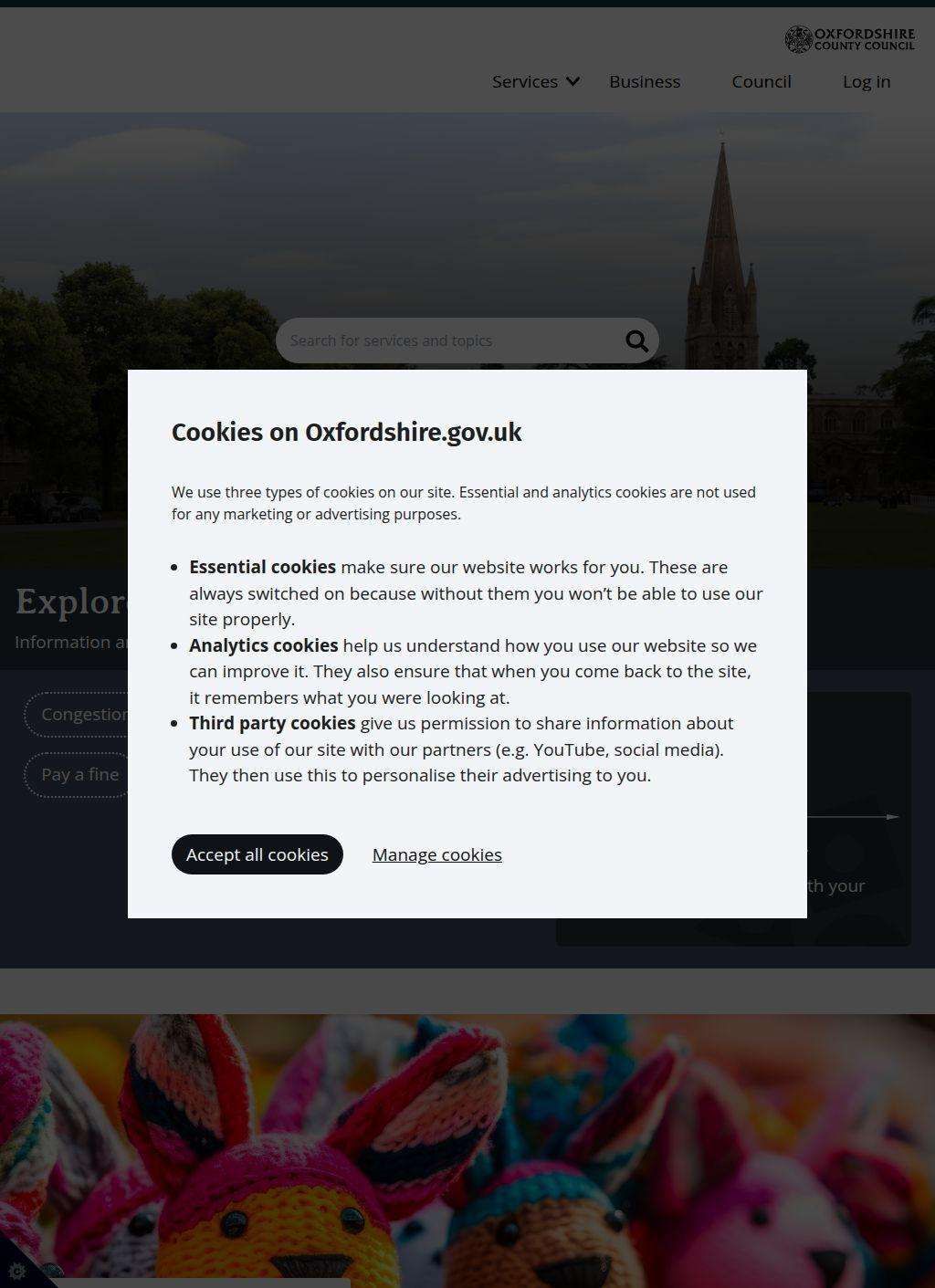
What can a county resident actually get done without leaving the house? Quite a lot, going by the spread of services that Oxfordshire County Council pulls together on one site. Adult social care sits near the top: assessments, advice on care funding, and support plans for people who need help staying independent. Alongside it run the children and family services, covering child protection, foster care, and SEND support for families navigating special educational needs. These are the heavy, life-affecting functions a county authority exists to deliver, and the site treats them as front-and-centre work, not buried administrative footnotes.
Transport services and live travel updates
Transport is where most people will land first on the Oxfordshire County Council site, and it is handled with a practical bent. Blue Badge applications for disabled parking, parking fine payments, bus passes, roadworks updates, and congestion charge information all have a home here. Public transport details sit in the same area, so someone planning a trip or chasing a delayed roadworks reopening does not have to hunt across three different places. The blend of routine transactions and live information is sensible. A parking fine and a bus pass renewal are not glamorous tasks, but they are the ones residents repeat most often, and putting them within easy reach is the right call.
Checking school admissions and performance data
Education runs deep on Oxfordshire County Council's pages. School admissions, term dates, and school performance data are all available, which is useful to any parent weighing options or simply trying to remember when the next half term falls. The performance data in particular gives families a factual basis for comparison, not guesswork, and that kind of openness builds trust over time. Listing Oxfordshire County Council here in a business directory is a good way to direct residents toward the official site and away from outdated third-party summaries.
The cultural and civic offering is broader than expected. Libraries, museums, and music services are reachable from the same hub, and so are the registration services that mark the big moments: births, deaths, and marriages or weddings. There is something quietly reassuring about an authority that handles both the joyful paperwork and the difficult kind under one roof. Oxfordshire County Council treats these registration duties as core public business, which they are, and the site handles them without fuss.
Finding household waste recycling centres
Environment and planning round out this section of Oxfordshire County Council's offering. Planning applications, conservation areas, and countryside access all have dedicated space, useful for anyone curious about a development near their street or looking for a public right of way to walk at the weekend. Waste and recycling gets a practical tool too: a locator for household waste recycling centres, so the question of where to take the old fridge has a straight answer.
Funding support for energy costs
Some of the more interesting material here is the support aimed at specific needs. The Warm Homes Local Grant offers energy efficiency funding for eligible households, a timely thing given how much home heating costs weigh on family budgets. Connect to Work is an employment support programme for job seekers that brings Oxfordshire County Council's reach to bear on the everyday problem of finding steady work. These are not headline services in the way social care is, but they show an authority trying to meet residents at particular pressure points beyond the obvious headline services.
Preparing for flooding emergencies
Emergency preparedness gets serious attention through the Oxfordshire Flooding Toolkit, a resource that acknowledges flooding as a real and recurring threat in parts of the county. Pulling flood guidance into one place is the sort of foresight that only proves its worth when the water is actually rising, and it is good to see it sitting ready, not assembled in a panic once the situation is already bad. Oxfordshire County Council also maintains current news and job vacancies through the same portal, so the site stays useful beyond crisis moments.
The consultations hub deserves a mention because it points at something Oxfordshire County Council clearly values: letting residents weigh in on decisions before they are set. Through it, people can respond to proposals and shape the direction of local policy. The safeguarding reporting tools are worth flagging separately, since reporting a concern about a vulnerable person needs to be simple and obvious. Oxfordshire County Council has made those tools easy to locate, which is the right approach for something where a confusing interface could mean a real delay in getting someone help.
If there is a fair observation to make, it is that the breadth itself can be daunting. An organisation responsible for this much will always ask a visitor to do some navigating to reach the exact page they need, and a first-time user might feel the scale before they feel the structure. That is the nature of a top-tier authority covering an entire county, and it is a reasonable trade for having everything gathered in one official place instead of scattered across separate bodies.
Taken together, the site does the job a county council site should do. Oxfordshire County Council covers the full range of local government for the area, from the most serious duties of care and child protection down to the small repeated errands of parking and recycling. The pages do not try to dazzle, and that restraint suits the subject. Public services are judged on whether they work when you need them, and on that measure the offering looks well organised and genuinely comprehensive. The volume of material can feel like a maze at first pass, but the underlying structure holds up once you know where to look.
Business address
Oxfordshire County Council
County Hall, New Road,
Oxford,
Oxfordshire
OX1 1ND
United Kingdom
Contact details
Phone: 01865 519800