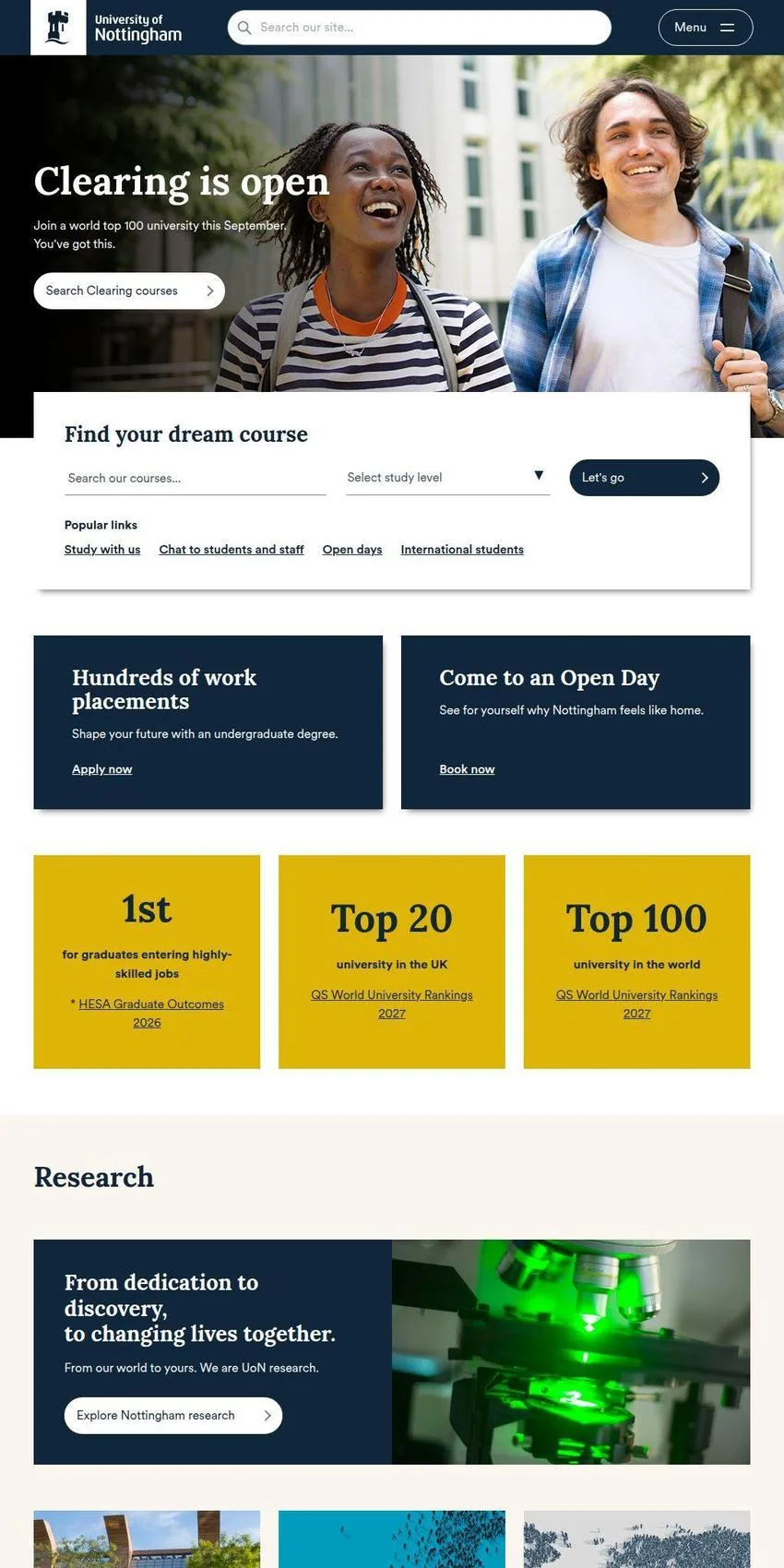
The University of Nottingham is a public research university in Nottingham, England. It began teaching in 1881 as University College Nottingham, based at first in a Victorian Gothic building on Shakespeare Street in the city centre, and it received its royal charter in 1948, the first English university to be chartered after the Second World War. The writer D H Lawrence took his teaching certificate at the college in the early 1900s, and the university now keeps collections on his life and work in its Manuscripts and Special Collections department.
The move to the present main site followed a gift from Sir Jesse Boot, the founder of the Boots company, who donated the Highfields estate west of the city centre. University Park opened in 1928 around the Trent Building, whose clock tower overlooks a boating lake, and the 300 acre campus has won Green Flag awards for its grounds year after year. Hopper buses link it with the university's other Nottingham sites.
Campuses in Nottingham and overseas
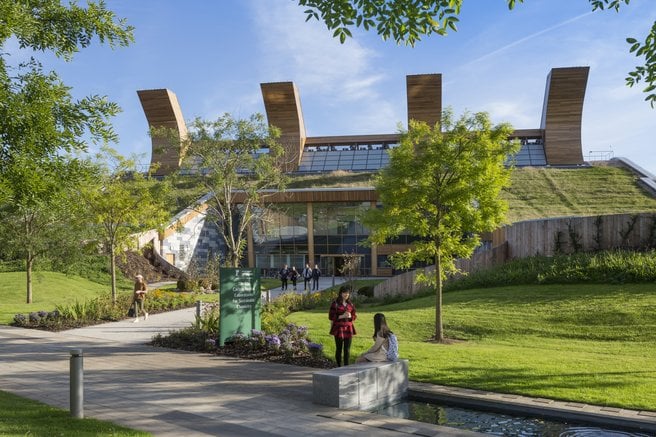
Jubilee Campus opened in 1999 on the site of the former Raleigh bicycle works in Radford, about a mile from University Park, and houses computer science, education and part of the business school around a series of artificial lakes. Sutton Bonington, a rural campus in south Nottinghamshire, is the base for biosciences and veterinary medicine and includes a working dairy farm. King's Meadow, a former television studio complex near the Trent, accommodates professional services departments, while clinical teaching takes place at the Queen's Medical Centre, Nottingham City Hospital and the Royal Derby Hospital.
International campuses
Nottingham was among the first British universities to open complete overseas campuses. A Malaysia campus began teaching in 2000 and now occupies a purpose built site at Semenyih, south of Kuala Lumpur. The University of Nottingham Ningbo China opened in 2004 as the first Sino foreign university campus approved in China. Several degree programmes allow students to move between the three countries during their studies, and the international network shapes research partnerships as well as teaching.
Academic profile
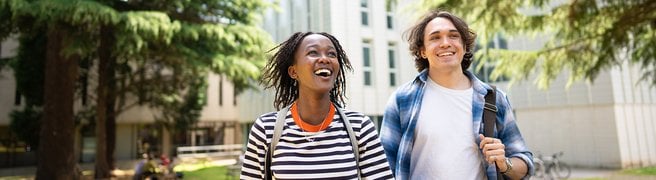
More than 35,000 students study at the UK campuses across five faculties: arts, engineering, medicine and health sciences, science and social sciences. The university is a founding member of the Russell Group of research intensive universities and one of the largest employers in Nottingham, with a workforce of more than 7,000 staff. Undergraduate degrees run alongside taught masters courses, research degrees and degree apprenticeships, and the institution attracts students from more than 150 countries. Teaching is organised through departments and schools within each faculty, and the academic year is divided into autumn and spring semesters.
Medicine and health sciences
The medical school admitted its first students in 1970 as the first new medical school established in Britain in the twentieth century. It is based at the Queen's Medical Centre, one of the largest teaching hospitals in the country, with a graduate entry programme taught at Derby. The School of Veterinary Medicine and Science followed in 2006 at Sutton Bonington, the first new veterinary school in the United Kingdom for more than fifty years. Pharmacy, nursing, midwifery and physiotherapy courses place students in hospitals and clinics across the East Midlands.
Research strengths
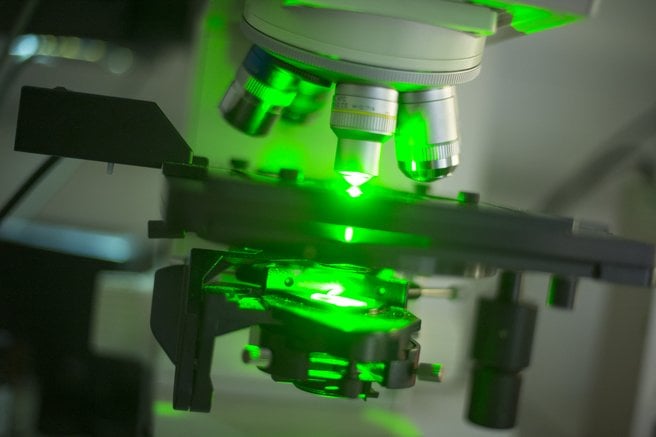
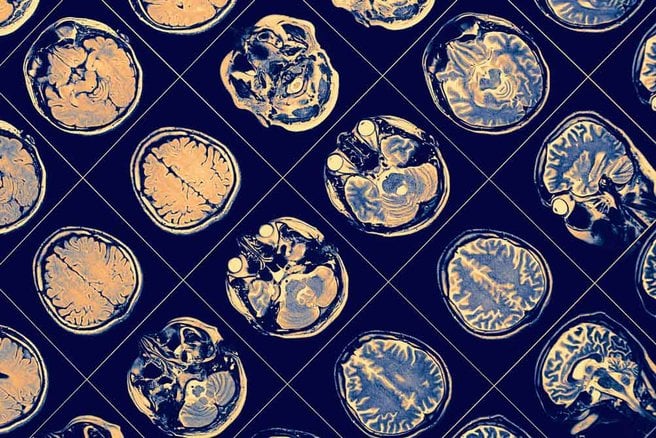
Magnetic resonance imaging owes much to work carried out in the university's physics department, where Sir Peter Mansfield developed the techniques that earned him the Nobel Prize in Physiology or Medicine in 2003. In the same year Clive Granger, who studied and later taught at Nottingham, shared the Nobel Memorial Prize in Economic Sciences for methods of analysing economic time series. Current research groups work on drug discovery, aerospace manufacturing, quantum imaging, food security and green chemistry, often with industrial partners in the region, and the university operates dedicated research buildings for advanced manufacturing and energy technologies on Jubilee Campus.
Student life and public facilities
The Students' Union supports around 300 societies and sports clubs, from subject associations to performing arts groups. Sport is concentrated at the David Ross Sports Village, which opened on University Park in 2016 and hosts fitness suites, a swimming pool and indoor courts used by students, staff and community members. The university maintains catered and self catered halls of residence, several of which date from the interwar and postwar decades, and first year undergraduates are normally offered a place in university accommodation. Many halls keep their own dining rooms, sports teams and common rooms, a pattern inherited from the early decades of the institution.
Lakeside Arts, the university's public arts centre at the southern entrance to University Park, includes the Djanogly Gallery, a theatre and a recital hall, and its exhibitions, concerts and family events are open to the general public. The adjoining Highfields Park, with its boating lake and walking routes, remains a popular open space for city residents. Campus grounds are open to visitors daily, and open days for prospective students run several times a year across the Nottingham campuses. Guided tours also cover the historic Trent Building and the lakeside.

Business address
University of Nottingham
University Park,
Nottingham,
Nottinghamshire
NG7 2RD
United Kingdom
Contact details
Phone: 0115 951 5151