Nottingham Trent University is a public university with its main campus in Nottingham city centre. Its earliest predecessor, the Nottingham Government School of Design, opened in 1843, and the modern institution took shape in 1970 when the regional college of technology merged with the college of art and design to form Trent Polytechnic. A teacher training college joined in the mid 1970s. Renamed Nottingham Polytechnic in 1988, the institution received university status in 1992 under the Further and Higher Education Act.
With around 40,000 students it is one of the largest universities in the United Kingdom. Teaching spreads across several sites in Nottinghamshire and one in London, and the university employs several thousand staff, which places it among the biggest employers in the city.
Campuses
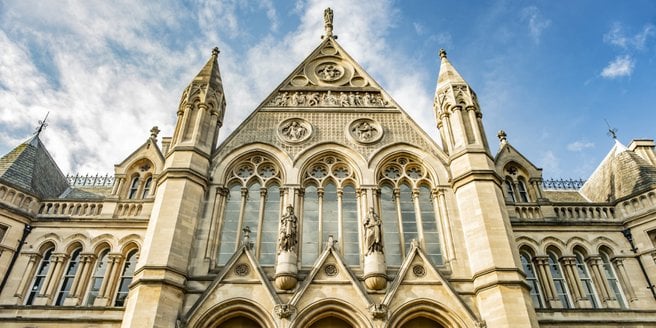
The City Campus occupies a cluster of buildings around Shakespeare Street and Goldsmith Street, a short walk north of Old Market Square. Its two landmarks are the Arkwright and Newton buildings. Arkwright, a Gothic revival building opened in 1881, originally housed University College Nottingham, the forerunner of the city's other university. Newton, a Portland stone tower completed in 1958, was for decades one of the tallest buildings in Nottingham. A refurbishment finished in 2010 joined the pair with a glazed central court, and both are listed buildings. The campus also includes the Boots Library, which opened in 1998 and provides study space over five floors, along with purpose built student accommodation and studio space for art and design students. Halls of residence stand within walking distance of the teaching buildings.
Clifton and Brackenhurst
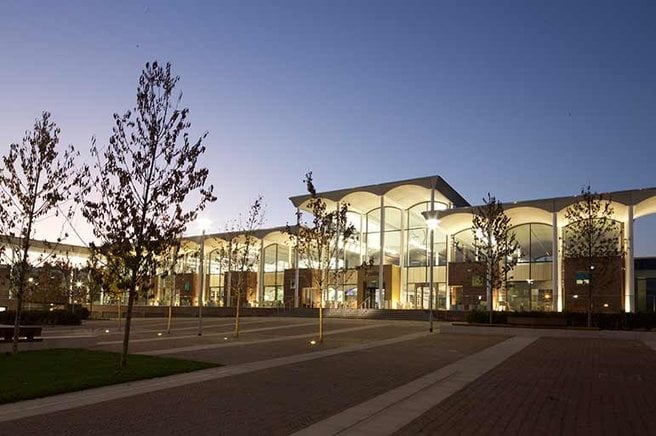
Clifton Campus, about four miles south of the city centre, concentrates science and technology, education, humanities and sport. Its facilities include teaching laboratories, the Lee Westwood Sports Centre and a medical technologies research facility, and regular bus services connect the site with the city centre. The Nottingham Institute of Education, based at Clifton, trains teachers for primary and secondary schools across the region. Brackenhurst Campus, a 200 hectare estate near Southwell that joined the university in 1999, teaches animal, equine, environmental and land based courses and works as a living laboratory, with a commercial farm, an equestrian centre, animal units and a veterinary nursing centre on site.
Creative and regional sites
Confetti Institute of Creative Technologies, part of the university since 2015, runs courses in music production, games, esports and film from premises in Nottingham's Creative Quarter, and it opened a London site in 2023 for creative industries teaching. In Mansfield the university operates a study hub with West Nottinghamshire College that brings degree level courses to the north of the county, part of a wider effort to widen access to higher education in former coalfield communities.
Academic schools and courses
Teaching is organised through academic schools that include Nottingham Business School, Nottingham Law School, the School of Art and Design, the School of Architecture, Design and the Built Environment, the School of Science and Technology, the School of Social Sciences and the School of Animal, Rural and Environmental Sciences. The art and design school traces its history directly to the 1843 school of design and remains one of the largest providers of creative arts education in the country, with degree shows each summer that open its studios to the public. Nottingham Business School holds both EQUIS and AACSB accreditation, a combination achieved by a small minority of business schools worldwide, and Nottingham Law School trains solicitors and barristers alongside its degree courses.
Courses place strong weight on placements and work experience. Many degrees include a sandwich year in industry, and the university has expanded degree apprenticeships in fields from quantity surveying to data science. Foundation years offer entry routes for applicants without standard qualifications, and a high proportion of students arrive from state schools and from families without a history of university study.
Recognition and public engagement
Nottingham Trent was named University of the Year at the Times Higher Education Awards in 2017 and Guardian University of the Year in 2019. It has also finished at or near the top of sustainability league tables for British universities over many years, reflecting long standing investment in energy efficient buildings and biodiversity work at Brackenhurst and Clifton. Research activity has grown considerably since 1992. Centres include the John van Geest Cancer Research Centre at Clifton, which works on cancer diagnostics and immunotherapy, alongside groups in imaging, materials science and computing that collaborate with regional industry. Graduate employability has been a recurring theme since the polytechnic era, and the careers service runs recruitment fairs on the main campuses each year.
Bonington Gallery on the City Campus stages free contemporary art exhibitions throughout the academic year. Community memberships are available at university sports facilities, public lecture series run at the city and Clifton sites, and schools outreach programmes work with pupils across Nottinghamshire. Open days take place at the Nottingham and Brackenhurst campuses through the year, with course enquiries handled by a central admissions team, and the university publishes term dates, accommodation guidance and support information for current and prospective students.


Business address
Nottingham Trent University
50 Shakespeare Street,
Nottingham,
Nottinghamshire
NG1 4FQ
United Kingdom
Contact details
Phone: 0115 941 8418