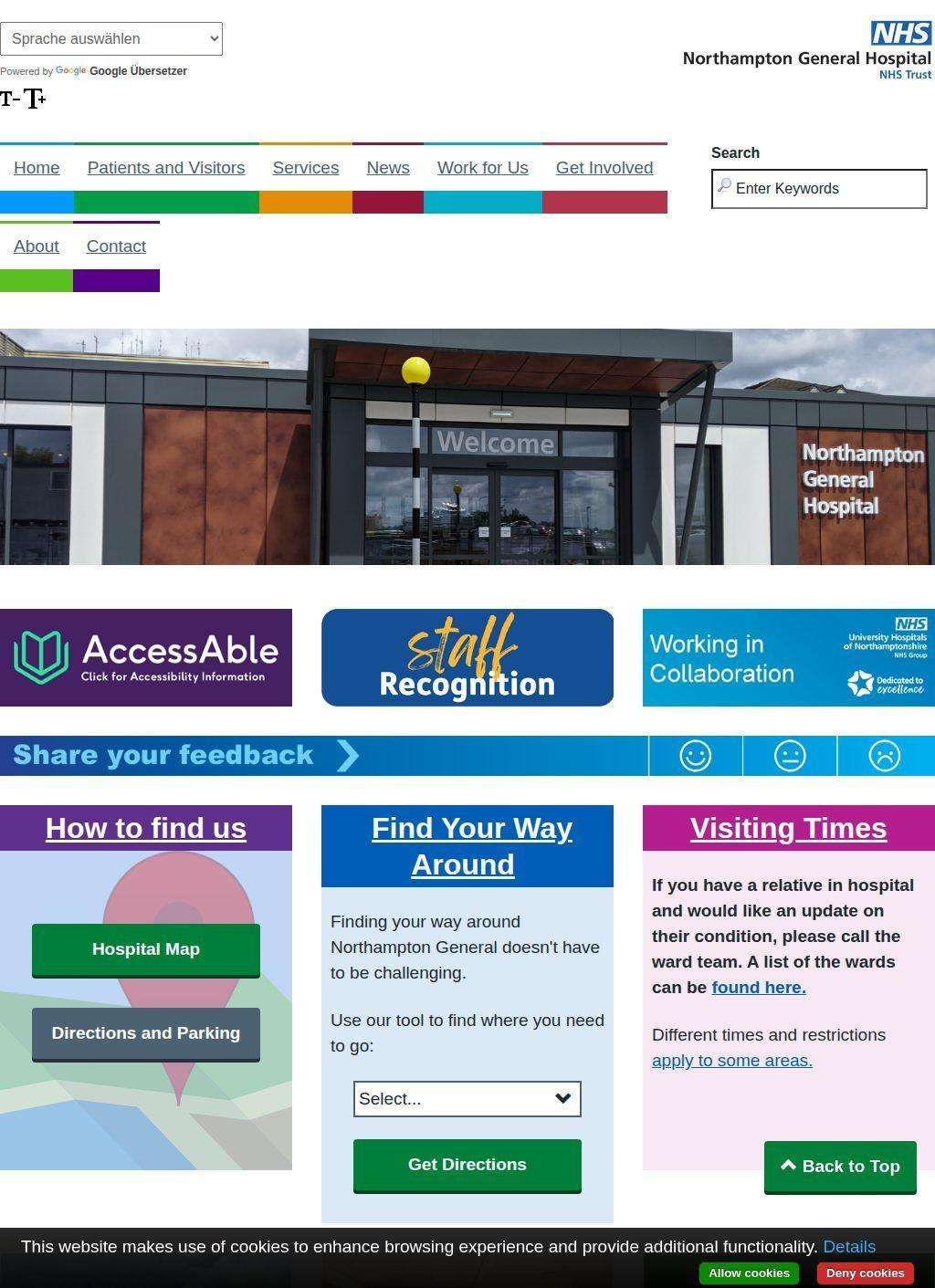
Northampton General Hospital NHS Trust runs the main acute hospital for Northampton and a large part of southern Northamptonshire, on a long-established site at Cliftonville on the eastern side of the town. The hospital has cared for the people of the area for well over a century, and today it provides emergency, surgical, medical and maternity services to a catchment of around 380,000 people, rising higher for the specialist services that draw patients from across the wider county. It is one of the two acute trusts in Northamptonshire, the other being Kettering General Hospital to the north, and the two have moved steadily closer together in recent years through a shared group arrangement designed to pool expertise and make the most of limited resources across the county.
Emergency and trauma services
The accident and emergency department is the part of the hospital most residents will recognise, and it operates around the clock for serious injuries and medical emergencies. Northampton General is the designated trauma unit for the area, linked into the regional major trauma network centred on the larger hospitals at Leicester and Coventry, and it handles the steady flow of urgent cases that any town of this size generates. Alongside the emergency department sits a range of urgent and same-day services intended to keep people who do not need a full admission out of the main A&E, though, as with emergency departments across the country, waiting times here can lengthen at busy periods, and the trust publishes its performance against the national standards rather than hiding from them.
Maternity care and neonatal support
Maternity is another core service, with a consultant-led unit and a midwife-led birthing area, antenatal and postnatal care, and a neonatal unit for babies who need extra support after birth. Thousands of babies are born at the hospital each year, and the maternity pages of the website carry the practical information expectant parents look for, from booking appointments to what to bring on the day. The trust also provides a broad span of planned surgery and medical specialties, including cancer services, cardiology, respiratory medicine, orthopaedics, ophthalmology, gastroenterology and care of older people, supported by the diagnostic backbone of radiology, pathology and outpatient clinics that a district general hospital depends on.
Cancer treatment across the county
Cancer care deserves particular mention, because Northampton General acts as a cancer centre for parts of the county and provides oncology and haematology services, chemotherapy and supportive care, working in networks with the larger regional centres for the most specialist treatment. Patients diagnosed locally are often able to receive a good deal of their treatment close to home rather than travelling, which matters when a course of treatment runs over many weeks. The hospital also has strong links with the University of Northampton and other institutions for the training of nurses, doctors and allied health professionals, and clinical placements at the trust are part of how the area educates its future healthcare workforce.
Finding information on the website
The website is built primarily for patients, visitors and the staff who work there, and it is organised accordingly. Patients will find their department's contact details, guidance on preparing for appointments and operations, visiting times, and practical information on parking, public transport and access to the Cliftonville site. The main switchboard number, 01604 634700, connects callers to wards and departments, while individual clinics and the patient advice and liaison service have their own routes for queries and concerns. The trust publishes its board papers, annual reports, quality accounts and the outcomes of its inspections by the Care Quality Commission, so anyone wanting to judge how the hospital is performing can read the assessments for themselves rather than relying on reputation alone.
Employment opportunities for local staff
Recruitment is a constant theme for any large NHS trust, and Northampton General is among the biggest employers in the town, with several thousand staff across clinical and support roles. The careers section advertises vacancies for nurses, doctors, healthcare assistants, scientists and the many administrative and estates staff a hospital needs to function, and the trust runs apprenticeships and training schemes of its own. For local people, the hospital is therefore not only where they go when they are unwell but also a significant source of skilled work, and the wider network of local healthcare providers, clinics and suppliers that surrounds it often maintains a presence in a business directory so that patients, partners and prospective staff can find and verify them alongside the trust itself.
Volunteering, charity and community governance
Volunteering and charitable support play a real part in the life of the hospital. The associated charity raises money for equipment and improvements that go beyond core NHS funding, and a body of volunteers helps with wayfinding, ward visiting and fundraising. Donations, the hospital radio and the friends-of-the-hospital activity are all signposted from the website, which gives residents who want to give something back a clear way to do so. The trust also works with patient groups and a council of governors drawn from the local community, part of the foundation-style governance that keeps an acute hospital answerable to the population it serves.
How to reach the Cliftonville site
The Cliftonville site has grown piecemeal over its long history, and the trust runs a continuing programme of building and refurbishment to bring older areas up to modern standards. Recent and planned work has touched the emergency department, theatres and diagnostic facilities, funded through a mix of national capital programmes and the hospital's own charity. Getting to the site is straightforward by road from the town centre and the A45, and the website sets out the bus routes that serve it, the location of the visitor car parks and the charges that apply, along with the disabled access and drop-off arrangements that matter to less mobile patients. Parking pressure at peak clinic times is a familiar frustration, and the trust is open about it, advising patients to allow extra time.
What should patients expect in outpatient clinics?
Outpatient activity makes up a large share of what the hospital actually does day to day, far more than the dramatic emergency work that tends to define hospitals in the public mind. Clinics across dozens of specialties see patients referred by their GPs for assessment, tests and follow-up, and the hospital has been expanding the use of telephone and video appointments where a face-to-face visit is not strictly needed. The website explains how to check, change or cancel an appointment, what to do if a letter has not arrived, and how to ask for results, which heads off a good number of the calls that would otherwise tie up the switchboard. For patients managing a long-term condition, that clarity about the outpatient process is genuinely useful.
Like every acute trust in England, Northampton General works under real pressure, and it is fair to set out the caveats plainly. Demand on emergency and urgent care is high, some planned operations can be subject to waiting lists, and the physical estate at Cliftonville mixes modern facilities with older buildings that the trust continues to invest in and upgrade. None of that is unusual for a hospital of its age and size, and the closer working with Kettering General through the group model is partly aimed at smoothing out exactly these strains by sharing rotas, specialties and back-office functions across the two sites. Patients are best served by checking the website or calling the relevant department for the current position on a particular service rather than assuming.
Listing Northampton General Hospital NHS Trust in a business directory under its Northamptonshire category gives an independently catalogued, authoritative link to the official site, placed alongside the council and the university that serve the same population. For a patient trying to confirm a department's phone number, a relative checking visiting arrangements, a job seeker looking at NHS careers, or a researcher reviewing the trust's published performance, that reliable signpost is worth having. The hospital's own homepage remains the definitive source for service details, contact points and visiting information, and the switchboard on 01604 634700 is the way in for anything that needs a person rather than a web form. For acute healthcare in Northampton and southern Northamptonshire, this is the central institution, and its homepage is the right starting point for almost any contact with it.
Business address
Northampton General Hospital NHS Trust
Cliftonville,
Northampton,
Northamptonshire
NN1 5BD
United Kingdom
Contact details
Phone: 01604 634700