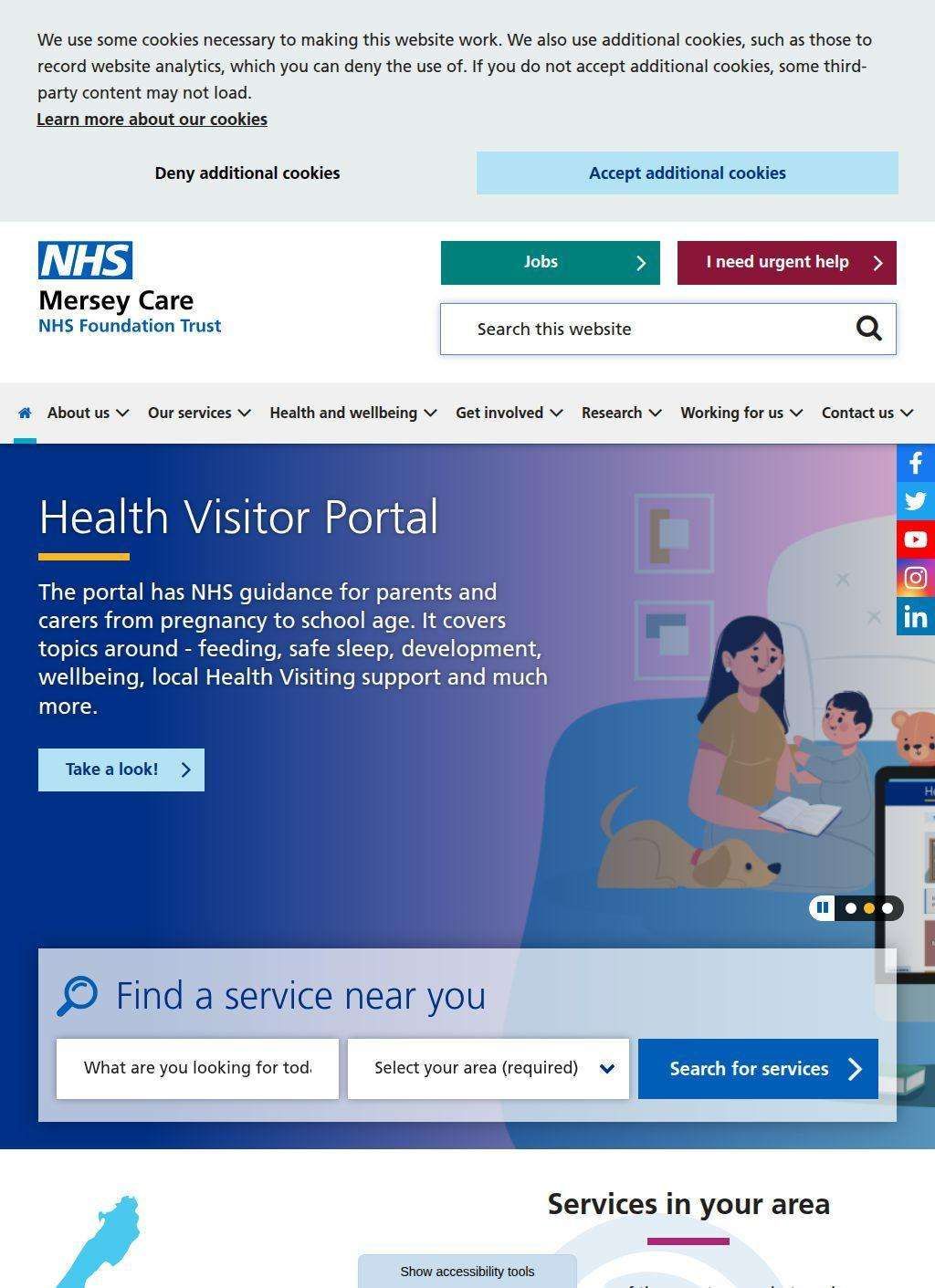
One NHS trust runs the highest tier of secure psychiatric care in England, and Mersey Care NHS Foundation Trust is one of the few that does. Ashworth Hospital, a high-secure facility that holds patients whose risk profile rules out ordinary inpatient wards, sits under its remit. That single fact tells you this is not a general district hospital operation. It is a specialist mental health and community provider whose work spans the routine and the genuinely difficult, from a local addiction clinic to a locked forensic ward.
Referral routes into care
The trust covers Liverpool, Sefton, Knowsley and neighbouring parts of the North West, and its patient base arrives the way NHS patients usually do: through a GP referral, a crisis pathway, or a transfer from another part of the health system. There is no shopping around here. If you live in the catchment and your care falls into one of these clinical areas, this is the body that will most likely be treating you, which is worth knowing when you land on the site looking for a specific service or ward.
Levels of mental health support
The bulk of what Mersey Care NHS Foundation Trust does falls under mental health, and it operates across the full range of intensity. At one end there are community mental health teams and outpatient clinics that people attend while living at home. In the middle sit acute inpatient wards for those who need admission during a crisis. At the top of the ladder are the secure and forensic services, where Ashworth is the flagship, alongside medium and low-secure provision for patients moving through the justice and mental health systems.
Learning disability services
Learning disability services round out this side of Mersey Care NHS Foundation Trust, supporting people with lifelong conditions who need clinical and social input rather than a single course of treatment. I find the breadth here striking, because a trust that can hold a high-secure patient and also run a talking-therapy clinic in a community centre is managing two very different kinds of care under one governance structure. That spread is unusual, and it shapes how the organisation presents itself: less a hospital, more a network of clinical settings.
Community health provision
Beyond the psychiatric remit, Mersey Care NHS Foundation Trust delivers community health services, the kind of care that reaches people in their homes and local clinics instead of on a ward. District nursing, community-based clinics and similar provision fall into this category, and they carry a large share of everyday NHS contact for people who are not acutely ill but still need regular clinical support.
Addiction and substance misuse treatment
Addiction and substance misuse services form another distinct strand. These sit somewhat apart from the general community offer, since they combine clinical treatment with the longer, harder work of recovery and relapse management. Putting them inside the same trust as the mental health teams makes a certain sense, given how often substance problems and mental health difficulties travel together, and the trust is structured to treat them as connected concerns.
Regulatory oversight and reviews
As a statutory public body, Mersey Care NHS Foundation Trust operates under external scrutiny that a private clinic does not face. Care Quality Commission inspections and oversight from NHS England set the standards it has to meet, and inspection reports on this trust are a matter of public record. Anyone wanting an independent read on quality can consult those directly, which is a more solid basis for judgement than any single account of a visit. A separate search for patient reviews outside those official channels turned up no dedicated aggregate rating page for the trust as a whole, only scattered comments tied to individual wards and clinics rather than one score that sums up the organisation.
Behind the site's access block
The catch worth naming is honesty about what could be confirmed here. The live site returned a block when I tried to reach it during this session, so the exact current service list, the precise names of individual clinics and the specific structure of its web pages could not be checked against the page itself. What is described above rests on the well-established public role of Mersey Care NHS Foundation Trust, not on a fresh pass through its site, and a reader chasing a particular clinic should treat the trust's own pages as the authority once they can open them.
How does it compare to neighbours?
Set against Cheshire and Wirral Partnership NHS Foundation Trust, the neighbouring mental health and community provider to the south, Mersey Care NHS Foundation Trust stands out mainly for that high-secure remit. Both cover similar clinical ground for their populations, but the presence of Ashworth and the wider forensic estate gives Mersey Care a national specialist role its neighbour does not carry. For someone in the Liverpool, Sefton or Knowsley area, though, the comparison is largely academic: catchment decides which trust you deal with, and for a large stretch of Merseyside the answer is this one. Worth consulting when you need to find a named service or check where a clinic sits, with the understanding that its authority comes from its statutory function, not from any marketing on the page.
Business address
Mersey Care NHS Foundation Trust
V7 Building, Kings Business Park,
Prescot,
Merseyside
L34 1PJ
United Kingdom
Contact details
Phone: 0151 473 0303