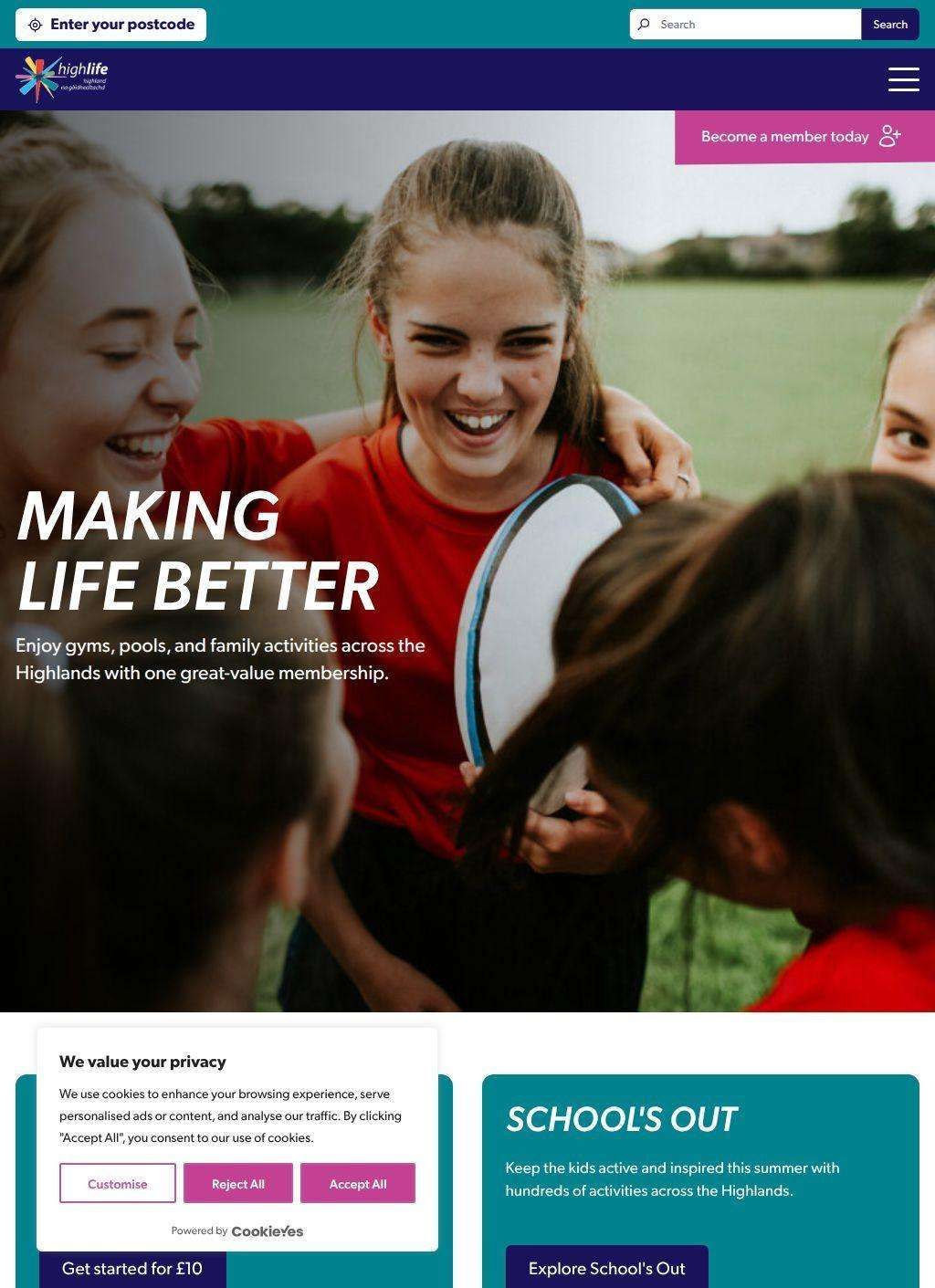
What does a single charity in the Highlands actually run? A surprising amount. High Life Highland is the Scottish trust that delivers public leisure, culture and heritage on behalf of Highland Council, and the breadth of it becomes clear the moment you start clicking through the site. Twenty-five leisure centres sit at the core, each with gyms, pools, fitness classes and structured swimming lessons. Around that spine wraps a second layer that most leisure operators never touch: libraries, archives, museums, music tuition, countryside ranger work and a visitor attraction in the city itself.
Leisure centres with health-focused programming
The leisure side is the easiest to picture, so it makes sense to start there. High Life Highland pools and gyms are the bread and butter, but the programming reaches further than recreation. There are health-referral style classes built around real medical needs, including cardiac rehabilitation, support for people recovering from cancer, diabetes management sessions and falls prevention for older residents. That is the sort of provision a council usually contracts out to the NHS or a separate charity, and seeing it sit inside the same body that runs the local swimming pool tells you something about how integrated the offering is. A resident managing a long-term condition and a teenager who wants a gym membership are being served by the same organisation, in many cases the same buildings.
Libraries, archives and the Inverness Castle Experience
Libraries and archives form the quieter half. High Life Highland gives access to an online library catalogue, so borrowers can check availability and reserve titles without a trip to the branch first. Archive centres and museums extend the same idea into local history, and for a region as large and scattered as the Highlands, that record-keeping function is genuinely consequential. Researchers, family historians and schools all draw on collections like these. The cultural strand then steps up a level with the Inverness Castle Experience, a visitor centre in the city that anchors the heritage work in a single, ticketed destination instead of a scatter of rural venues.
Music tuition across a rural region
Music education is one of the more distinctive threads here, and it is easy to overlook against the gyms and libraries. High Life Highland runs tuition programmes and a route for young musicians to progress, which in a rural region is far more consequential than it would be in a city where private teachers cluster on every street. Where a young player in the Highlands might otherwise have no realistic access to structured lessons, a region-wide trust can carry instruction out to where the pupils are.
Youth activities and inclusive access
That youth focus runs through the community work too. Sports clubs, coaching, youth leadership schemes and inclusive activities for people with mobility challenges or health conditions all appear in the programme list. The inclusion angle is not a token line. It threads back to the health classes and the falls prevention work, and that link shows High Life Highland treats access as a single problem across all its services. Accessibility belongs to the core offer here, not bolted onto one or two programmes.
Ranger services and outdoor accommodation
Countryside services round out the picture and pull it outdoors. High Life Highland ranger-led programmes take people into the landscape with someone who knows it, outdoor access support deals with the practicalities of getting onto Highland ground, and bunkhouse accommodation gives walkers and groups somewhere to stay. For anyone using the hills for sport or simple recreation, that combination of guidance, access and a bed is genuinely useful, and it ties the indoor leisure work to the open country that defines the region.
One more practical strand sits alongside all of this: venue hire. High Life Highland makes its spaces available for events and meetings, the kind of dual use that keeps public buildings earning their keep between scheduled activities. A leisure centre hall or a cultural venue that would otherwise stand empty on a weekday evening can host a community group or a private booking, and the income loops back into the wider mission.
That mission is stated plainly on the site as "Making life better" for Highland residents of all ages and abilities, and the spread of services gives that phrase something concrete to stand on. Registered as a Scottish charity under number SC042593 and operating as the cultural and leisure arm of Highland Council, High Life Highland is the formal vehicle through which a lot of the region's public provision reaches people. That structure is what explains the unusual range. A standalone gym operator would never run an archive; a museum trust would never offer cardiac rehab. Bundling them under one charity is what makes the catalogue look so wide.
A search of Google and Trustpilot turned up no substantial independent review record for High Life Highland. That is not unusual for a public trust of this kind; accountability runs through the council relationship and the charity regulator instead of star ratings on consumer platforms.
For anyone trying to understand what is available across the Highlands, this listing is a sensible single point to start from, because so many separate functions are gathered behind one name. A parent looking for swimming lessons, a researcher after old records, a young musician, a walker needing a bunkhouse and an older resident referred to a falls class are all dealing with High Life Highland. That consolidation is the most interesting thing about how the organisation is set up, and it is the practical reason the site repays a proper look.
How integrated services create durability
The way the services interlock also says something about durability. Health programmes feed off the leisure centres; the music pathway feeds off the youth clubs; the countryside rangers feed off the access work; the venues feed income back to all of it. None of these strands stands entirely alone, which is part of why a regional trust model tends to hold together where a string of separate operators might not. High Life Highland covers a territory most organisations would find unmanageably large, and it does so by treating leisure, learning and the outdoors as one connected job. The published record is wide and consistent enough to take seriously.
Business address
High Life Highland
Highland Archive Centre, Bught Road,
Inverness,
Highland
IV3 5SS
United Kingdom
Contact details
Phone: 01349 781700