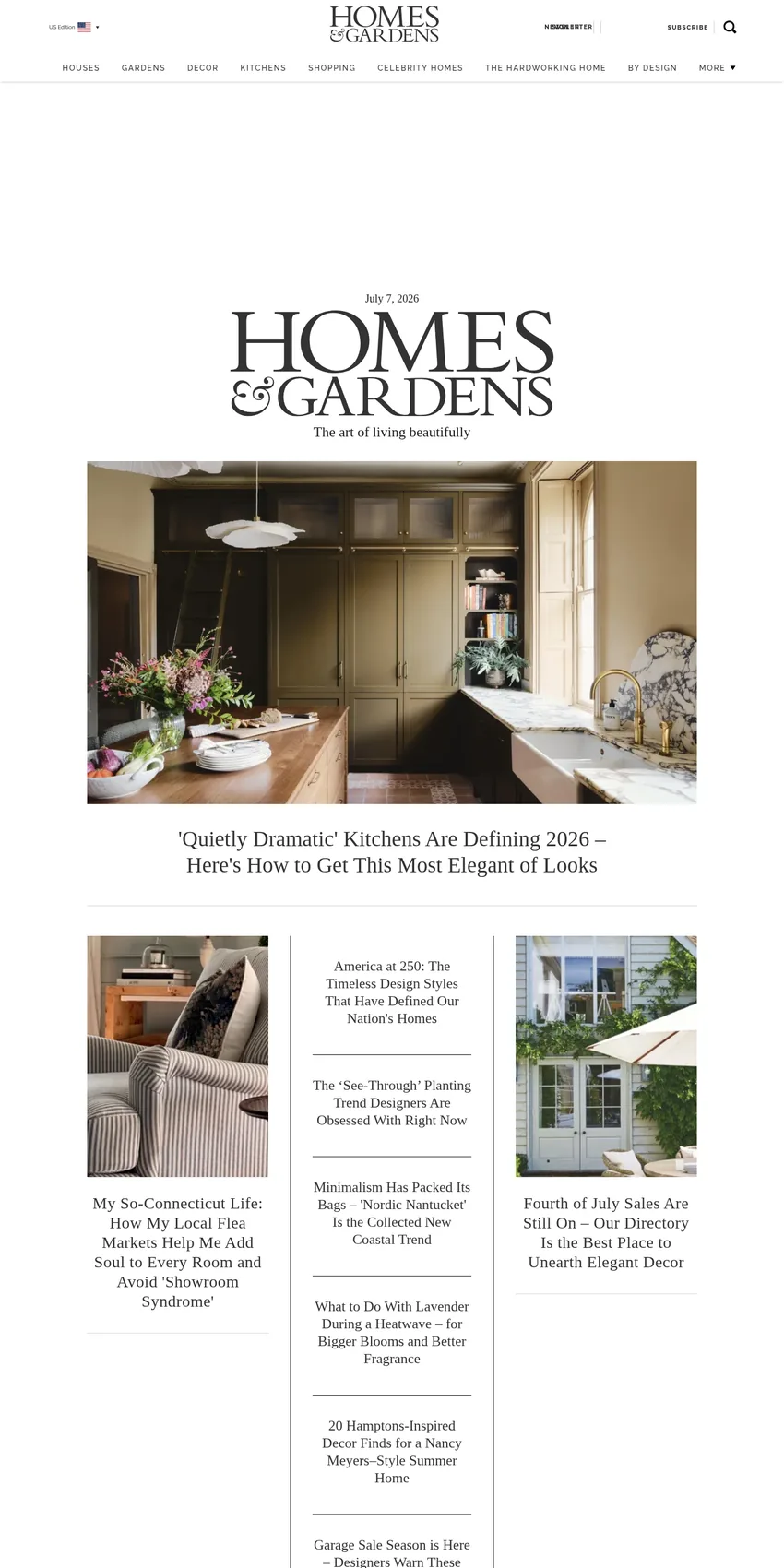
Can lavender care and Paul McCartney's living room share one front page? At Homes & Gardens they can, and they do. The site is the web edition of an interiors and lifestyle magazine owned by the publisher Future plc, and it sorts a large editorial output into section fronts for Houses, Gardens, Decor, Kitchens, and Celebrity Homes, covering interior design, decorating, and home renovation along the way. A reader can switch the whole site between regional editions for the UK, the US, and Canada, which is more than a cosmetic toggle when the planting advice depends on where that reader lives.
The scale of Homes & Gardens registers quickly. The homepage is a hero grid of features stacked over section navigation, the article feed runs to fifty items at a time, and each of the main sections opens onto its own grid of current features; together that is a full publishing operation. The layout is conventional and easy to move through, and the volume is the point: a site this size lives on steady output and clear sorting.
The section fronts
Each front behaves the same way. Houses collects house tours in a grid of features. Gardens holds the growing advice. Decor and Kitchens carry the decorating and design work: paint palettes, with a farmhouse-white palette feature typical of the output, plus kitchen and bathroom design guidance, and renovation coverage that threads across all of it. The pattern is easy to learn, and a reader who cares about a single subject can stay inside one section without ever touching the rest of Homes & Gardens.
The assumed reader sits somewhere between planning and doing: repainting a room, replacing a kitchen, keeping a border alive through a hot spell. Much of the material is task advice with a product dimension attached, and that dual nature runs through the whole of Homes & Gardens, on the editorial pages as much as the shopping ones. Renovation guidance sits next to decorating ideas, and one visit can serve a project and a purchase at the same time.
One editorial habit counts in the site's favor: Homes & Gardens runs reader-submitted questions past named contributing editors and experts, so a specific person signs off on the advice. A named editor has something at stake when a recommendation goes wrong, and that is worth something on a site that also wants to sell things.
Gardening advice by month
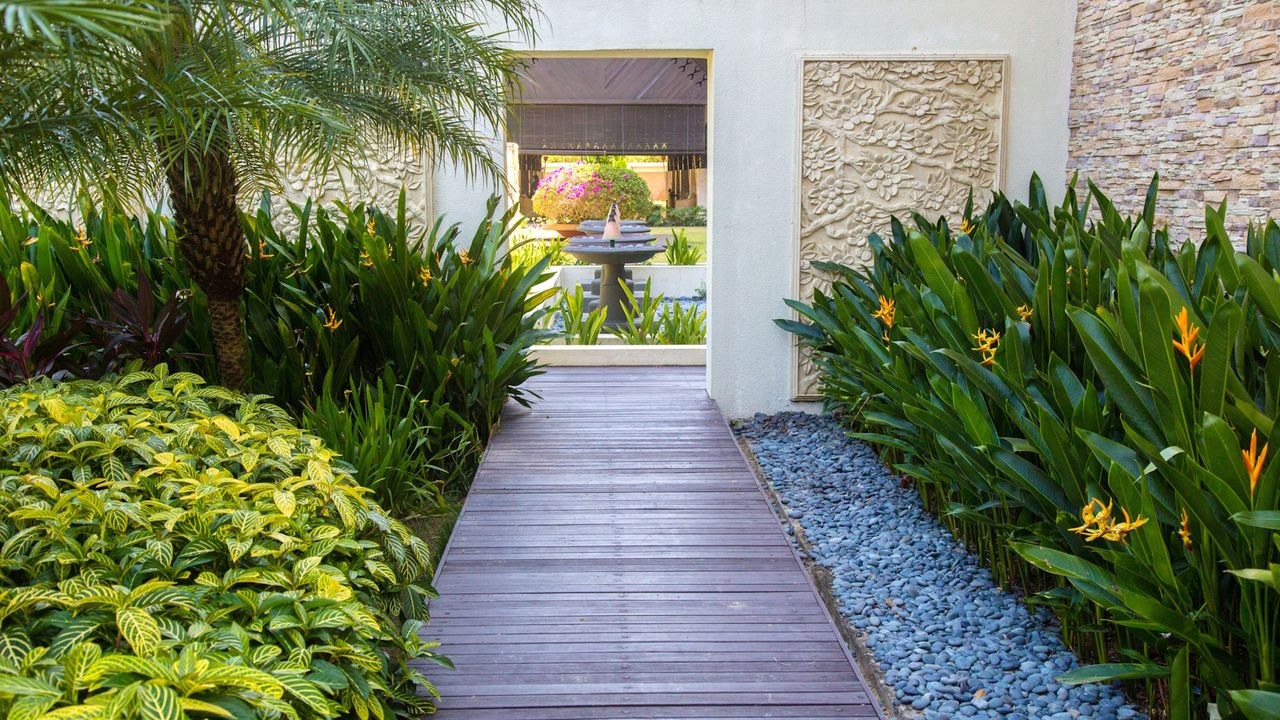
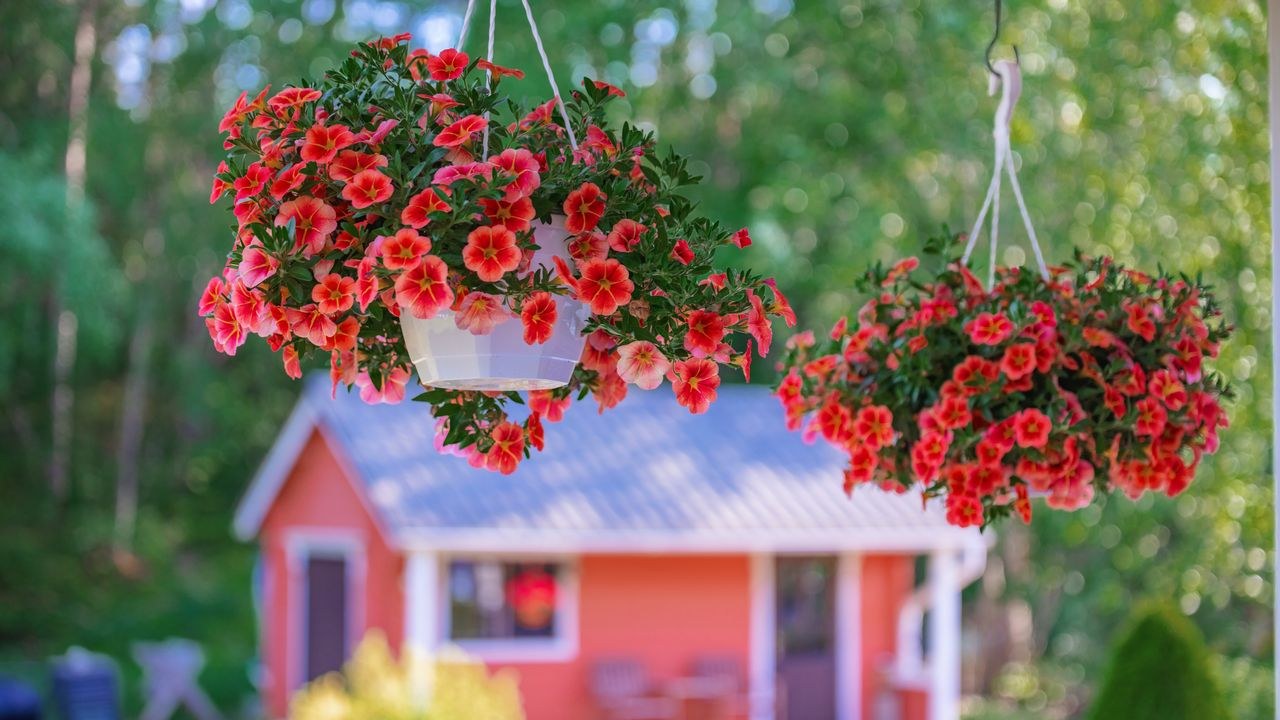
The gardening material is organized by month and by plant type, so lavender gets its own care piece and a hanging basket is treated as a subject in its own right. That structure fits the way gardening decisions get made, because the job list changes with the season. The features are specific and unglamorous: lavender care, hanging baskets, how to bring hummingbirds into a garden, tropical plants that suit small spaces. The spread inside a single section is wide, part wildlife encouragement, part small-space problem solving, but every piece stays tied to a task. None of that is exotic subject matter. It does not need to be.
What the month-based archive gets a reader is timing. Arrive mid-season and the tasks that apply right now are the ones on the front, and the edition switch keeps the advice pointed at the right climate. For a reader working through a season the calendar does the choosing, and there is always a next job in a garden. Homes & Gardens treats gardening as a schedule to be kept, and the section is more useful for it.
Celebrity home tours
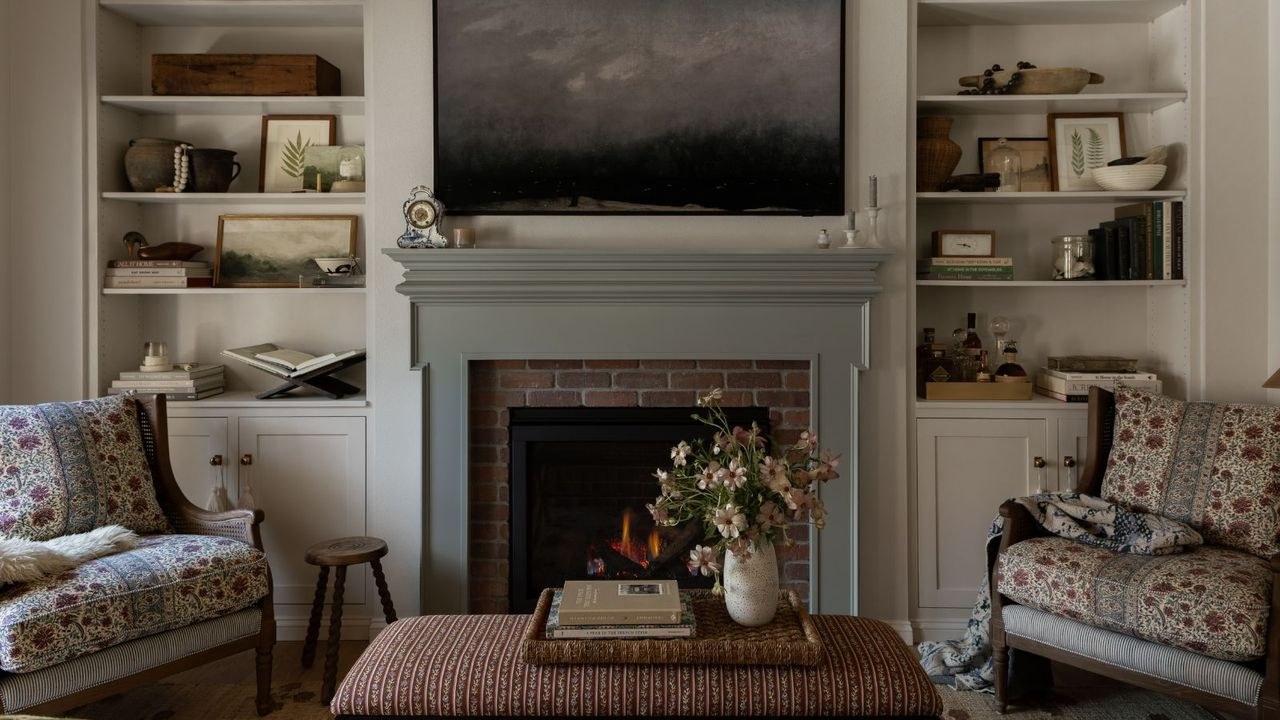
The Celebrity Homes front hangs interior features on famous names: Paul McCartney's living room, Jennifer Aniston's home, an accent chair belonging to Drew Barrymore. The McCartney piece is a photo-led feature about the room itself, and that is the general shape of the section. The celebrity supplies the headline; the room gets the coverage.
The pull of this material is easy to understand, and so is the eye-rolling it invites. A famous living room is still a living room, and the photographs do most of the work. Anyone cold on celebrity coverage loses nothing by staying in Houses, where the tours stand on the rooms alone. As a sample of the tone, the named features say enough: domestic, specific, more interested in the armchair than in its owner.
Product reviews and the deals page
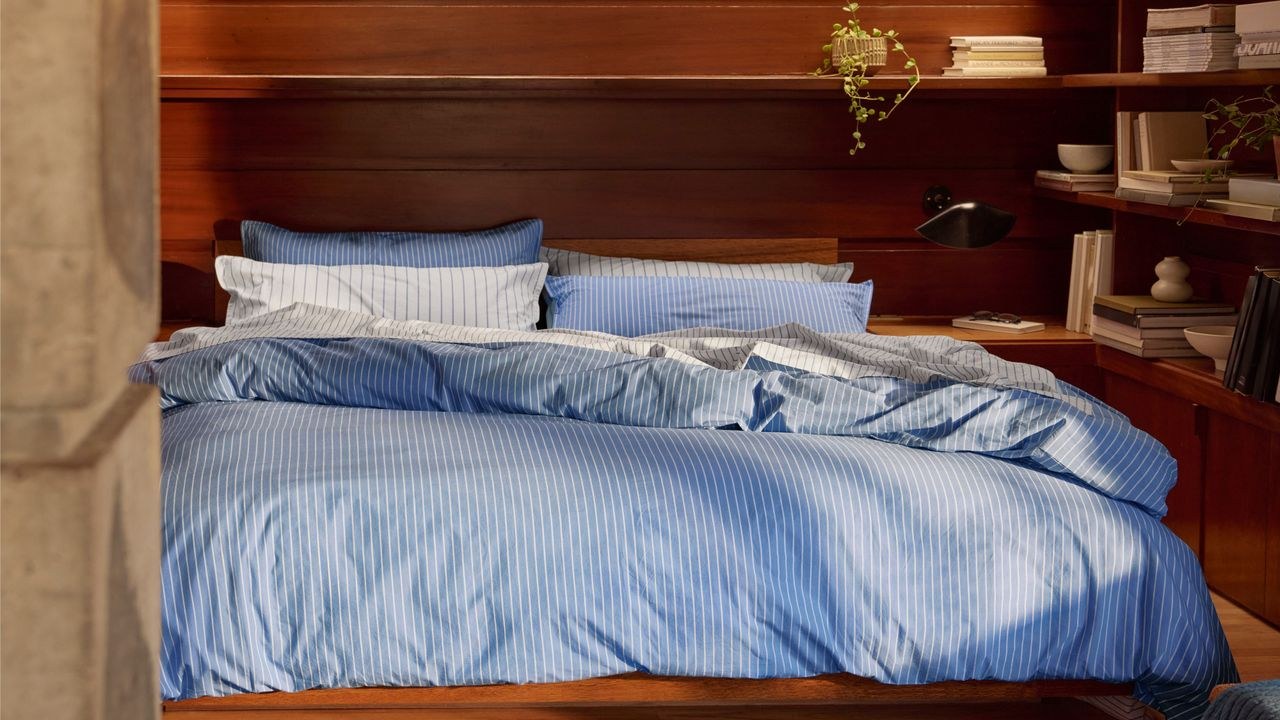
Commerce runs through the other half of the operation. Homes & Gardens publishes product reviews with buying advice on household kit, with blenders, bedding, and garden tools among the covered categories. A Parachute bedding feature runs in the same design as the editorial features, and the shopping side widens into guides and curated collections, a "Hamptons Decor" collection among them. The categories are domestic staples, purchases a decorating reader was already weighing, so the commercial fit with the editorial is close. The review categories track the editorial map: garden tools for the gardening readership, bedding and blenders for the home side.
Then there is the deals section, a page of promo codes for retailers. Nothing about it is hidden, and it settles any question about the business model: reviews, shopping guides, and discount codes are stages of a single funnel, with the editorial sitting upstream of all of it. A working code has real value for a reader, but the cost is subtler: a site that hosts the retailer's discount code has become a party to the purchase it is advising on. Pages like that exist because they earn, and the sensible response is to read the buying guides with the arrangement in mind.
Subscriptions and back issues
The magazine itself is still for sale: a print subscription to Homes & Gardens starts at $25.99, a digital edition is available, and subscribers get access to more than 130 digital back issues. For an interiors title, that archive is the strongest single reason to pay, with the digital edition rounding out the paid side. A kitchen feature does not expire the way a news story does, and a stack of back issues that deep works as a reference library rather than a news pile.
Around the paid layer sit the plainer tools: a newsletter sign-up and user accounts for signing in. Homes & Gardens also keeps pages on Facebook, X, Instagram, and YouTube.
Ownership and outside reputation
Homes & Gardens is a Future plc brand, run through Future Publishing Limited, a UK-registered company. That ownership explains the scale of the operation and its commercial layer. It does not explain why the site says so little about who to contact directly, or about what anyone outside the magazine makes of it.
The magazine's own contact and about pages publish no phone number and no street address. The company details exist, but at the parent publisher's corporate level, and a reader has to climb from the magazine up to Future plc's pages to find them. For an editorial site this is a small gap rather than an alarm. A real company with a real office and phone line stands behind the brand; it is simply not presented on the pages where a magazine reader lands.
The other quiet spot is any outside record of the magazine's own reputation: a Trustpilot check turns up nothing for Homes & Gardens itself, only unrelated retail domains trading under similar names. It is a magazine, not a business directory, so the absence of star ratings is not surprising in itself; readers rarely rate a magazine the way they rate a courier or a tradesman. It still leaves nothing independent to weigh the product verdicts against.
That is the doubt the site never resolves. The same brand that answers a reader's lavender question also reviews the blender, writes the shopping guide, and hosts the retailer's promo code. No outside trail shows how any of that advice worked out for the people who followed it. Homes & Gardens asks to be read as a magazine, yet part of its architecture exists to move readers toward checkouts. Nothing on the site establishes which of those two jobs wins when they pull against each other.


Verified social profiles
Business address
Future Publishing Limited
Quay House, The Ambury,
Bath,
BA1 1UA
United Kingdom
Contact details
Phone: +44 1225 442244
Five steps for healthy, beautiful trees
From a launch party to a charming pop-up to a vignette at 200 Lex. Follow us around town!
The seasonal updates that feel tasteless and timeless – and no, pumpkins don't meet the mark
Once three separate flats, this Victorian terrace has been reimagined by Studio Squire as an airy and enduring family home