Every book and magazine and pamphlet published in the UK and Ireland ends up here, by law. That legal deposit status is the quiet engine behind The British Library, and it is the thing that separates it from any other collection a person could walk into. The result is a catalogue that keeps growing whether anyone is paying attention or not, covering books, maps, manuscripts and archival material that runs the full length of recorded printing and well before it. You can search the whole thing online at catalogue.bl.uk, which is the practical starting point for almost anyone planning a visit to The British Library or a piece of research.
Free access for every researcher
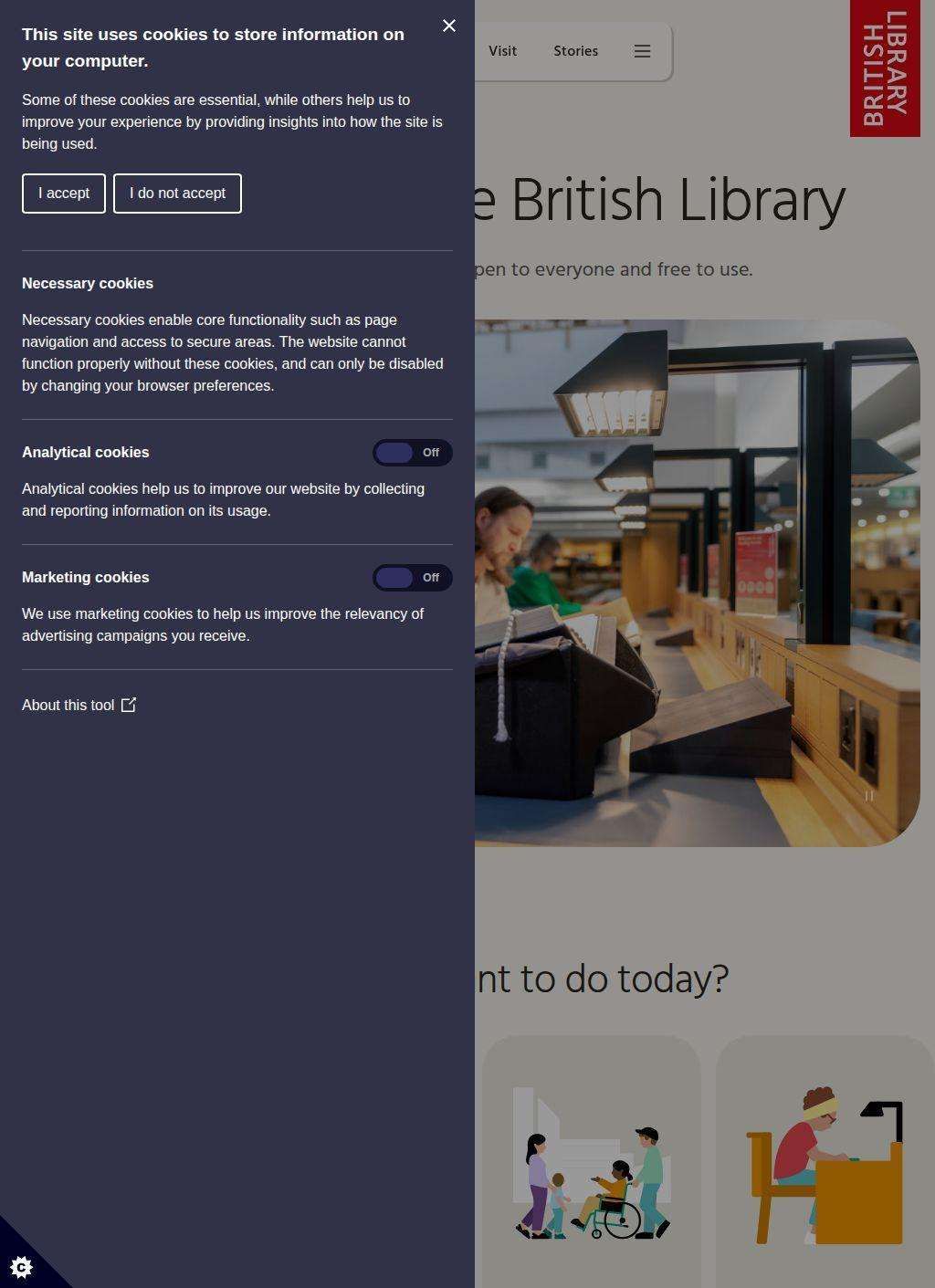
The catalogue is one half of the offer. The other half is space. Reading rooms and study spaces sit at the centre of what the place does, and they are free to use for researchers who register. That word free matters more than the brochure language around it suggests, because access at this scale usually comes wrapped in fees or membership tiers, and here it does not. The British Library is open to everyone, which in practice means a doctoral student, a novelist chasing a fact, and a curious passer-by all use the same front door. There is no membership tier dividing the serious from the merely interested, and that single decision shapes the whole character of the place.
Exhibitions and events beyond London
On top of the working collection there are exhibitions, some permanent and some that rotate through. Treasures of the British Library is the headline gallery, the one that puts genuinely old and rare objects in front of the public without charge. Around that, The British Library runs a calendar of events, lectures, courses and educational programmes. These are not confined to one building either: they are delivered in London, up in Yorkshire, and online, which widens the reach for people who are never going to physically reach Euston Road.
Programs for schools and families
The honest answer is several different audiences at once, and the way the offer is split reflects that. There is a Schools Hub with curriculum-linked resources and arranged visits, aimed squarely at teachers and pupils. There is a separate Family Hub with activities pitched at children and families, which says plainly that The British Library wants weekend visitors as much as academics in spectacles. These two strands suggest a place trying hard to be more than a vault, and on paper it succeeds at that breadth. A parent looking for something to do with restless children gets a real reason to come through the door, which is not how most national collections present themselves.
Inside the business hub
Then there is the commercial side, gathered under a Business Hub. This covers document supply, digitisation services and venue hire, which is a frank acknowledgement that a national collection can also function as a supplier to companies and a paid host for events. I find this the least visible part of the offer from the outside, and probably the part a casual visitor will never touch, yet it is where some of the institution's working revenue and professional relationships clearly sit. Document supply in particular has a long history at The British Library, serving researchers and organisations who need a specific paper they cannot get anywhere else.
Underneath the public face, the research mission is the through-line. The British Library supports academic and professional work across the humanities, the sciences and the social sciences, which is about as wide a remit as a single body can claim. That width is both the strength and the source of the doubt that follows. A collection that tries to serve everyone risks being deep for fewer than it hopes, and from the outside it is genuinely hard to judge how evenly that depth is spread across such different fields. The catalogue size says one thing about The British Library; the experience of finding the exact item you need says another, and only a real research session settles which is true for a given subject.
Two sites for one collection
It is worth being clear about the physical shape of The British Library, because it is not a single address. The main site sits in London, and a second operation at Boston Spa in Yorkshire handles document supply and storage. That northern presence is not a gimmick. Storing and supplying material at the scale legal deposit produces takes serious warehousing, and splitting the function geographically is a practical answer to a practical problem of sheer volume. For anyone whose request involves stored or supplied items, the two-site arrangement is a real factor and worth knowing in advance, since material may not be on the London shelves the moment you ask for it.
Behind the charity funding model
The funding model adds another layer. The British Library operates as a charity and accepts donations, which sits a little oddly next to its status as a national institution. It is reasonable to read that as a sign of how public money alone does not stretch to cover everything a collection of this size wants to do. The events programme, the digitisation, the family activities, all of it costs money, and a charity structure with a donation route is the mechanism that keeps some of the more ambitious work at The British Library moving. Whether that mix of public funding, commercial services and donations is comfortable or strained is not something the surface of the site reveals.
What the wide offer achieves
What The British Library clearly does well is make the front door wide. The combination of a free, searchable catalogue, free reading rooms, free flagship exhibitions and a programme that reaches beyond one city is a strong public offer by any measure. A researcher gets the working tools, a family gets a day out, a teacher gets a lesson plan, and a business gets a supplier. Few collections manage to address those groups without one of them feeling like an afterthought, and on the evidence of how the offer is laid out, The British Library has at least tried to give each a proper landing point.
Still, breadth invites a worry that the listing cannot settle. A place that holds a copy of nearly everything published in two countries, runs galleries, schools work, family activities, commercial services and a second site, all under a charity that solicits donations, is carrying an enormous amount on one institutional frame. The risk is not that any single strand is weak. It is that the whole thing is stretched, that the document supply user and the Saturday family visitor and the doctoral researcher each get a version of The British Library that is competent but never quite the best it could be if it did less. Nothing in front of me proves that is happening. Nothing rules it out either, and for a collection this central, that unsettled question is the one worth holding onto.
Business address
The British Library
96 Euston Road,
London,
Greater London
NW1 2DB
United Kingdom
Contact details
Phone: +44 330 333 1144