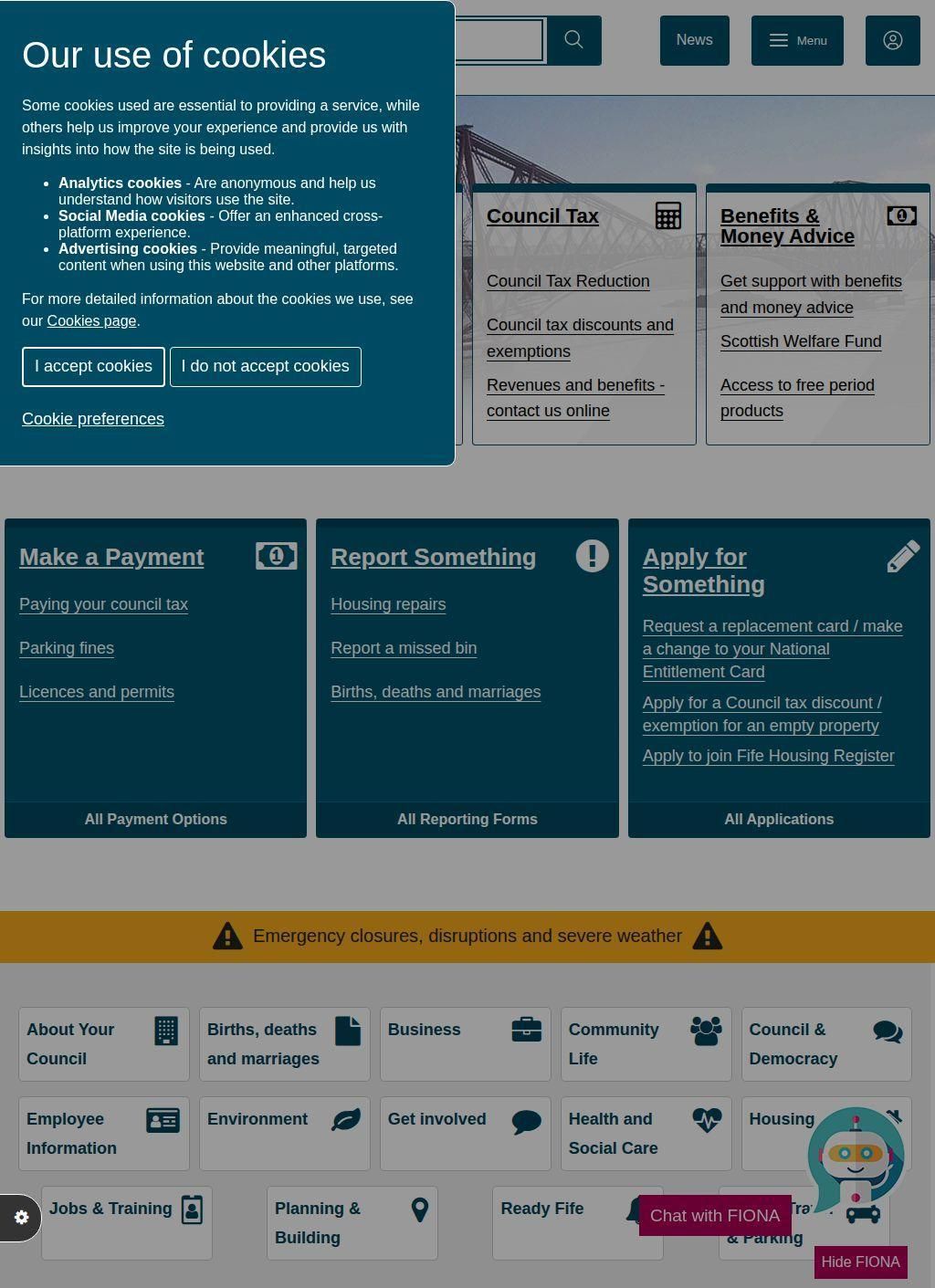
Fife Council runs the everyday public services for the Kingdom of Fife, the slab of eastern Scotland that sits between the Firth of Forth and the Firth of Tay. It is the local authority for around 370,000 people, which puts Fife among the larger council areas in the country. If you live, work or run a shop anywhere from Kirkcaldy and Dunfermline to Glenrothes, St Andrews or Cupar, this is the body behind your bin collection, your child's school place and the state of the road you drive to work on.
Education, care and housing remit
The remit is wide. Education takes up a big part of it: the council looks after primary and secondary schools across the region, plus early years places and additional support for learning. Social work and social care account for another large slice, from child protection through to support for older residents and adults with disabilities. Housing sits alongside that, with the council managing a sizeable stock of homes and dealing with applications, repairs and homelessness.
Managing council business online
Most people meet the council online these days. The website lets you pay council tax, report a missed bin or a pothole, apply for a parking permit, check school term dates, and look up planning applications near your postcode. You know what usually frustrates people about a council? Not the service itself, but hunting for the right form. Fife has put real work into pulling those tasks onto one site so you're not ringing round three departments to sort one thing.
Support for local businesses
For businesses, the council does more than send out a rates bill. It runs economic development and employability schemes, backs town centre regeneration, and points new or growing firms towards premises, grants and advice. Someone researching the area through a business directory will often hit the council page first, because that's where the practical detail lives: licensing, trade waste, food hygiene registration, pavement permits. A tidy entry in a curated business directory such as Jasmine Directory shortens that first step for a person who only knows they need "the council" and not which of its hundred-odd pages to open.
On the schools front specifically, the pages carry the things parents actually search for. Placing requests, holiday dates, free school meal eligibility, catchment addresses. There's adult learning and employability support too, linking school leavers and career changers to college courses and training. Fife College is a separate institution, but the council's job of nudging young people into work or further study runs quietly underneath all of it.
Waste collection and road maintenance
Then there's the unglamorous core that people judge any council on: bins, roads and street cleaning. Fife runs kerbside recycling with separate collections, operates recycling centres around the region, and publishes collection calendars by postcode. Road repairs, winter gritting routes and broken street lights sit in the same corner of the site. None of it makes for thrilling reading. It is, though, exactly what a resident wants to find inside a minute, and it's where the council's online setup earns its keep.
Planning is another heavily used section. Whether someone is putting a rear extension on a house in Inverkeithing or objecting to a development near a conservation area in Falkland, the planning portal lets you search applications, read the documents and comment while the consultation is open. Housing services cover council tenancies, repairs, rent and the housing register, with separate guidance for private tenants and landlords on registration and rights.
Fife Council is run by elected councillors who set the budget and the policy, with permanent staff doing the work. Decisions go through committees and local area arrangements, so a planning matter in the East Neuk gets some local input rather than being settled purely from headquarters. Papers and decisions are published, which helps if you want to follow a development or a budget line that affects your street.
Some services barely register until you need them. The registrars handle births, deaths, marriages and civil partnerships, and they run the ceremonies families remember for years. Parks, cemeteries and grounds maintenance fall here, as do trading standards and environmental health. Libraries, archives and museums are delivered through a separate cultural charity, OnFife, though the council stays closely tied to that work and funds much of it.
Handling council tax payments
Money matters get their own busy corner of the site. Council tax bands, payment plans, single person discounts and the various benefits and reductions are all handled here, and many residents set up a single online account to manage them without phoning in. That shift has turned the website into the front door for most contact, so the accuracy of the web address counts for more than it used to. A homepage link that's current and correct in a business directory, rather than an old or mistyped one, is a small thing that quietly saves residents and local firms a wasted click.
The business side deserves a closer look, because a lot of Fife's economy runs through the council in one way or another. It sets and collects non-domestic rates, issues the licences a trader needs (everything from a street cafe to a taxi plate or a late-opening pub), and runs the registration schemes for landlords and short-term lets that have tightened up across Scotland in recent years. For someone starting a small business in Kirkcaldy or Dunfermline, the council is often the first and most confusing stop, which is exactly the kind of thing a clear directory entry helps untangle.
Joint health care services
Health and social care is worth singling out, because it no longer sits neatly inside the council alone. Fife runs an integrated Health and Social Care Partnership with NHS Fife, which pools budgets and teams to handle care at home, hospital discharge, mental health support and services for older people. It's a model the whole of Scotland has moved to, and it means a carer or a family looking for help may be dealing with a joint service rather than a single department. The council's pages explain who does what, which saves a lot of phoning around at a stressful time.
It's easy to forget the sheer scale of the organisation. The council is one of the largest employers in Fife, with thousands of staff spread across schools, care, refuse, roads and offices, and it spends a budget running to well over a billion pounds a year. Decisions about that money are made in public, and there are community councils dotted across the region that feed local views into the process. For residents who want a say, or businesses tracking a contract or a consultation, knowing where to look is half the battle, and a clear directory entry is one quiet way to shorten that search.
The headquarters is Fife House on North Street in Glenrothes, KY7 5LT, and the contact centre number is 03451 55 00 00. Opening hours vary by service, and a good chunk of enquiries can be started online at any hour. There's also the accountability machinery you hope never to use: a complaints process, freedom of information requests, and accessibility support including translation and BSL. People rarely go looking for that until something has gone wrong, which is one more reason a clear, correctly linked listing matters. Get someone to the right Fife Council page on the first try and you've done most of the job.
Business address
Fife Council
Fife House, North Street,
Glenrothes,
Fife
KY7 5LT
United Kingdom
Contact details
Phone: 03451 55 00 00