Robots built for places people cannot reach
Every spacecraft that leaves Pasadena is built to go somewhere no person can follow and, in most cases, never to come back. That single constraint explains a lot about how the Jet Propulsion Laboratory works. When a robot is 140 million miles away, you cannot send a technician out to reset it. You have to get the hardware right before launch, then run it from a control room using radio signals that take minutes or hours to arrive. JPL is the NASA center that specializes in exactly this problem: robotic exploration of the solar system and the study of Earth from orbit.
The lab is a federally funded research and development center. NASA owns it and pays for it, but it is operated under contract by the California Institute of Technology, which sits a few miles south in Pasadena. That arrangement is unusual among NASA field centers, and it means JPL staff are Caltech employees rather than federal civil servants. Roughly 5,500 people work on the site, a mix of engineers, scientists, technicians, and the people who keep a small campus running. The annual budget runs in the region of 2.4 billion dollars, most of it tied to planetary science missions.
How the work is organized
A mission at JPL usually starts years, sometimes a full decade, before launch. Scientists propose an investigation, engineers work out whether the instruments can be built and flown within strict budget and mass limits, and if NASA selects the concept the lab assembles a project team to carry it from design through operations. The same organization that draws the spacecraft on paper is often still running it when it reaches its target, which keeps hard-won knowledge in one place instead of handing it off.
Building and testing spacecraft
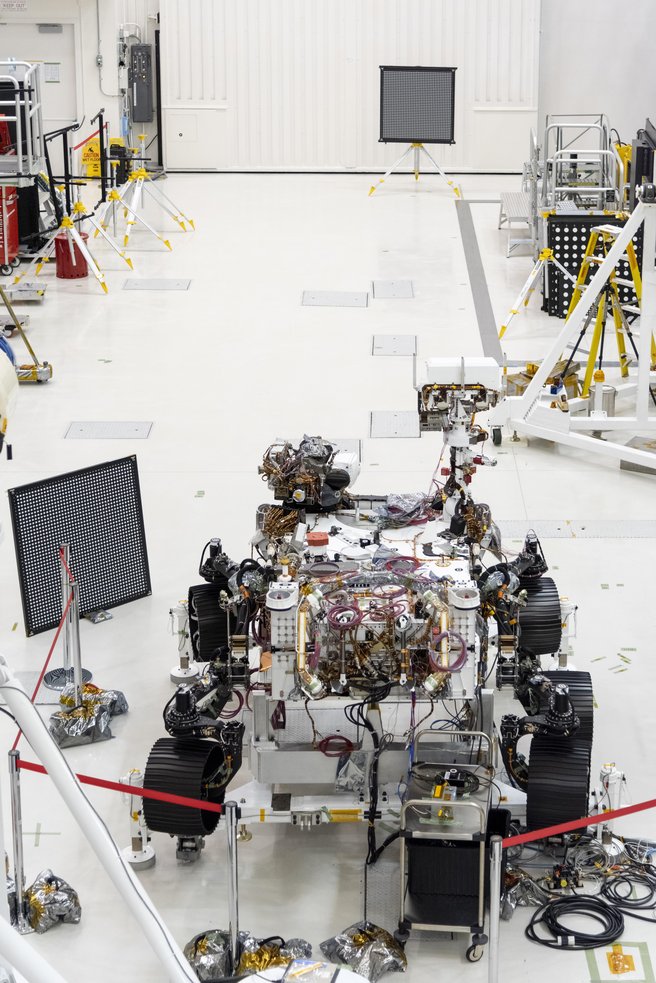
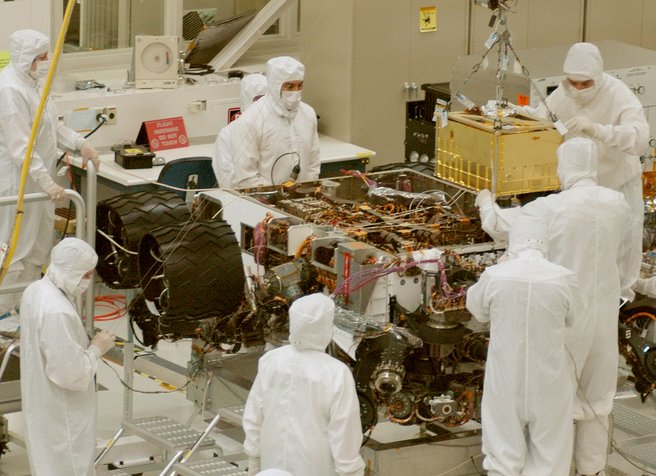
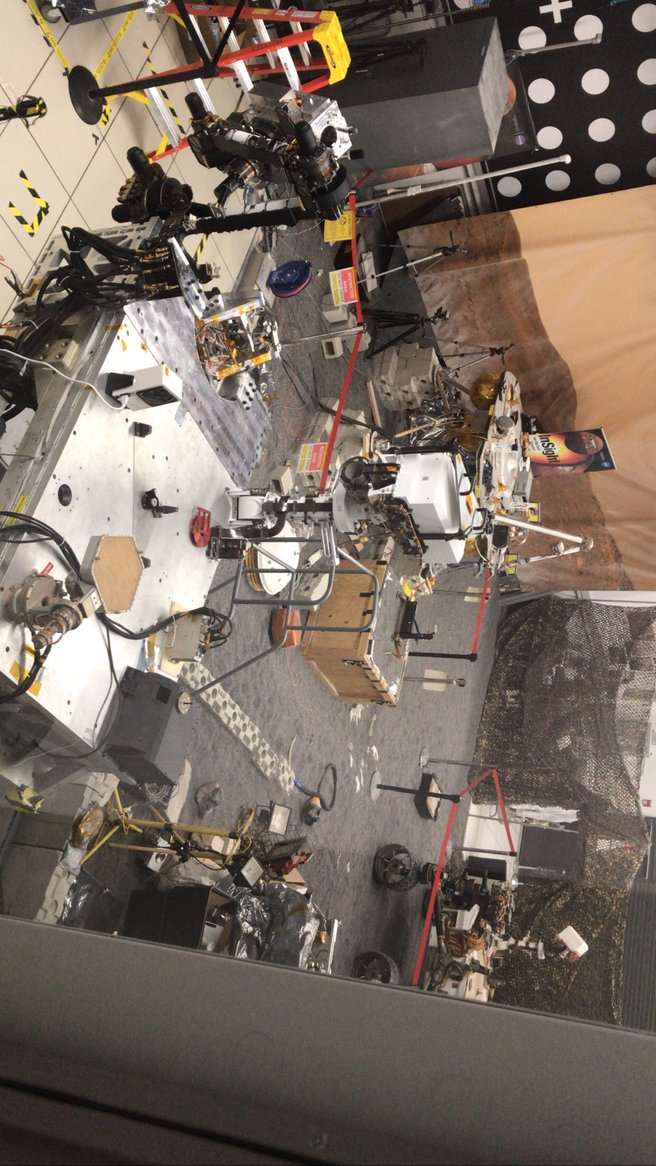
Hardware is assembled in clean rooms, where filtered air and gowned technicians keep dust and microbes off the flight parts. The largest of these, the Spacecraft Assembly Facility, is where the Mars rovers took shape. Before anything flies it is shaken on vibration tables to imitate launch, baked and frozen in thermal vacuum chambers to imitate space, and driven or deployed over and over so that failures happen on the ground rather than in flight. The 25-foot space simulator and the Space Flight Operations Facility are both National Historic Landmarks, a nod to how much early deep-space work happened inside them.
Talking to spacecraft: the Deep Space Network
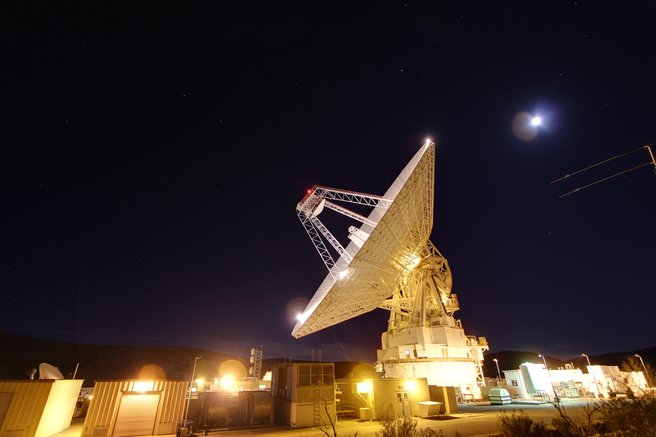
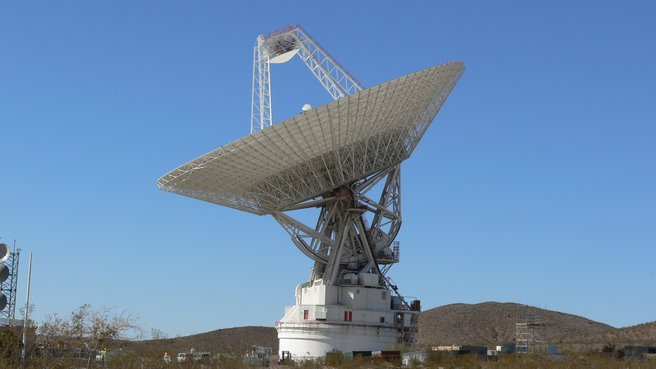
None of the exploration would matter if you could not hear the results, so JPL manages the Deep Space Network for NASA. This is a set of very large dish antennas at three sites spaced roughly evenly around the planet: Goldstone in the California desert, a station near Madrid, and another near Canberra. Because the sites are about 120 degrees of longitude apart, at least one of them can always point at a given spacecraft as the Earth turns. The 70-meter dishes are sensitive enough to pull in signals measured in billionths of a watt from the edge of the solar system.
Missions that defined the place
JPL built Explorer 1, the first American satellite, which reached orbit in early 1958 and detected the radiation belts around Earth. The center went on to run the Voyager program, whose two probes launched in 1977, toured the outer planets, and are now the most distant working machines people have ever made. Along the way the lab has been responsible for Galileo at Jupiter, the Cassini orbiter at Saturn (a joint effort with European partners), and Juno, which is still circling Jupiter.
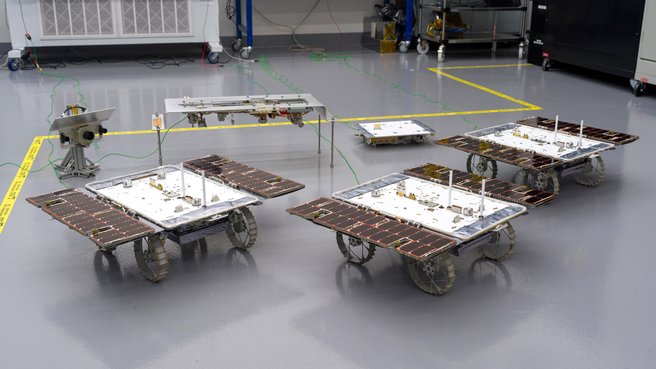
Mars is the thread that runs through much of the lab's recent history. Every successful NASA rover on the surface was built and is operated here: Sojourner in 1997, the twin rovers Spirit and Opportunity, the car-sized Curiosity, and Perseverance, which carried the small Ingenuity helicopter. Ingenuity flew dozens of times in the thin Martian air, the first powered, controlled flight on another world. The landing sequences, including the sky crane that lowers a rover on cables from a rocket-powered stage, are designed and rehearsed at JPL long before the real descent, which the team can only watch play out on a delay of many minutes.
The work is not limited to other planets. A large share of the lab's portfolio watches Earth: instruments that track sea level, soil moisture, atmospheric carbon dioxide, and the motion of ice sheets, flown on satellites that feed climate and weather research. The same skills that put a camera on Mars turn out to be useful for measuring the planet everyone actually lives on.
Where it fits, and how to reach it
For a directory of resources about the universe and space, JPL is close to a primary source. Its website publishes mission status, raw and processed images, and explainers written for the public, and much of that imagery is in the public domain because it was made with federal funding. Anyone teaching a class, filing a story, or simply following a Mars landing tends to end up on jpl.nasa.gov sooner or later.
The laboratory occupies a campus in the foothills of the San Gabriel Mountains. Its mailing address is 4800 Oak Grove Drive, Pasadena, California 91109, although the grounds themselves straddle the edge of La Canada Flintridge. The main telephone line is +1 818-354-4321. Public tours and the annual open house are arranged through the lab's visitor and community office, and press questions go through its news office, but the Oak Grove address and that main number are the front door to the institution as a whole.
Business address
Jet Propulsion Laboratory, California Institute of Technology
4800 Oak Grove Drive,
Pasadena,
California
91109
United States
Contact details
Phone: +1 818-354-4321