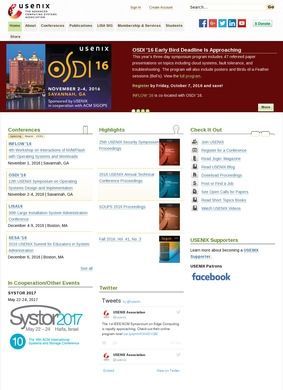
Where does the systems research that shapes how the internet actually runs get argued out, published, and archived for anyone to read? A good chunk of it passes through Usenix: The Advanced Computing Systems Association, the nonprofit behind conferences like OSDI, NSDI, FAST, and the annual Usenix Security Symposium. The site is the front door to decades of that work, and it is refreshingly plain about what it holds. You come for a paper, a talk, or a conference schedule, and the path there is short.
Open-access proceedings archive
The heart of it is the proceedings archive. Usenix: The Advanced Computing Systems Association runs its conferences on an open-access model, so the papers presented at Security, OSDI, NSDI, ATC, and the rest sit on the site as full PDFs, free to download, with no paywall standing between a reader and the research. For a field where a lot of important work still hides behind expensive publisher gates, that is not a small thing. A graduate student in a country without a big library budget gets the same access as someone at a well-funded lab. The archive goes back years, so it doubles as a record of how systems thinking has moved over time.
Conference venues for systems research
The conference program is broad and aimed at distinct crowds. Security and Enigma pull the researchers and practitioners working on attacks, defenses, privacy, and the human side of all three. OSDI and NSDI are the operating-systems and networked-systems venues that tend to set the agenda for what the rest of the field builds on. FAST covers storage. Then there is the operational wing: SREcon and LISA speak to site reliability engineers and system administrators, the people who keep services running at scale, which is a different audience from the academics and a smart one for the association to keep close.
Videos and recordings from sessions
What makes the conference pages more than a calendar is the media. Many sessions come with video and audio recordings, so a talk given to a few hundred people in a hotel ballroom reaches anyone who wants it afterward. Paired with the paper archive, that turns each event into something durable instead of a moment that evaporates once the room clears. Someone who missed a symposium can still watch the presentation and read the paper side by side.
Login magazine and practitioner writing
Alongside the events, ;login: is worth calling out. It is the technical publication of Usenix: The Advanced Computing Systems Association, and its back issues are part of the archive, giving the site a longer-form counterpart to the peer-reviewed papers. The writing there tends to be practitioner-facing, closer to how engineers actually talk about their work than a formal paper allows.
Membership and community support
Membership is the other pillar. Usenix: The Advanced Computing Systems Association offers individual and student memberships, and it channels money back into the community through student grants, programs that bring newcomers to conferences, and diversity and good-works efforts. There is also a job board and career material, which fits an organization whose audience spans academia and industry hiring. None of this is padded out with marketing; the pages read like an association telling members what exists and how to use it.
The open-access commitment deserves a second mention because it shapes the whole character of the site. Plenty of professional bodies treat their archives as revenue and lock them tight. Usenix: The Advanced Computing Systems Association went the other direction, and the result is a resource that researchers cite and link to constantly, precisely because the link will resolve to a readable paper instead of a purchase prompt. That decision is the single strongest reason to bookmark the place.
Finding your way through the site
If there is a knock, it is that the breadth can overwhelm a first-time visitor. The sheer volume of conferences, acronyms, and years of proceedings means someone arriving without a specific target may wander before landing on what they need. The organization is functional and the search works, but this is a site built for people who already know roughly what they are hunting for. A newcomer to systems research might want a pointer or two before diving in, and the site does little hand-holding for that person.
Who should use this resource
For its intended audience, though, the value is hard to argue with. A systems researcher, a security engineer, an SRE, or a student trying to get grounded in the literature will find that Usenix: The Advanced Computing Systems Association gives them primary sources, recorded talks, and a community all in one spot, without asking for a credit card to read the science. The paper archive alone would justify the visit; the recordings and ;login: back issues are a bonus on top.
The verdict lands firmly positive, with one honest qualifier. Usenix: The Advanced Computing Systems Association is one of the more genuinely useful resources in computing systems research, and its open-access stance sets a standard other bodies would do well to match. It is not a place you skim casually, and the depth demands that you come with a purpose. Bring a specific question, or a paper title, or a conference name, and Usenix: The Advanced Computing Systems Association will reward you fast. Show up with only vague curiosity and you may need patience to find your footing. Students, working engineers, and researchers alike will want it bookmarked, and the fact that Usenix: The Advanced Computing Systems Association keeps all of it open makes that an easy call.