What the Peace Corps actually does
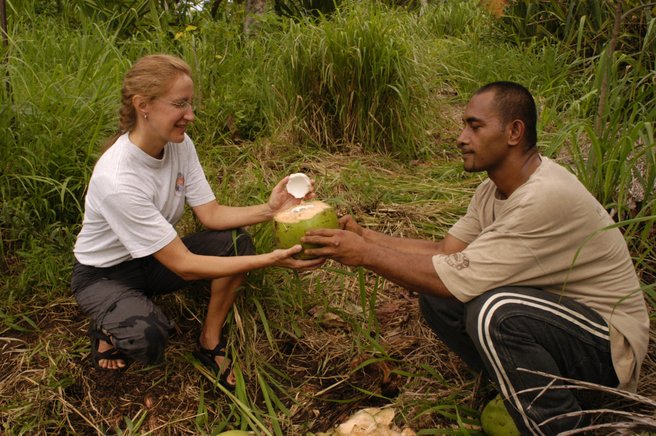
The work is slower than most people expect. A volunteer arrives in a country, spends roughly three months in training on the language and the local way of doing things, and then moves to a town or village to stay for two years. The assignment might be teaching English, helping a health clinic run vaccination days, working with farmers on soil and water, or keeping the books for a small cooperative. The full commitment runs about twenty-seven months. Nobody gets rich, and nobody is meant to. Volunteers live at roughly the standard of the community they join, on a modest local allowance rather than a salary.
The Peace Corps is an independent agency of the U.S. federal government. It is separate from the State Department, and it does not operate as an aid contractor. Its people are the volunteers themselves, plus a smaller staff of country directors, trainers, and medical officers who keep the operation running and safe. Because the whole model rests on living inside a community and learning how it works, the agency fits a social sciences reference as well as any development textbook does.
How it started and how big it got
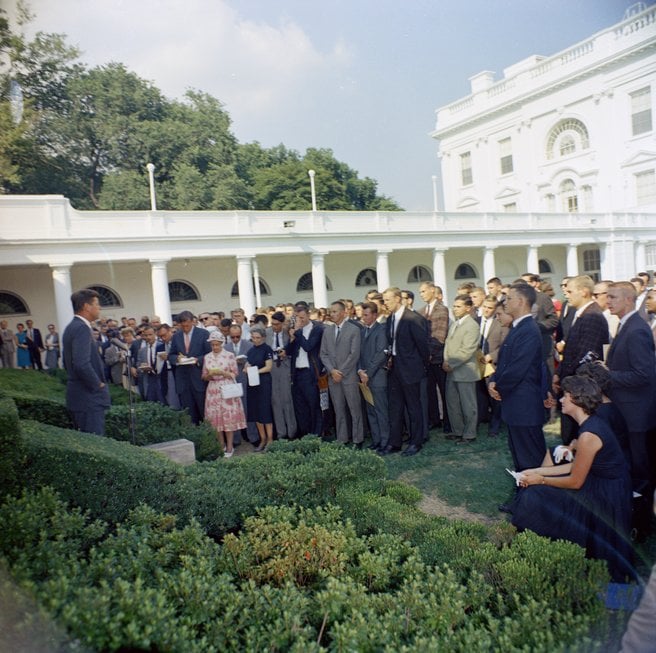
President John F. Kennedy created the Peace Corps by executive order on March 1, 1961, and Congress made it permanent with the Peace Corps Act that September. Kennedy named his brother-in-law, Sargent Shriver, as the first director, and Shriver set the pace by sending the first groups abroad within months. The idea drew on a challenge Kennedy had put to students at the University of Michigan the year before, when he asked how many of them would give years of their lives to work in the developing world.
The numbers grew fast and then settled. Enrollment peaked in 1966 at more than 15,000 volunteers in the field at once, then fell and levelled off over the following decades. More than 240,000 Americans have served since 1961, in more than 140 countries. The agency suspended operations worldwide in March 2020 during the pandemic, brought every volunteer home, and began sending people out again in 2022. It now runs posts in dozens of countries across Africa, Asia, Latin America, the Caribbean, Eastern Europe, and the Pacific.
The three goals
Every part of the agency traces back to three goals written into the Peace Corps Act. They are worth reading in the original, because they explain why the two years abroad matter as much as the project itself.
- To help interested countries meet their need for trained men and women.
- To help promote a better understanding of Americans on the part of the peoples served.
- To help promote a better understanding of other peoples on the part of Americans.
The second and third goals are the reason returned volunteers keep talking about their service years later. The teaching or the well or the clinic is the first goal. The other two are about what the volunteer and the host community learn about each other, and that does not end when the plane lands back home.
Sectors, response, and what volunteers get
Regular two-year assignments fall into a handful of sectors: education, health, environment, agriculture, community economic development, and youth development. Education is the largest, and much of it is teaching English or training local teachers. Placements are matched to a volunteer's background and to what a host country has asked for, so an agronomist and a nurse and a recent graduate can end up in the same program country doing very different jobs.
Peace Corps Response
Alongside the standard program, Peace Corps Response places experienced professionals in shorter assignments, usually three months to a year. These roles are aimed at people who already have a career behind them, including many returned volunteers who want to serve again without another two-year commitment.
What volunteers get
Service is not paid work, but it is not left unsupported either. Volunteers receive housing, a living allowance set to the local cost of living, full medical care, and transportation to and from the post. At the end of service the agency pays a readjustment allowance, a lump sum meant to help with the move back to American life. Other practical benefits follow service: deferment on federal student loans, noncompetitive eligibility for many federal jobs for a period afterward, and the Coverdell Fellows program, which offers graduate school funding to returned volunteers.
Where it is based and how to reach it
The Peace Corps runs from its headquarters at 1275 First Street NE, Washington, District of Columbia 20526, the agency holding its own dedicated ZIP code. The main line is +1 202-692-2000, and recruitment questions go to a toll-free number, 1-855-855-1961. For anyone researching international development, cross-cultural exchange, or the practical side of grassroots work, the agency is a primary source in the social sciences, and its Washington headquarters is the place to start.
Business address
United States Peace Corps
1275 First Street NE,
Washington,
District of Columbia
20526
United States
Contact details
Phone: +1 202-692-2000