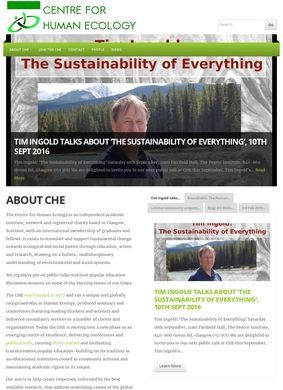
Say someone has spent years working in conservation, community organising, or local food, and keeps hitting the same wall: the training on offer is either narrowly technical or so abstract it never touches the ground they actually work on. That gap is roughly where the Centre for Human Ecology has set up shop. Running out of Glasgow as an independent academic institute, the Centre for Human Ecology treats environmental problems and social problems as two views of one thing and teaches them together rather than parcelling them into separate departments. A person arriving with that frustration will find a body that has been turning the same question over for a long time.
Teaching method and curriculum design
The phrase the institute uses for its own method is education for head, heart, and hand, which could slide into slogan territory but does seem to describe how the programmes are built. The teaching the Centre for Human Ecology runs is popular education in the older sense of that term: aimed at adults already doing the work, drawing on what they bring, treating the classroom as a place to make sense of practice. Ecology sits next to economics, politics, ethics, and community development, and that spread is the point rather than a marketing flourish layered over a narrower core. The holistic framing the Centre for Human Ecology uses is easy to claim and harder to deliver, but the way the strands are stitched together here is more deliberate than the usual broad-church institute manages.
Courses, workshops, webinars
What the Centre for Human Ecology offers breaks into a few clear strands. There are courses, some currently running and some kept in an archive you can still browse, which tells you the catalogue has turned over for years. Alongside longer courses sit shorter workshops, webinars, and a steady run of research and consultancy projects where much of the applied work happens. The site does not pretend everything is live at once. Keeping older courses visible is a small honesty, because it lets a prospective student see the real track record of the Centre for Human Ecology instead of a polished snapshot.
Consultancy projects
The consultancy thread is worth noting separately: it means the Centre for Human Ecology puts its thinking to work on outside projects, a useful sign that the ideas survive contact with real clients and real briefs instead of living entirely inside the seminar room.
Events and public engagement
Events make up the other large part of the work, and this is where the character of the place comes through. The calendar has carried conferences, symposiums, public talks, teach-ins, and exhibitions, plus a recurring strand called Wee Talks, run as Creative Commons community discussions so the material can travel beyond the room it was recorded in. Named events such as Clyde Commons, Flourish, and Dear Green Commons point at a consistent preoccupation: the commons, shared resources, and what a greener Scotland might look like in practice. These are not generic eco-awareness sessions with interchangeable titles.
Recurring formats on commons themes
They are tied to specific places and specific arguments, and that specificity does more work than a long list of vague themes. A single splashy conference proves little, but a format the Centre for Human Ecology has kept running over time, in a shareable Creative Commons form, shows a habit of public engagement, not an occasional gesture toward it.
Membership structure and accountability
The membership structure is one of the more distinctive things on the site. The Centre for Human Ecology runs as a co-operative, registered as such alongside its charity and company registrations, and membership is open to individuals anywhere in the world. That makes it an international network as much as a teaching body. There is a graduates and fellows community documented on the site, so the relationship is meant to outlast a single course. Someone who does not want to enrol formally can still subscribe to the newsletter or make a charitable donation, which keeps the door open at a lower level of commitment.
Co-operative registration and legal status
The legal scaffolding is laid out plainly: a Scottish charity number, a company number, and a co-operative registration, all on the page. For an outfit working at the meeting point of activism and education, that formal accountability matters because it means there are filings and obligations standing behind the mission statements. It also points to an organisation that has been around long enough to accumulate that paperwork. The Centre for Human Ecology wears its constitution openly, and the three registrations together show the structure has been thought about carefully, which fits the co-operative ethos the Centre for Human Ecology describes elsewhere on the site.
Who the programmes serve
The Centre for Human Ecology is plainly aimed at adults who are already practitioners of one kind or another: people in environmental work, in community development, in education, in the slow business of changing how a place feeds and governs itself. The programmes assume you bring experience to the table and want a setting in which to interrogate it. That is a real strength for the right person and a poor fit for someone looking for a hand-held entry into the subject. The Centre for Human Ecology does not seem interested in pretending to be both, and there is something to respect in an organisation that knows its audience well enough to write for it directly.
Academic claims versus stated credentials
Now for the part that a careful reader should sit with. The Centre for Human Ecology calls itself an academic institute and operates on a .ac.uk domain, both of which carry a strong implication of higher or continuing education. Yet the homepage lists no degree-awarding status and no accreditation details at all.
That is not the same as saying there is none, and a great deal of valuable adult education happens outside formal qualification frameworks, which may well be the deliberate stance here. Plenty of what the Centre for Human Ecology does is clearly meant to change how people think and act, not to hand them a certificate. Even so, the question hangs unanswered on the page itself. The .ac.uk domain raises an expectation the homepage does not then meet, and that mismatch is the sort of thing a prospective student notices once and cannot quite un-notice.
For an experienced practitioner who wants to think harder about systems, meet others doing similar work across the country, and engage with a body that has held a consistent line on ecology and the commons for years, the Centre for Human Ecology reads as a serious and genuinely unusual place. The popular-education approach is real, the events have substance, and the co-operative model backs up the talk about shared ownership with an actual legal structure instead of a paragraph of intent. Where this picture gets complicated is at that academic framing.
Someone weighing a longer course partly for the credential it might carry will not find that question answered, and the gap between the institute's scholarly self-description and the complete absence of any stated accreditation is the one thread left dangling across an otherwise coherent operation. The Centre for Human Ecology clearly does substantive work; what it has not done is give the page enough to settle that particular doubt.