Back in 1995, Golf Channel launched as a 24-hour cable and satellite feed given over entirely to one sport. That still strikes me as an odd and slightly heroic premise for a television business. Golf is slow. It is quiet. It does not lend itself to the highlight-reel adrenaline that fills most sports programming. And yet here is a full-time network, reaching somewhere around 70 million US households, built on tee times and putting tips. The flagship studio show, once called "Morning Drive," now runs as "Golf Today," which pretty well captures how Golf Channel operates: it rearranges the furniture but keeps the house standing.
Live tournament coverage and leaderboards
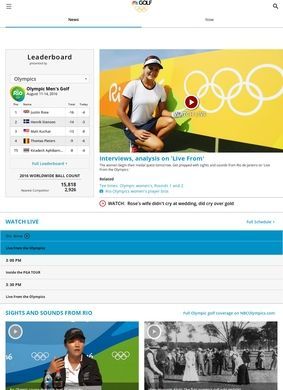
What the website does is act as the digital extension of that feed. Golfchannel.com pulls together live tournament leaderboards, schedules, news articles, and video clips, with live streaming available to viewers who can sign in through a participating TV provider. The coverage spine is professional tournament golf: PGA Tour events, the LPGA Tour, the Champions Tour for the senior players, and a rotation of international competitions. If a tournament is being played and Golf Channel has the rights, the site is where you track scores in something close to real time, or catch the broadcast when you are away from a television.
Instruction, equipment, travel content
Beyond the live results, the editorial side is broader than a casual visitor might expect. There are dedicated sections for instruction, which fits a sport where nearly everyone playing it is also quietly trying to fix their swing. Equipment reviews sit alongside that, covering the endless churn of new drivers, irons, and gadgets that manufacturers release every season. Travel content points readers toward courses and destinations, and a lifestyle strand rounds things out with the softer material that surrounds the game. It reads less like a pure scores-and-standings page and more like a magazine that happens to be wired to a live broadcast.
Golf Channel Academy lessons
That instruction angle extends off the screen entirely. Golf Channel runs the Golf Channel Academy, a nationwide network of teaching facilities staffed by certified instructors, which turns the brand from a thing you watch into a thing you can physically book a lesson with. It is an unusual move for a television network, and a smart one for golf specifically, because the sport's audience overlaps almost completely with its participants. The same person watching a pro grind out a Sunday round is probably the person who wants a lesson on Monday. The Academy closes that loop. There is also amateur-focused programming, including the Golf Channel Amateur Tour, plus Partners in Education content, both of which push Golf Channel toward the recreational player rather than keeping it locked on the professional game.
Distribution through NBC Sports platforms
Distribution is where the network shows its corporate muscle. Golf Channel belongs to NBC Sports Group, which sits inside Comcast and NBCUniversal, so the content does not live only on the linear TV feed. It flows through the NBC Sports app and the wider digital platform NBC operates, meaning a subscriber gets several doors into the same library. A standalone golf network would be a fragile thing; one folded into a media giant with national broadcast rights and an existing app ecosystem is far more durable, and it explains how a single-sport channel has lasted three decades.
Advertising and affiliate links
None of this is free of commerce, and the site does not pretend otherwise. Golfchannel.com carries advertising, runs sweepstakes, and threads affiliate commerce links through its equipment and apparel coverage. That is worth flagging plainly because it shapes how you should read the gear sections: when a review of clubs or shoes sits next to a link to buy them, the editorial and the sales pitch are not fully separate. It does not make the information worthless, but a reader looking for a genuinely neutral take on a new driver should keep one eye on the buy button. This is standard practice across modern sports media, so Golf Channel is not an outlier here, just transparent about a model the whole industry uses.
Audience metrics instead of reviews
Golf Channel does not accumulate the kind of consumer reviews you would find for a retailer or a local service. It is a broadcast network, and people do not leave star ratings on cable channels the way they do on products. A search turns up media and fan commentary rather than formal review platforms, which is normal for this category. The channel has been around long enough, and grown large enough, that its standing is measured in audience figures and broadcast deals, not aggregated review scores.
Behind the cable subscription wall
The value a visitor gets from golfchannel.com depends heavily on how they consume the sport. A fan who already pays for a TV package that includes Golf Channel gets the most: live streaming, the full schedule, leaderboards, and the broadcast all behind one provider login. A more casual reader without that subscription still gets news articles, clips, instruction pieces, and equipment and travel content for free, which is a respectable amount of material even without the live feed. The streaming gate is the main friction point. The live tournament coverage, which is the whole reason Golf Channel exists, sits behind a cable or satellite relationship, and cord-cutters will feel that wall quickly.
As a reference and viewing hub for an existing subscriber, Golf Channel online is comprehensive and well-supplied, with the rare bonus that its teaching arm reaches into the physical world through the Academy. The breadth of programming covers most of what a committed golf follower would want in one place. The reservation worth keeping is the same one that defines most of this kind of media: the model is built around a paid TV relationship, and the commercial layering on the gear pages asks for a degree of skepticism. If you watch golf seriously and already have the channel, the site is the natural companion to the broadcast. If you do not, you are looking at a partial experience, useful for news and clips but walled off from the coverage that justifies the network's existence.