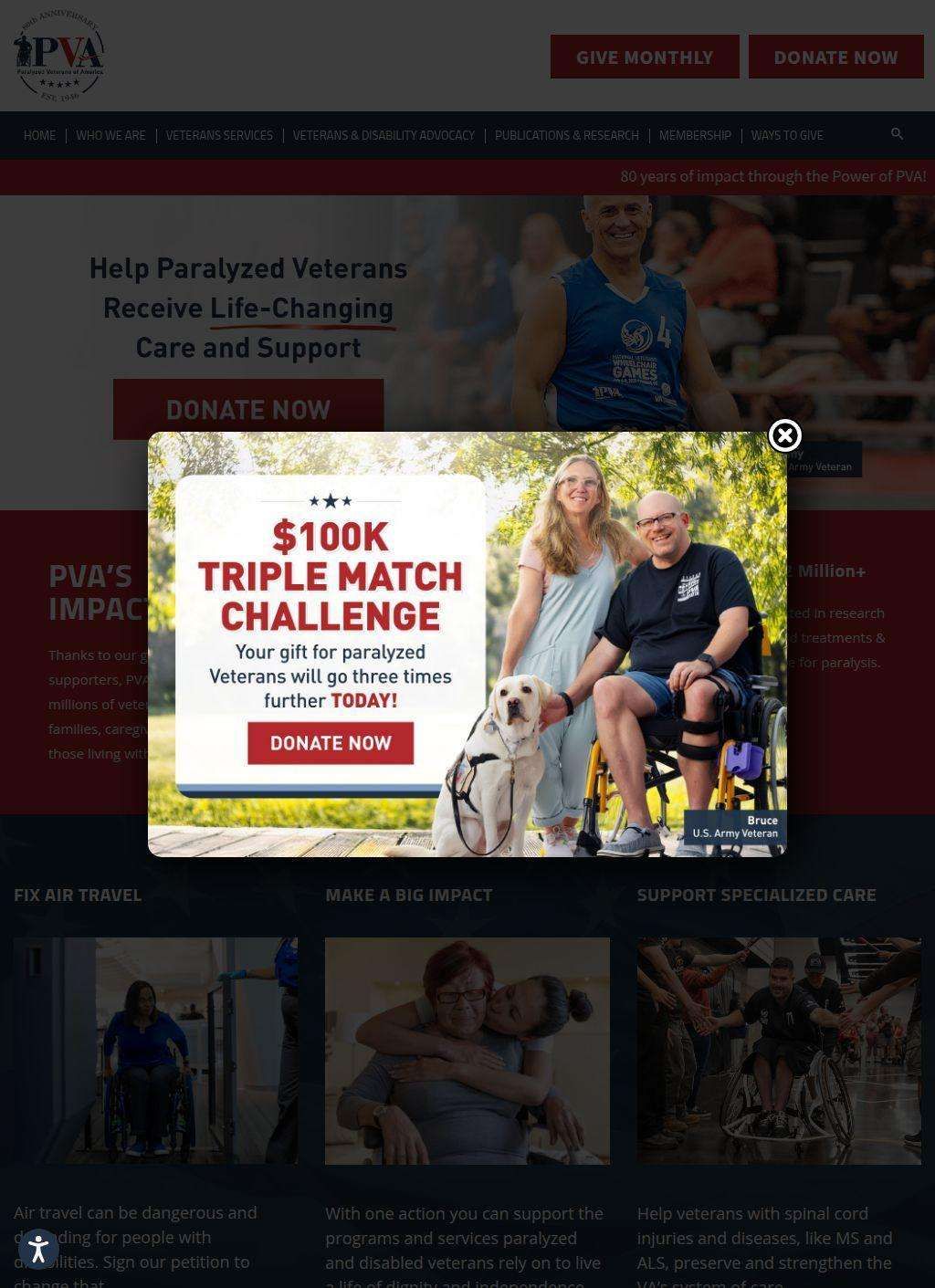
Veterans who come home with a spinal cord injury almost immediately run into the part nobody warns about: the paperwork. The VA claims process is dense, the appeals are slow, and the difference between a denied claim and an approved one often comes down to whether someone who understands the system is sitting on your side of the table. That is the gap Paralyzed Veterans of America was built to fill. Its National Service Officers handle benefits claims and appeals directly with the VA, and they do it at no cost to the member, which removes the one barrier that tends to stop people from getting help in the first place.
Free VA claims assistance and benefits helpline
The organization works specifically with veterans who have spinal cord injuries and diseases, and that scope is broader than the name might suggest. It includes conditions like multiple sclerosis and ALS, and it extends to families as well as the veteran. There is a Benefits Helpline staffed for exactly the kind of questions that come up at two in the afternoon when a form makes no sense and the deadline is close. The claims assistance is the spine of the whole operation at Paralyzed Veterans of America, and everything else branches off it.
Legislative advocacy through PVAction Force
What pulls Paralyzed Veterans of America out of the narrow category it is filed under here is how much of the work happens before a single claim is filed. Through PVAction Force, the group does legislative advocacy on disability rights, ADA enforcement, and the long-running fight over air travel accessibility, which is a real and specific problem for wheelchair users and one that gets surprisingly little national attention. This is the kind of work that changes the rules everyone operates under. A member benefits from the claims help; a much wider population benefits from the policy pressure, whether they ever join or not.
Programs beyond benefits claims
The list of programs is long. Beyond benefits advocacy, Paralyzed Veterans of America funds spinal cord injury and disease research at more than $1.2 million a year, runs a Career Program for members trying to get back into employment, and operates Sports and Recreation programming, which matters more than it might read on paper for people rebuilding a life around new physical limits. There is accessible home design consultation, Caregiver Support, a Women Veterans Empowerment effort, and a Scholarship Program. Membership comes with chapter locations spread across the country, so the national structure has local points of contact rather than living entirely in Washington.
Weighing the breadth of services
That range is genuinely impressive, and it is also where some caution is warranted. An organization doing claims advocacy, federal lobbying, research grants, employment counseling, adaptive sports, home modification advice, caregiver services, and scholarships is carrying a lot of mission at once. The congressional charter behind Paralyzed Veterans of America and its long institutional history point to an organization with the structure to hold all of it together, and the research figure is concrete enough to take seriously. Still, depth in one area and presence in eight are different things, and the site presents the full menu without making it obvious which programs are deep and which are lighter touchpoints. A veteran arriving with one urgent need has to figure out where the real muscle is.
Strength of the National Service Officer model
For the core function, the evidence leans positive. The National Service Officer model is the clearest example of what Paralyzed Veterans of America does well. These are trained representatives who carry claims through the VA system, and offering that service free is the entire value, not a marketing gesture. Veterans navigating appeals are often doing it while also managing rehabilitation, and handing that fight to someone who does it full time is the single most useful thing on offer here. The research investment reinforces the same impression: Paralyzed Veterans of America is willing to put real money behind the population it serves, going beyond advocacy alone. For a group its size, that combination of direct casework and funded science is a meaningful marker of seriousness.
Donation and giving options for donors
The fundraising side is built out the way you would expect from a long-established nonprofit. Paralyzed Veterans of America takes one-time donations, monthly giving, vehicle donations, and real estate donations, which signals an operation comfortable with larger and more complicated gifts, not a bare donate button. That sophistication cuts both ways. It tells a prospective donor that Paralyzed Veterans of America can handle a serious contribution responsibly, and it also reflects an institution that has been doing this long enough to build a real development apparatus. The breadth of giving options is, in its own quiet way, a credibility signal, and it points to an organization that expects to be around for the long haul, not chasing a single campaign.
Distinguishing service work from legal representation
One thing worth flagging plainly: this is a veterans service organization, not a private law firm, despite where the listing sits. That distinction matters for anyone arriving expecting litigation or personal injury representation. What Paralyzed Veterans of America provides is benefits advocacy inside the VA system and policy work outside it, which is closer to specialized administrative representation than to courtroom work. For most veterans dealing with the VA, the help Paralyzed Veterans of America gives is exactly the right tool. For someone looking for a traditional attorney to sue over an injury, it is a different service entirely, and the category label could set a misleading expectation.
The accessibility advocacy deserves a second mention because it is where Paralyzed Veterans of America does work that almost nobody else does at scale. Air travel for wheelchair users is a genuinely broken experience, with damaged equipment and undignified boarding processes that have persisted for years. An organization with a congressional charter pushing on the FAA and the airlines can move things an individual complaint never will. The ADA enforcement work sits in the same lane. These are not feel-good line items; they are the reason the group can claim to change conditions rather than only respond to them.
Who should pay attention to Paralyzed Veterans of America comes down to fit. A veteran with a spinal cord injury or a qualifying disease, or a family member helping one, will find the most directly useful thing first: free, expert help with VA benefits. People interested in disability policy will find an organization actually moving legislation. Donors will find a long-running nonprofit with a wide set of giving options and a measurable research commitment. The Career Program, scholarships, and sports offerings round out a support system that tries to address a life beyond the immediate claim.
Where I land is mostly favorable with one honest reservation left open. The claims advocacy and the policy work are the organization's specific and demonstrable strength, and Paralyzed Veterans of America has the charter and the longevity to back them. The unresolved question is the one the wide program list raises and does not quite answer: when an organization promises this much across this many fronts, how evenly is the quality distributed, and which of these programs would a member actually find capable of holding up if they leaned on it hard? The site makes the case for the whole; it does not make the case for each part, and that is the doubt a prospective member or donor has to settle on their own before deciding how far to trust the breadth.
Business address
Paralyzed Veterans of America
1875 Eye Street NW, Suite 1100,
Washington,
DC
20006
United States
Contact details
Phone: 1-800-424-8200