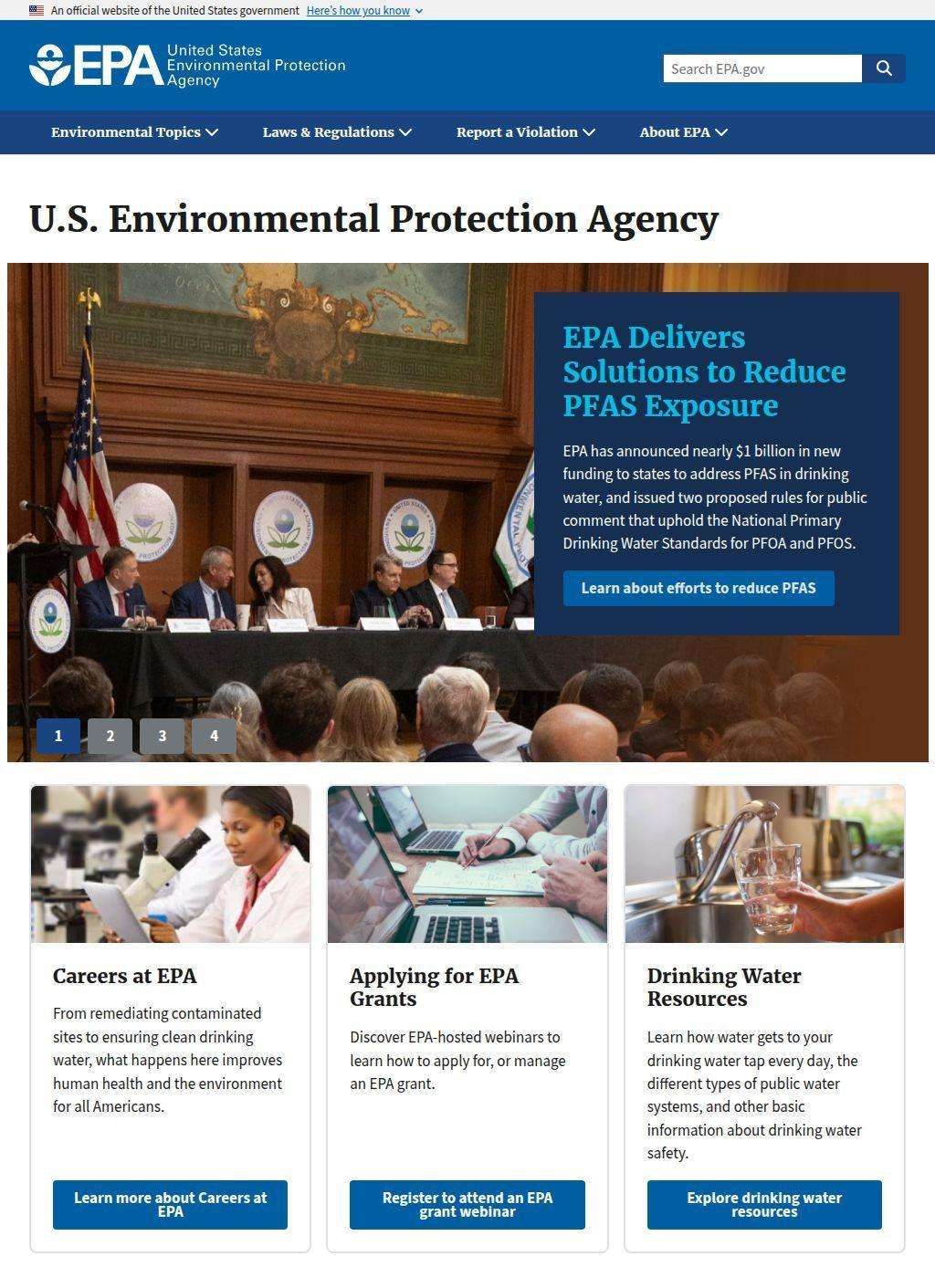
Someone discovers a strange chemical smell near a creek behind their property, or a small manufacturer suddenly needs to know whether the solvent it has used for years falls under a federal rule. These are the moments that send people to epa.gov, and the site of the United States Environmental Protection Agency (EPA) is built to answer exactly that range of questions, from a worried homeowner to a compliance officer reading the fine print of a permit. The United States Environmental Protection Agency (EPA) has been the federal anchor for environmental protection since 1970, and the website reflects that mandate without making you dig too hard for the practical parts.
Range of topics and statutes covered
The breadth is the first thing that registers. Air quality, water safety, chemicals and toxics, land and waste handling, and climate each get their own substantial section, and these are far from shallow topic pages. Behind them sit the actual statutes the United States Environmental Protection Agency (EPA) administers: the Clean Air Act, the Clean Water Act, the Resource Conservation and Recovery Act, and CERCLA, the law most people know by its nickname, Superfund. A reader who lands here trying to understand why a nearby site is being cleaned up can move from the plain-language explanation to the regulatory machinery underneath it, which is a rarer thing than it sounds. Most reference material picks one altitude and stays there. The EPA site lets you change altitude.
Compliance guidance organized by industry sector
For businesses, the regulatory guidance is organized by industry sector, which is a sensible choice. Agriculture, manufacturing, transportation, and energy each have compliance assistance written for their realities, so a farm operator and a transportation fleet manager are not forced through the same generic checklist. Compliance and enforcement information sits alongside this, including the channels for reporting an environmental violation. I found the sector-first organization genuinely useful, because it mirrors how a regulated company thinks about its obligations, by what it does for a living, not by statute number.
Tools for looking up specific data
Several of the features go past publishing and into doing. The Safe Drinking Water search lets a member of the public look up the state of their own water system, which turns an abstract worry into a concrete answer. The guidance on reducing exposure to PFAS, the per- and polyfluoroalkyl substances that have dominated recent water-quality headlines, is written for people who need to act on it, with concrete steps and fewer caveats than you might expect from a federal agency. The Toxics Release Inventory (TRI) puts facility-level emissions and waste data into public hands, and that dataset has fed countless journalists, researchers, and neighborhood groups over the years.
Programs for grants careers and emergencies
Other practical functions round it out. There is a route for filing a Freedom of Information Act request, registration for webinars, United States Environmental Protection Agency (EPA) career listings, and grant and funding opportunities aimed at nonprofits and government organizations. Specialized programs each get proper coverage: Superfund for contaminated-site cleanup, pesticide registration, stormwater management, and the broader chemicals work tied to toxic substances regulation. Emergency response resources are present too, the kind of material most needed in a crisis.
Published research risk assessments and data
The scientific layer deserves its own mention. The United States Environmental Protection Agency (EPA) publishes research, risk assessments, and environmental data that are open to the public, to academics, and to the industries being regulated. This is the part of the site that quietly does the heavy lifting, because regulation without published evidence behind it tends to crumble under challenge. Having the risk assessments and the underlying data sitting in the open, rather than locked behind a request process, gives the whole operation a transparency that strengthens everything else on the domain.
Weighing scale against ease of use
It is worth being honest about the scale and the friction that comes with it. A site this large, covering this many statutes and programs, can be a maze. Someone arriving with a narrow, specific question may pass through several layers of overview before reaching the document they need, and the language in the deeper regulatory pages assumes a reader who already speaks the dialect of federal environmental law. The United States Environmental Protection Agency (EPA) does offer the site in multiple languages, which widens the door, but the sheer surface area means that finding the right page is sometimes the real task. This is the trade-off of comprehensiveness, and the United States Environmental Protection Agency (EPA) has come down firmly on the comprehensive side.
A resource for environmental injury questions
The category this listing sits under, environmental injury matters, is an interesting lens to view it through. The United States Environmental Protection Agency (EPA) is not a law firm and offers no legal representation, so anyone arriving with that expectation will be in the wrong place. What the site does provide is the factual and regulatory groundwork that such a question rests on: which contaminant is regulated and at what threshold, which facility reported what release, whether a site is on the Superfund list, and what the federal standard for drinking water or air says. For understanding the substance behind an environmental concern, this is closer to a primary source than almost anything else available, and that is precisely its value to a reader whose interest is the harm rather than the litigation.
Why professionals keep coming back
For the working professional, the appeal is plainer still. An environmental consultant, an in-house compliance lead, or a researcher will return to epa.gov repeatedly because the authoritative version of a regulation, a dataset, or a risk figure lives here. The United States Environmental Protection Agency (EPA) is the body that writes and enforces these rules, so its own portal is the definitive reference, with no intermediary to second-guess. That is a meaningful distinction when a single threshold value can change how a permit is written or how a cleanup is scoped.
Where does the United States Environmental Protection Agency (EPA) land as a destination worth bookmarking? For anyone with a genuine stake in air, water, chemical, or waste issues, it is close to essential, and the practical tools like the drinking-water lookup and the TRI data lift it above being a mere document archive. The reservation is about navigation, not substance: this is a deep, dense resource that rewards patience and a reasonably specific question, and it can overwhelm a casual visitor who wanted a quick answer. The United States Environmental Protection Agency (EPA) holds the most complete and authoritative material on its subject that you will find anywhere, and the depth that makes it occasionally hard to navigate is the same depth that makes it irreplaceable.
Business address
U.S. Environmental Protection Agency
1200 Pennsylvania Avenue NW,
Washington,
DC
20460
United States
Contact details
Phone: 202-564-4700