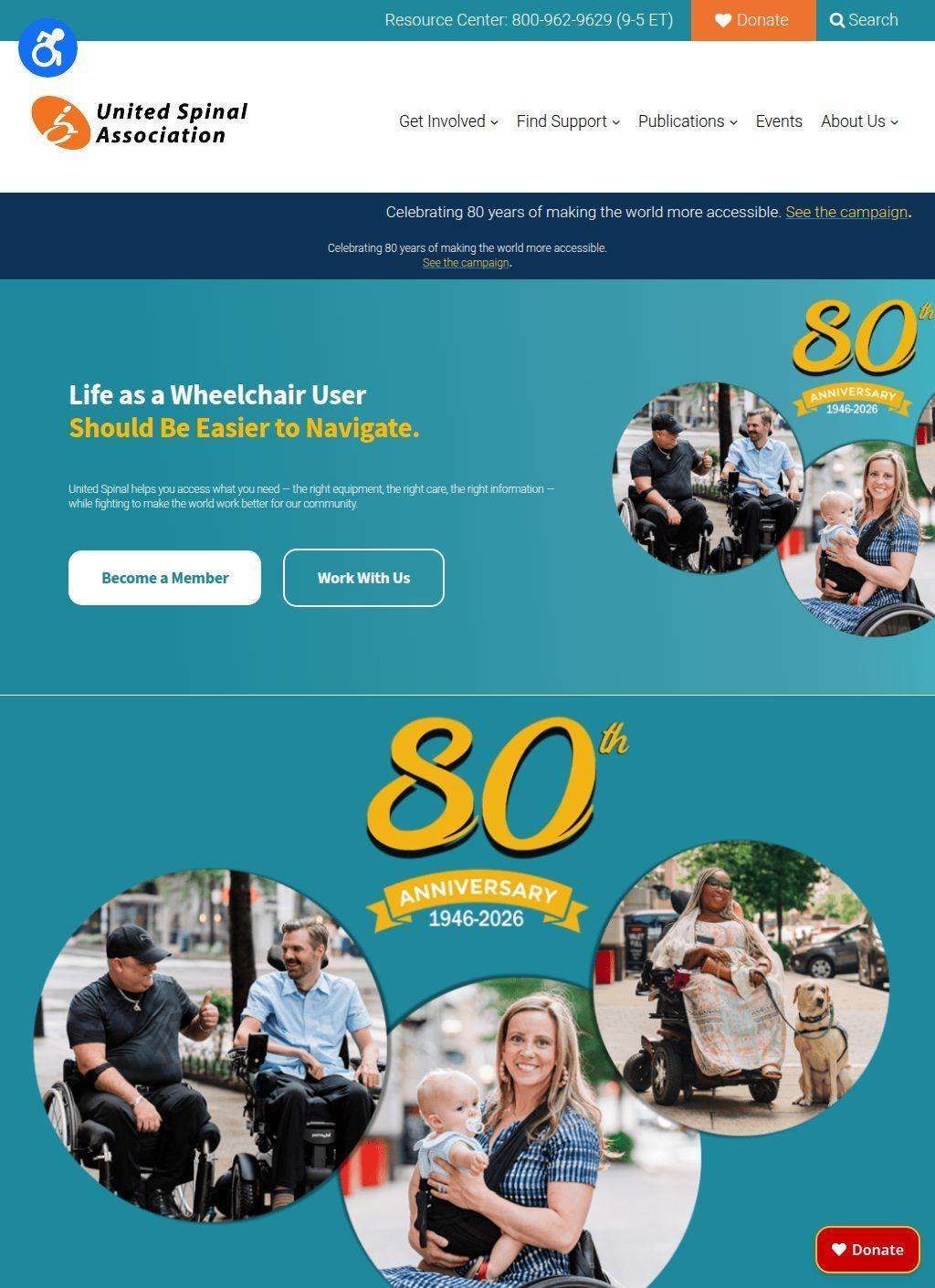
Someone newly using a wheelchair after a spinal cord injury runs into a wall of practical questions almost immediately. Which insurance will cover the right cushion or power chair. Whether a job is still realistic. How to find anyone who has lived through the same thing and come out the other side. United Spinal Association is built around answering exactly those questions, and its Resource Center is the part of the operation that most people will touch first. Staff and materials there cover healthcare navigation, benefits, durable medical equipment, and accessibility, a useful spread because those four areas tend to tangle together in real life rather than arrive one at a time.
Resource center and support network
The organization serves more than 70,000 members, most of them wheelchair users or people living with spinal cord injuries and disorders. That scale shows up in the breadth of what it runs. Peer support and mentoring connect members with others who share their experience, and over 100 support groups operate nationwide. A chapter network of 40 local chapters carries the work into specific communities, with events and adaptive sports programming attached. For anyone who has spent time looking into disability resources, the gap between a national entity that publishes guidance and one that actually has people meeting in your area is enormous, and United Spinal Association sits clearly on the side of the latter.
Peer mentoring across 40 local chapters
Beyond the Resource Center, the program list is genuinely varied. The Work Readiness Program targets employment, a real sticking point because returning to or entering the workforce after a disabling injury is one of the harder transitions and generic advice rarely addresses it well. There is a Disaster Relief fund, which speaks to an often overlooked vulnerability: people who depend on power chairs, ventilators, or refrigerated medication are among the most exposed when a hurricane or wildfire knocks out infrastructure. A Grassroots Advocacy Network organizes members around disability policy, and the group itself engages in federal and state legislative advocacy on issues affecting people with physical disabilities, including veterans living with SCI/D.
Employment and disaster relief programs
That advocacy strand is worth dwelling on. United Spinal Association does not limit itself to helping individuals one at a time. It works on the rules and conditions that shape whether accessibility happens at all, a different and longer game. The two efforts feed each other: the people calling the Resource Center are the same constituency whose experiences inform the policy positions, and that loop gives the advocacy a credibility that detached lobbying often lacks.
Advocacy work shaping accessibility policy
Members also receive New Mobility magazine, a publication aimed squarely at the wheelchair-using community. A regular magazine points to an organization that intends to stay in continuous contact with its audience, not one that resurfaces only during fundraising drives. Adaptive sports through the chapters, similarly, reflect a view of disability that includes recreation and community, not strictly medical management.
From magazine subscriptions to adaptive sports
There is a second audience here that is easy to miss. United Spinal Association also sells expertise to businesses and institutions through its Accessibility Services arm. This covers plan review, design consultation, and on-site assessments, and it extends into DEI consulting and product design advisory. A property developer, an architect, or a manufacturer wanting to get accessibility right at the design stage can hire the same organization that fields questions from the people who will eventually use the space or the product. That arrangement has obvious value, because the advice comes from a body deeply embedded in the daily reality of physical disability rather than reading it off a checklist. It is a smart use of accumulated knowledge, and it likely helps fund the member-facing programs as well.
What can accessibility services do for businesses?
One framing point worth being clear about for anyone arriving through a business directory listing in this category: United Spinal Association is a nonprofit advocacy and support organization, founded and headquartered in New York. It is not a law firm and does not present itself as one. People searching specifically for legal representation after a catastrophic injury will not find litigators here, though the Resource Center and benefits guidance can be a sensible starting point for understanding rights, equipment entitlements, and the broader support landscape before or alongside any legal process. Setting that expectation matters, because the value of the place is real but specific.
A search for external reviews turns up general nonprofit ratings on charity watchdog sites but no dense pool of user testimonials on mainstream consumer platforms. That is not unusual for a membership organization of this type; the people it helps are not typically writing Yelp reviews. What the published record does show is consistent scope and longevity.
The verdict depends heavily on what brings someone to United Spinal Association in the first place. For wheelchair users, people with spinal cord injuries or disorders, their families, and the businesses trying to serve them well, this is a substantial and active resource with a long programmatic reach and a clear constituency. People expecting catastrophic injury litigation should look elsewhere and treat this as a complementary support and advocacy hub instead. Judged on what it actually sets out to do, United Spinal Association covers an impressive amount of ground without losing focus on its core mission of helping people live fuller lives after spinal cord injury. The published evidence is enough to take it seriously.
Business address
United Spinal Association
102 Duane Road,
Fort Totten,
NY
11359
United States
Contact details
Phone: 718-803-3782