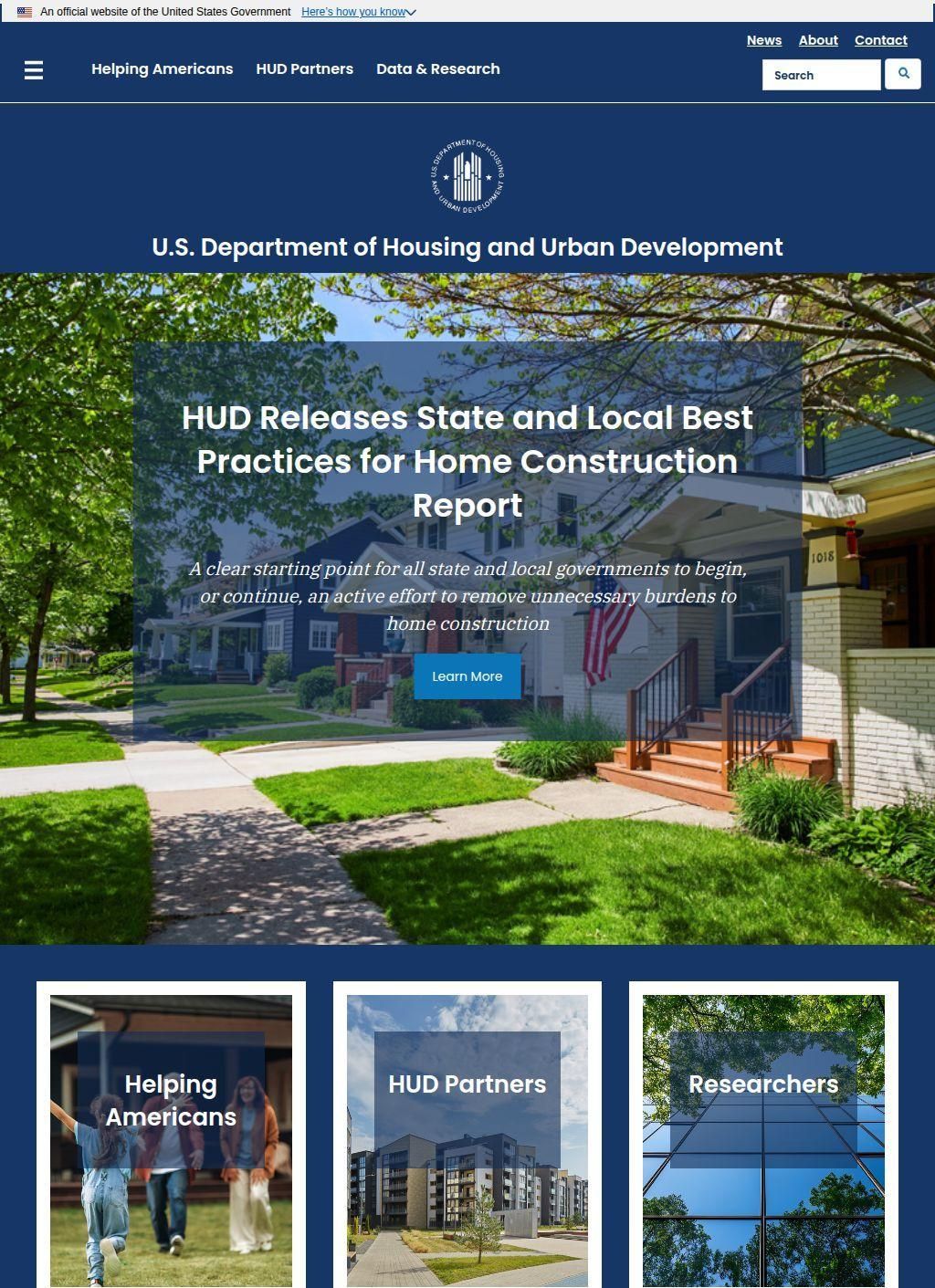
Type a ZIP code into the housing counseling search at apps.hud.gov and you get back a list of HUD-approved counselors who will sit with you, often for free or close to it, and work through what a homeowner facing a missed mortgage payment can actually do next. That single tool is the most useful thing on hud.gov for anyone worried about losing a home, and it sets up the rest of the U.S. Department of Housing and Urban Development site well: practical referrals first, policy second.
Finding foreclosure counseling
The Avoiding Foreclosure section is where a stressed homeowner should start. It lays out loss mitigation options in plain terms, points to the Tips for Avoiding Foreclosure guidance, and explains that funded counselors can negotiate with lenders and loan servicers on a borrower's behalf. For households with an FHA-backed mortgage, the site spells out the FHA Loss Mitigation Program in detail: forbearance, loan modification, a pre-foreclosure sale (PFS), and a deed-in-lieu of foreclosure. These are the exact terms a borrower will hear from a servicer, so seeing them defined by the agency that backs the loan removes a lot of guesswork. The counseling referral service is also worth noting: it connects people to approved agencies without going through a paid intermediary, which is exactly what someone in financial distress needs.
What HUD does and does not do
It is worth being clear about what this resource is and is not. Listed here under foreclosure defense, the U.S. Department of Housing and Urban Development does not represent homeowners in court or file legal pleadings. What it does is fund and vet the counseling network that often becomes the first line of defense before a case ever reaches litigation, and it points toward civil legal aid where that next step is needed. State-specific pages make this concrete. The Washington State Foreclosure Fairness Program page, for instance, links out to local mediation and civil legal aid programs, so a homeowner in one state is not left reading generic national advice that may not match local procedure.
State-specific resources
Beyond the foreclosure material, hud.gov carries a lot that serves different audiences. Renters and low-income households can read up on assistance programs and homeownership routes that run through local housing agencies. Veterans get pointers to VA Home Loan information. There is a Fair Housing and Equal Opportunity section covering discrimination enforcement, and a set of consumer pages on spotting fraud and foreclosure-rescue scams. Desperate homeowners are exactly who scammers target, so having that material in the same place as the counseling search is a reasonable editorial decision. The U.S. Department of Housing and Urban Development also runs the HUD Home Store, where HUD-owned properties go up for sale, so a buyer hunting for one of those listings has an official place to look instead of relying on resale aggregators.
Beyond foreclosure assistance
Some of the site is plainly aimed at institutions and researchers, not individuals. The Community Development Block Grant program directs funds to states, territories, and local governments for housing and economic development, and the pages around it read accordingly: grantee-facing, dense, procedural. The HUD USER portal goes further, publishing policy research datasets that are far more useful to an analyst or a city planner than to someone trying to keep their house this month. None of that is a flaw. It just means a first-time visitor should know they are walking into a large agency's full catalog and head straight for the counseling and foreclosure tools rather than browsing the whole thing.
Institutional tools for researchers
The information holds up because it comes from the body that writes the rules. When the U.S. Department of Housing and Urban Development describes what a pre-foreclosure sale involves or which counselors carry its approval, that is the definitive version, not a secondhand summary. For a homeowner trying to separate real options from the noise of a sales pitch, that authority is substantial. The same logic applies to the fair housing materials: enforcement guidance published by the U.S. Department of Housing and Urban Development carries more weight than a summary produced by a third-party site with no statutory role.
Authority from the source
The practical caution is scope. A government portal this broad can bury the one page you need under dozens you do not, and the foreclosure guidance, while sound, stops at education and referral. Someone already served with court papers will use the U.S. Department of Housing and Urban Development to find a counselor or legal-aid contact, then move quickly to that person for representation. Read as a starting map rather than the final destination, the site does its job, and it does it without charging anyone for the directions.
Business address
U.S. Department of Housing and Urban Development
451 7th Street SW,
Washington,
DC
20410
United States
Contact details
Phone: (202) 708-1112