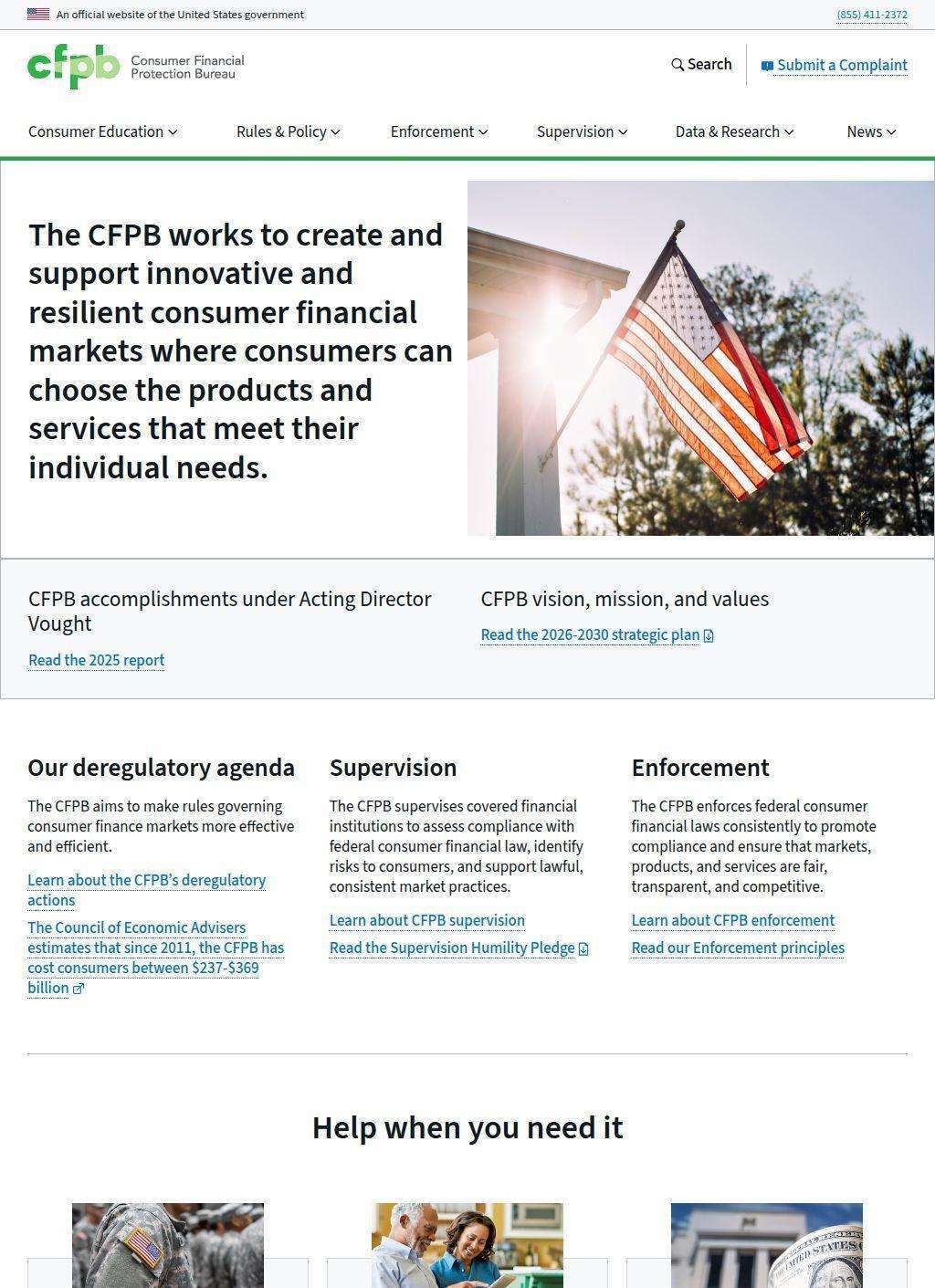
Where should a homeowner who has fallen behind on the mortgage and started getting letters about foreclosure turn for information that is not trying to sell them anything? One sound answer is the Consumer Financial Protection Bureau, the federal agency created by the Dodd-Frank Act of 2010 to write and enforce consumer financial protection law. The site at consumerfinance.gov is the public face of that work, and for the foreclosure question it carries more usable, plain-language material than paid services typically pull together.
The agency sits at an unusual intersection. It regulates banks, credit unions, mortgage servicers, debt collectors, and non-bank lenders, and it also teaches the people those companies deal with. That dual role shows up across the site. One half is rulemaking and enforcement: final rules, compliance guidance, supervision of covered institutions, and enforcement actions that sometimes return money to consumers who were harmed. The other half is education written for someone who has never read a statute and does not want to start now.
Mortgage servicing and foreclosure guidance
For the category this listing falls under, the mortgage material is the part worth opening. The Consumer Financial Protection Bureau publishes step-by-step explanations of how mortgage servicing works, what loss mitigation options a borrower can ask for, and how a foreclosure timeline typically unfolds. The Consumer Financial Protection Bureau spells out borrower protections under RESPA and TILA in terms a non-lawyer can follow, which matters when a servicer is the one explaining your options and has every reason to keep things vague.
There is also a practical bridge from reading to acting. The site points homeowners toward HUD-approved housing counselors, the people who can sit with a borrower and work through a hardship case at no charge. That single referral does more good than a stack of generic advice, because it connects someone in trouble to a real person who is not paid on commission. A foreclosure defense attorney would still be the right call once litigation looms, but for the early stage, knowing your rights and finding a counselor is exactly the groundwork that keeps people from signing bad deals out of panic.
The depth here is genuine. Loss mitigation, repayment plans, modification, the difference between what a servicer must do and what it merely might do: these are laid out without the soft-focus reassurance that usually coats this subject. Someone reading carefully comes away understanding what questions to ask, which is the whole point.
Consumer Complaint Database
The Consumer Complaint Database is the tool that gives the site real teeth. A member of the public can file a complaint against a financial company, track where it goes, and read complaints that others have filed. The Consumer Financial Protection Bureau forwards each one to the company named and publishes the outcome. For a borrower who feels a servicer mishandled a payment or stonewalled a modification request, that is a documented channel with a paper trail, not a customer-service voicemail that goes nowhere. The published data also lets anyone see patterns: which companies generate the most complaints and how they tend to respond.
Ask CFPB library of money questions
Sitting alongside it is Ask CFPB, a library of plain answers to specific money questions. What is a deed in lieu of foreclosure, what happens to a second mortgage, how long does a missed payment stay on a credit report: the answers are short, sourced, and free of jargon. It reaches well past housing, too, into auto loans, credit cards, credit reports, debt collection, payday and prepaid products, money transfers, reverse mortgages, and student loans. The breadth is real without feeling padded, because each topic gets a genuine explanation instead of a stub.
Beyond the consumer-facing tools, the Consumer Financial Protection Bureau also publishes data that researchers and journalists lean on: the Home Mortgage Disclosure Act database, consumer credit trend reports, and findings from its financial well-being survey. That is heavier reading, but the connection is worth noting: the mortgage guidance draws on the same data that shapes the agency's rules, not assembled from secondary sources. The advice is grounded in the same evidence the regulators use.
Audience-specific sections and resources
One more thing the site does well is segment its audiences. Whether a visitor arrives through a business directory entry or a direct web search, they find dedicated sections for servicemembers and veterans, for older Americans, for educators, and for people inside the financial industry who need to follow the rules. A surviving spouse trying to assume a loan and a compliance officer at a credit union are not looking for the same page, and the Consumer Financial Protection Bureau does not pretend they are. That organization saves time and shows that the material was written with actual readers in mind.
If there is a limit to flag, it is one of scope. The Consumer Financial Protection Bureau explains the law and points to help; it does not represent anyone, file motions, or stop a sale date. A homeowner days away from auction needs counsel, and the Consumer Financial Protection Bureau is honest enough about its lane that it sends people to counselors and resources instead of overpromising. Reading it cover to cover will not save a house on its own. Knowing what it teaches will make every conversation with a servicer, counselor, or lawyer sharper.
Set against the obvious alternative, HUD's own housing pages at hud.gov, the two complement each other more than they compete. HUD is where the counselor list and the official foreclosure-avoidance programs live, and it remains the place to go for the program mechanics. What the Consumer Financial Protection Bureau adds is the rights framework and the complaint machinery: the why behind the rules and a documented way to push back when a company breaks them. A homeowner who reads both, starting with the bureau's mortgage guides and then booking a HUD-approved counselor, is about as well prepared as a person can be before bringing in an attorney. For free, public, non-commercial footing on foreclosure, this is among the few sources that justify the time.
Business address
Consumer Financial Protection Bureau
1700 G Street NW,
Washington,
DC
20552
United States
Contact details
Phone: (855) 411-2372