The National Institute of Mental Health is the lead federal agency for research on mental disorders in the United States. It is one of the 27 institutes and centers of the National Institutes of Health, the government's medical research agency, and its stated mission is to transform the understanding and treatment of mental illnesses through basic and clinical research. The institute was formally established in 1949. Besides funding science, the institute publishes free plain-language health information, and its child and adolescent mental health pages gather the material most useful to families with teenagers.
Nothing on the site is sold. Publications sit in the public domain, so schools and clinics may copy and distribute them without permission, and the same applies to the statistics the institute reports.
Recognizing when a teenager needs help
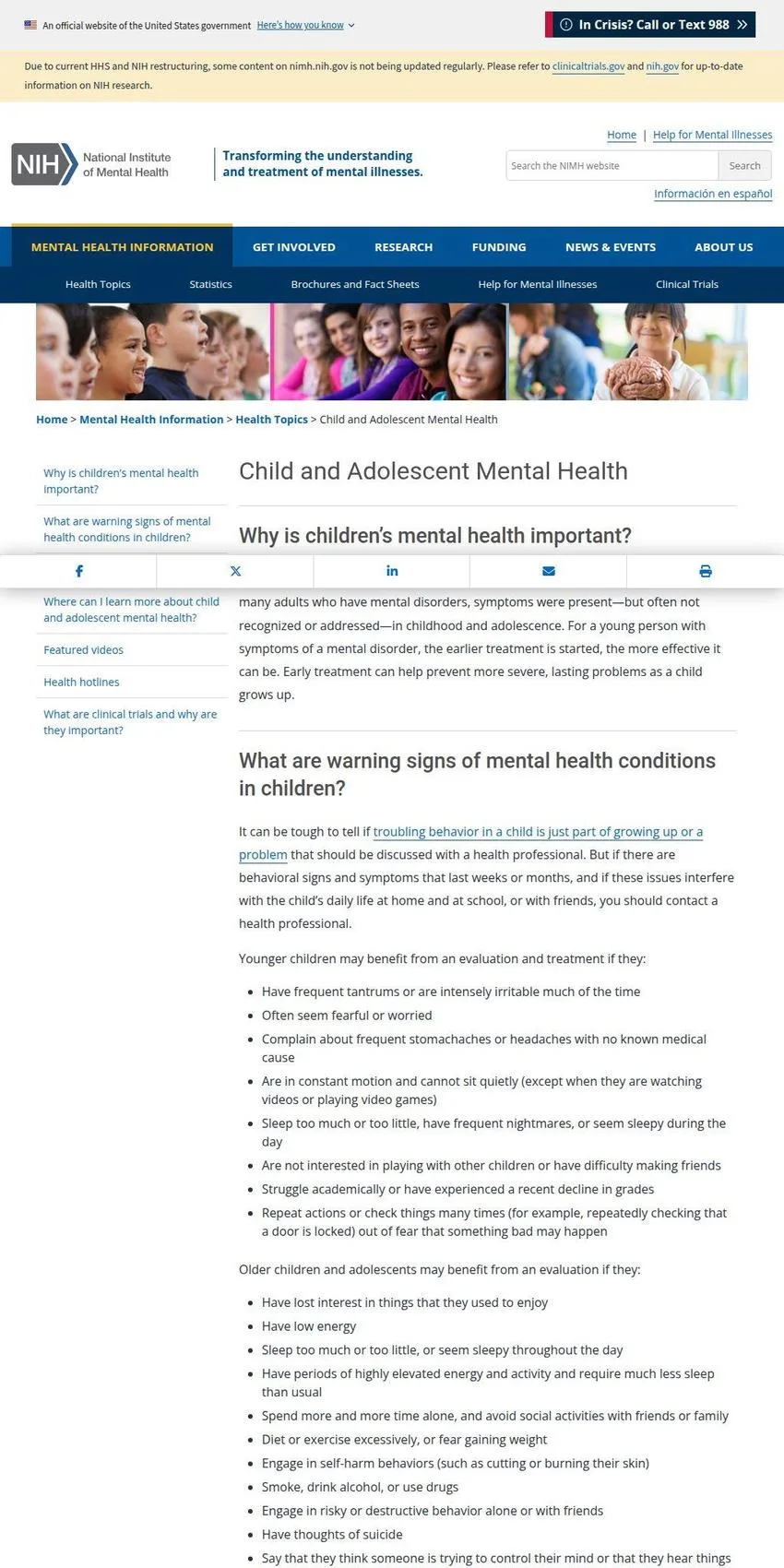
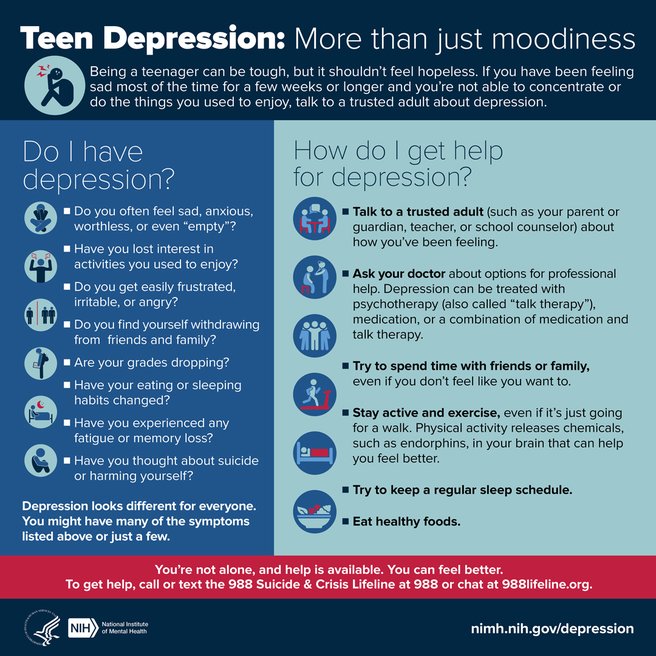
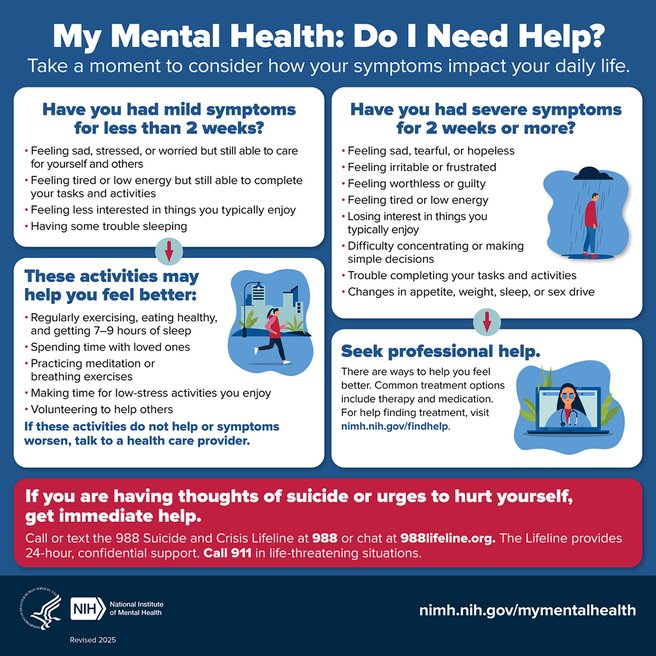
The section starts with the question parents ask most often: which changes belong to ordinary adolescence and which are warning signs. For older children and teens, the institute points to signals such as losing interest in activities they once enjoyed, and it treats any talk of suicide as a reason to act. Persistent problems that last weeks or months and interfere with daily life warrant a professional evaluation. Younger children have a list of their own, including frequent tantrums, intense irritability, and constant motion. The advice on where to begin is concrete: a pediatrician, family doctor, or school counselor can start the process and refer onward.
The institute itself does not diagnose patients or provide treatment. Its role is research and public information, and the pages say so plainly while pointing readers toward practicing professionals. Condition-specific pages sit one level deeper; anxiety disorders, attention deficit hyperactivity disorder, bipolar disorder, depression, and eating disorders each have a page covering symptoms, causes, and current therapies. Treatment pages describe the main evidence-supported psychotherapies for young people, cognitive behavioral therapy among them, and what families can ask a prescriber before a teenager starts medication.
Crisis lines
For emergencies the pages list the 988 Suicide and Crisis Lifeline, reachable day and night by calling or texting 988. The service is free and confidential, and adults worried about a teenager can contact it on the young person's behalf. A separate Disaster Distress Helpline at 1-800-985-5990 supports people in distress after natural or human-caused disasters, and for any life-threatening situation the guidance is to call 911 first. Neither line asks for a name or an appointment.
Free publications for teens and parents
Some brochures address adults, others speak to adolescents directly. Titles connected to the section include:
- Teen Depression, on recognizing and treating depression during the teen years
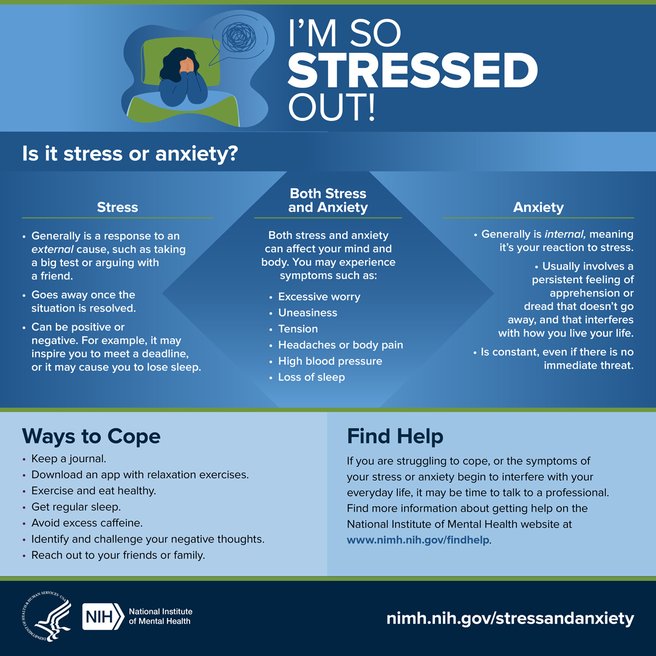
- I'm So Stressed Out!, a fact sheet that separates everyday stress from anxiety
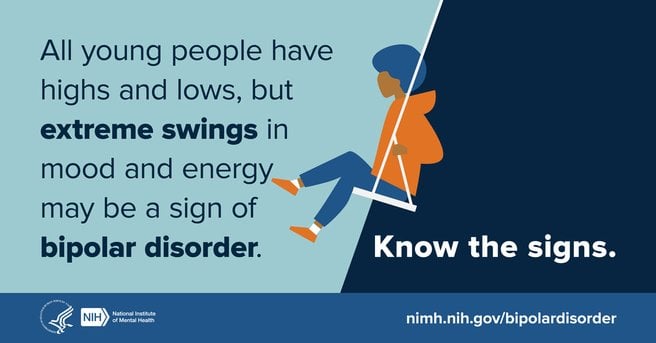
- Bipolar Disorder in Children and Teens
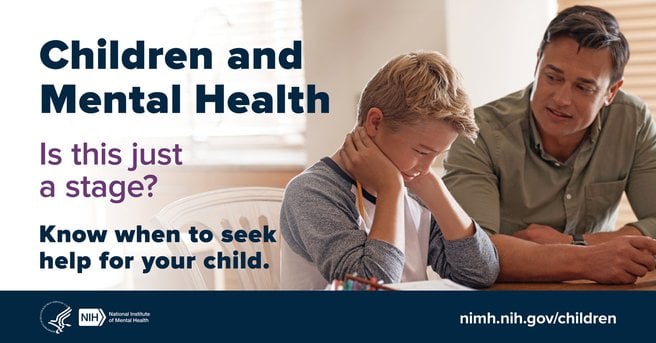
- Children and Mental Health, a guide for parents weighing an evaluation
Print copies can be ordered at no charge, and many titles exist in Spanish as well as English. Each runs a few pages of plain text stating symptoms, treatment options, and where to find help. A digital shareables area adds graphics sized for social media that anyone may repost, which schools and youth groups use for awareness campaigns.
The teen brain fact sheet
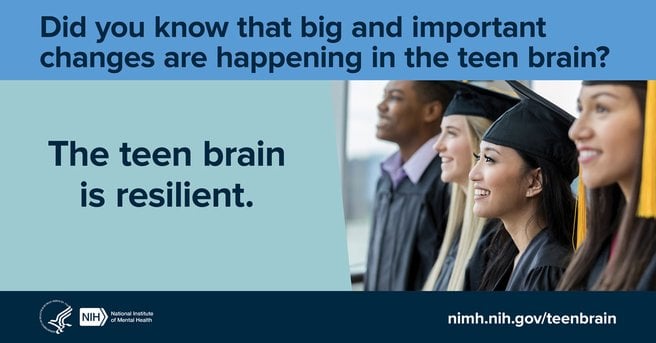
The Teen Brain: 7 Things to Know condenses what imaging research has shown about adolescent brain development. The brain reaches its full size early in adolescence, yet it keeps maturing into the mid to late twenties, and the prefrontal cortex, the region behind the forehead responsible for planning and decision making, is among the last areas to finish. Melatonin rises later at night in adolescents than in children or adults, which helps explain why many teenagers stay up late and struggle to get up for school. The fact sheet also notes that a still-developing brain responds to stress differently, one reason anxiety and depression can emerge during these years, and that most teenagers nonetheless grow into healthy adults.
Research, statistics, and studies that enroll teenagers
Research is the institute's main work. It funds studies at universities and hospitals across the country and operates an internal research program in Maryland, where more than 40 research groups investigate mental illnesses, brain function, and behavior. Statistics pages report how common conditions such as depression and anxiety are among adolescents, drawing on national survey data, and they are widely used as a primary source for prevalence figures.
Clinical trials sometimes enroll children and adolescents, both at the Bethesda campus and at study sites elsewhere. The reasoning is stated plainly: developing brains and bodies can respond to medicines and treatments differently than adult ones, so results from adult studies cannot simply be carried over. Pages describe what taking part involves, the safeguards that apply to minors, and how families can search for studies currently recruiting.
Questions that fall short of a crisis can go to the institute's information line at 1-866-615-6464, staffed on weekdays from 8:30 in the morning to 5 in the afternoon Eastern time, with service in English and in Spanish. Postal inquiries go to the institute's mailing address in Bethesda, Maryland.
Business address
National Institute of Mental Health
6001 Executive Boulevard, MSC 9663,
Bethesda,
MD
20892-9663
United States
Contact details
Phone: 1-866-615-6464