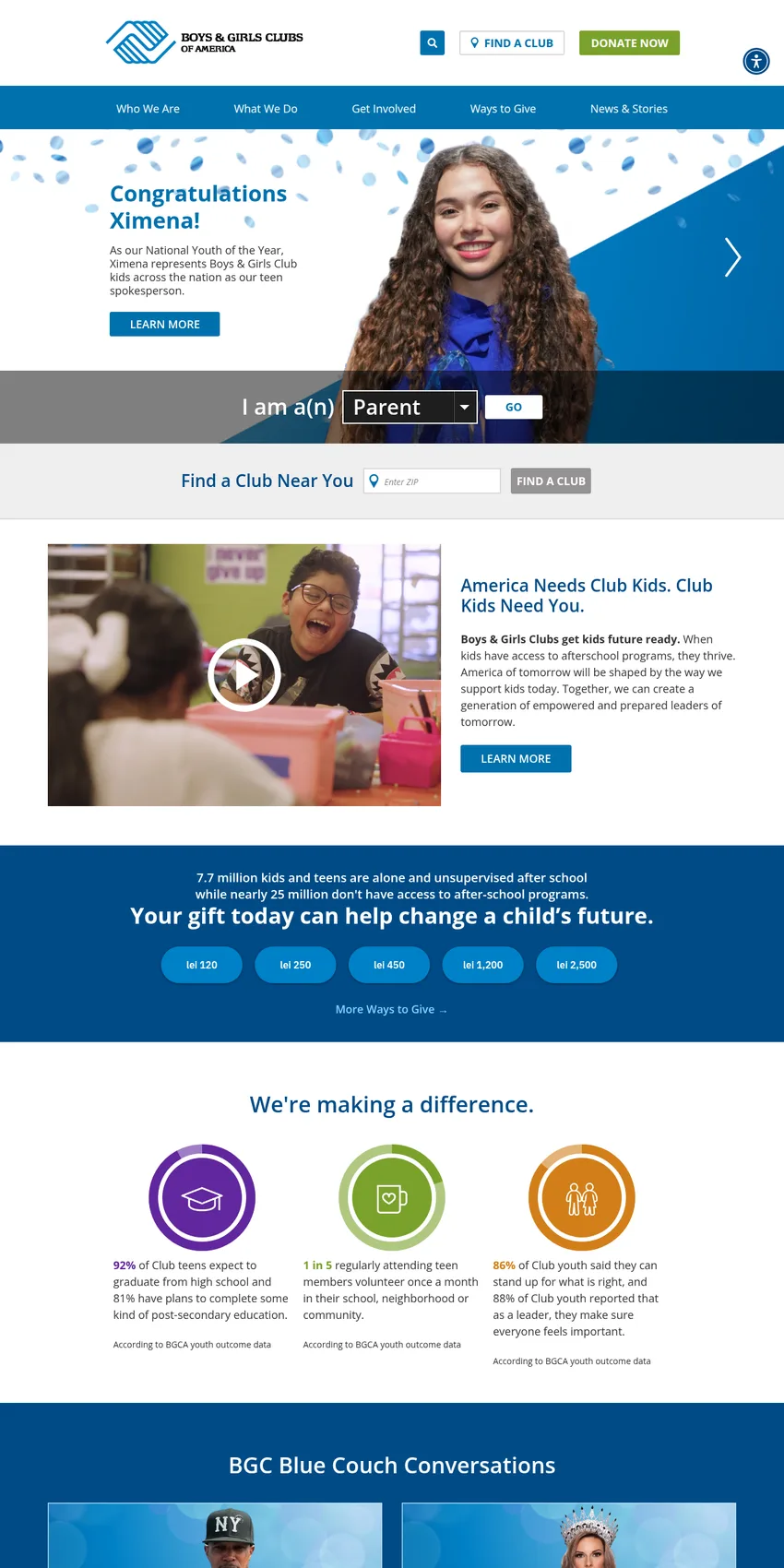
Boys and Girls Clubs of America is a national nonprofit organization that supports a network of local youth clubs offering after-school and summer programs for children and teenagers. The national office, based in Atlanta, sets standards, trains staff, and develops programs, while day-to-day work happens at thousands of independently governed local clubs across the country. The organization reports that its member clubs reach more than four million young people each year, most of them roughly between the ages of six and eighteen, through a small annual membership fee that keeps the clubs open to families of modest means.
History
The movement began in 1860 in Hartford, Connecticut, when three women, Elizabeth Hamersley and the sisters Mary and Alice Goodwin, opened a club meant to give boys in the neighborhood a safe place to spend their time. Similar clubs appeared in other cities over the following decades, each run on its own. In 1906 fifty-three of these independent boys' clubs came together in Boston to form a single national body called the Federated Boys' Clubs, which gave the scattered groups a shared name and a way to coordinate their work.
From boys' clubs to boys and girls clubs
The national organization renamed itself Boys' Clubs of America in 1931. In 1956, marking fifty years since the Boston federation, it received a charter from the United States Congress, a formal recognition granted to a small number of national civic groups and recorded in Title 36 of the United States Code. Girls had taken part in many local clubs for years, and in 1990 the national name was changed to Boys and Girls Clubs of America to reflect that fact, with the congressional charter amended soon after to match. The change in name did not alter the basic model of locally run clubs tied to a national office.
How the organization is structured
The system works as a federation rather than a single company with branch offices. Each local Boys and Girls Club, or group of clubs in a city or county, is a separately chartered nonprofit with its own board, budget, and staff, and it must meet standards set by the national organization to use the name. The national office in Atlanta supplies program materials, training, brand oversight, research, and fundraising support, and it channels national grants and corporate partnerships down to the local level. This arrangement lets a club respond to the needs of its own town while drawing on programs and safety rules developed for the whole network. Around fifty thousand paid staff work across the clubs, supported by many more volunteers, and facilities operate in all fifty states along with Puerto Rico, the Virgin Islands, American Samoa, and United States military bases overseas.
Programs and daily activities
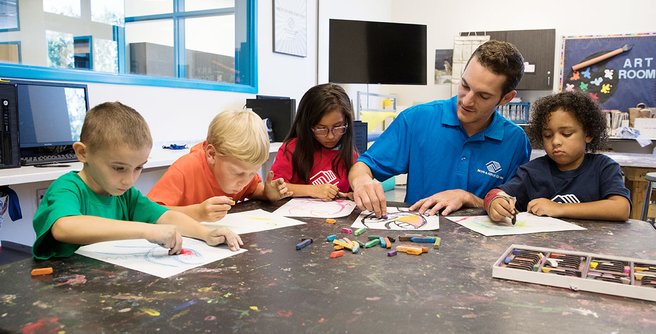
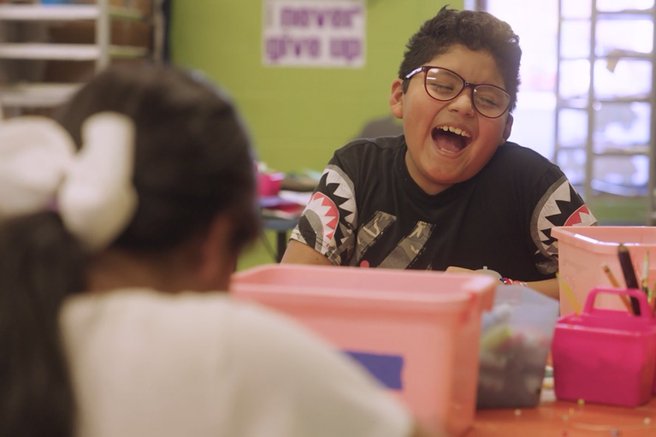
A local club is typically a building with space for homework help, games, sports, arts, and meals, staffed by adults trained to work with young people. Many clubs provide a snack or supper, since for some members the club is where they eat after school. The national organization groups its work around three priority results it wants clubs to produce for the young people who attend.
- Academic success, including homework help, tutoring, and college and career preparation
- Healthy lifestyles, covering nutrition, physical activity, and decisions about drugs, alcohol, and personal safety
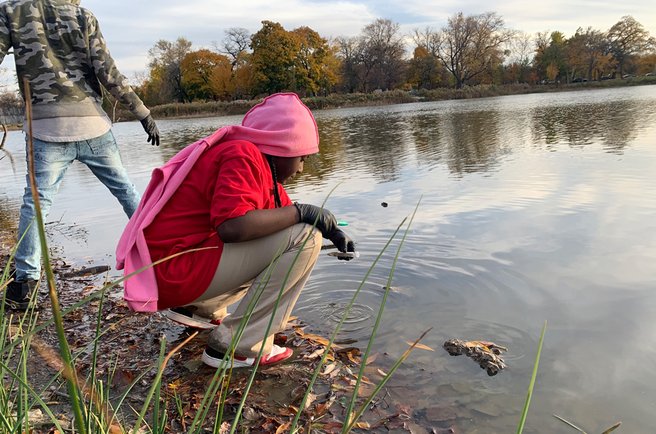
- Good character and citizenship, including leadership, service projects, and civic participation
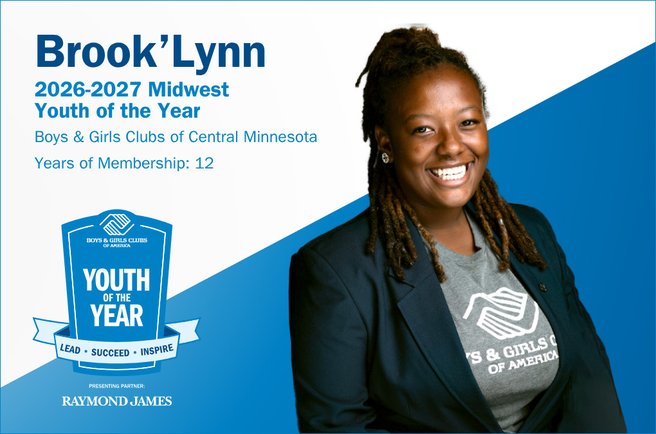
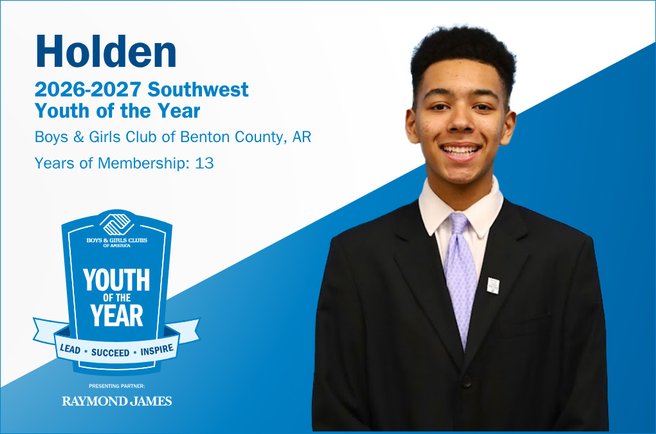
Within those areas the organization runs several long-standing programs. Keystone Clubs give teenagers between about fourteen and eighteen a structure for leadership and community service, while Torch Clubs do the same for younger members. Sports leagues, art contests, and technology and workforce programs round out the schedule. The best known national program is Youth of the Year, a recognition and scholarship competition in which members are chosen first at their own club, then at state and regional levels, and finally as a National Youth of the Year who speaks for the organization for a year. Past national winners have gone on to meet the president of the United States as part of the honor.
Membership and cost
Membership is open to children and teenagers in the communities a club serves, and clubs generally charge only a small yearly fee rather than the full cost of the programs. The gap is covered by donations, grants, corporate sponsors, and local fundraising. Because the clubs concentrate in cities and towns where families may have fewer options for supervised after-school care, the organization describes much of its work as reaching young people who might otherwise be on their own between the end of the school day and the return of a working parent.
Standing and partnerships
Boys and Girls Clubs of America is one of the larger youth-serving charities in the country and is regularly listed among the best known national nonprofits for children. It is the official charity of Major League Baseball, a relationship that supports club sports and facilities, and it works with many other companies and foundations that fund specific programs. Alumni of the clubs include athletes, entertainers, and public officials who often speak about the role a local club played in their childhood, which the organization uses in its fundraising and outreach.
The organization belongs in a directory of society and civic groups because it is a long-established framework for youth membership and community participation. It links a chartered national body, thousands of local nonprofit clubs, tens of thousands of staff, and millions of young members into one recognizable structure aimed at supervised care, education, and civic training. A parent searching for after-school care, a teenager looking for a leadership program, a donor choosing a youth charity, or a researcher studying out-of-school-time programs can all begin with this organization and follow it down to a specific club in a specific community.
Business address
Boys & Girls Clubs of America
1275 Peachtree Street NE,
Atlanta,
Georgia
30309
United States
Contact details
Phone: (404) 487-5700