The federal reporting point for internet crime
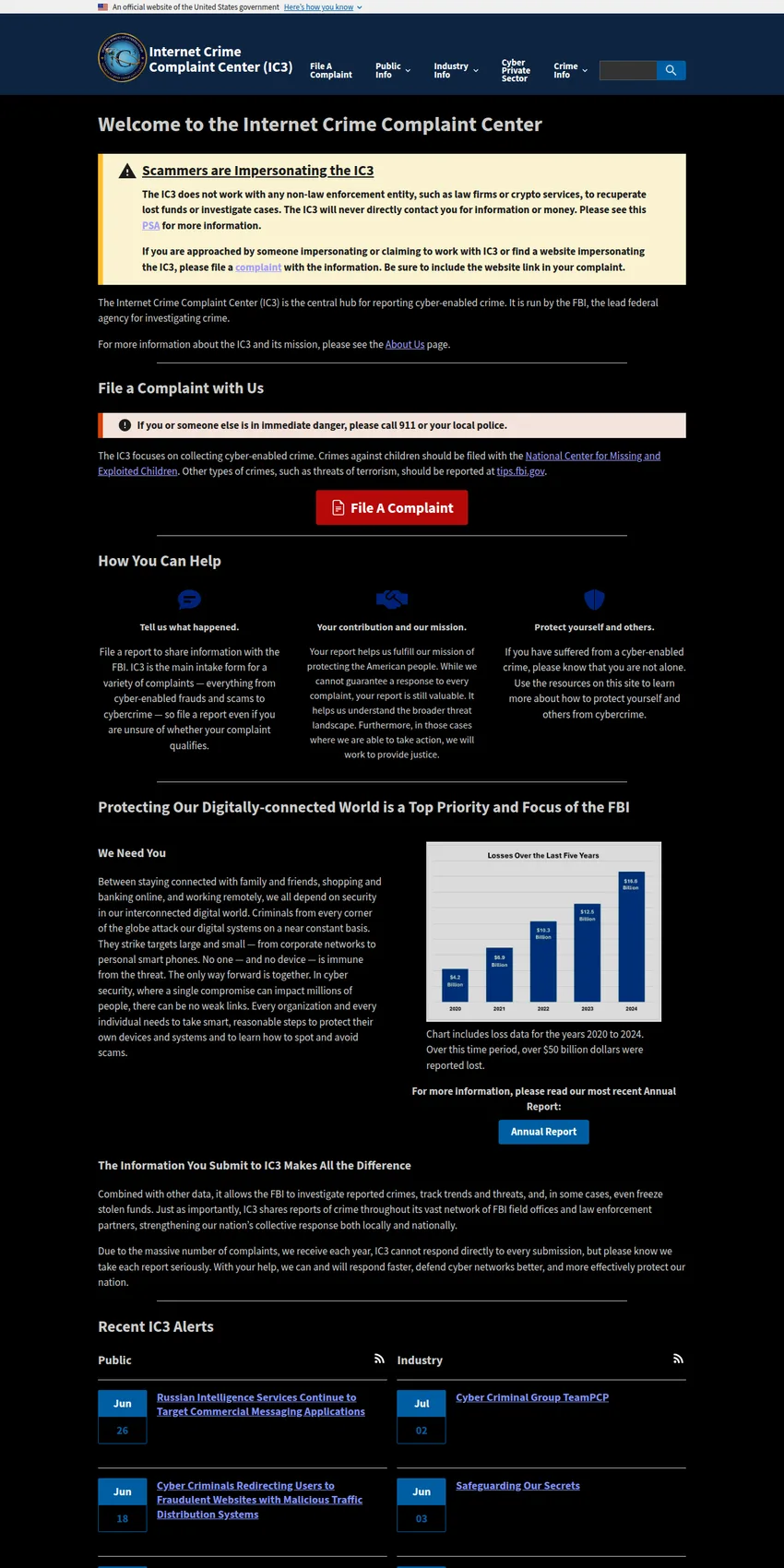
The Internet Crime Complaint Center, known as the IC3, is the part of the Federal Bureau of Investigation that collects public reports of crime committed over the internet. It was set up in May 2000 under the name Internet Fraud Complaint Center, a pilot run jointly by the FBI and the National White Collar Crime Center, and it was renamed the Internet Crime Complaint Center in October 2003 to reflect the wider set of offenses it had begun to track. The center works out of a facility in Fairmont, West Virginia, staffed by FBI agents, analysts, and technology specialists, while the Bureau itself is headquartered in Washington. Its stated mission is to give the public and private sector a way to send information to the FBI about suspected internet-facilitated crime and to build working relationships with law enforcement and industry.
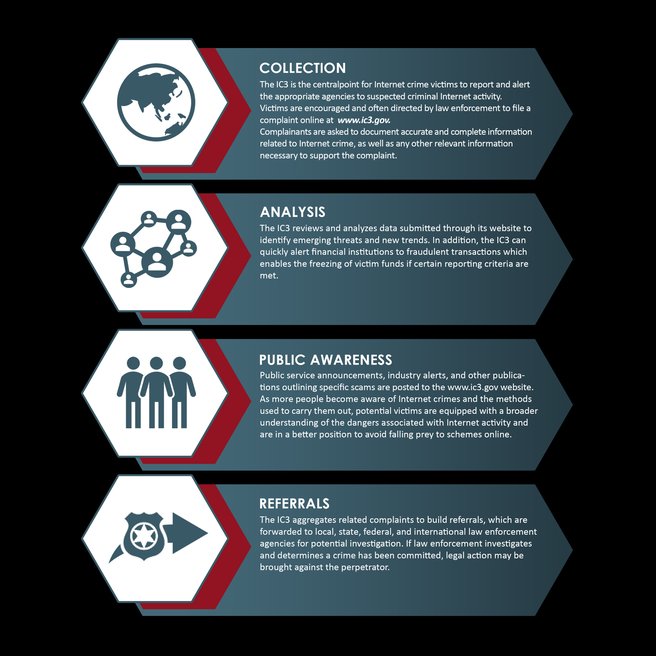
The IC3 does not investigate cases on its own. It receives complaints through an online form, reviews and groups them, and refers them to FBI field offices and to federal, state, local, and international agencies that carry out the investigations. Over its first two decades the center logged its five millionth complaint in March 2020, and the yearly total has climbed since then as more crime moved online.
Romance and confidence fraud
For a directory that lists dating sites, the IC3 matters because it is the official channel through which people report being defrauded by someone they met on a dating platform, and it is the source of the national figures on how often this happens. The center places these cases in a category it calls confidence or romance fraud, covering schemes in which an offender builds a personal or romantic relationship online and then uses that trust to take money.
What the reporting covers
A romance-scam report to the IC3 records how the contact began, how the relationship developed, the payment methods used, and the amount lost. Investigators use these details to connect separate complaints to the same offender or network, since a single scammer often works many victims at once across several dating and messaging services. Because the center gathers reports from across the country in one place, it can see patterns that no individual dating company would detect from its own users alone. The IC3 also publishes guidance telling people never to send money to someone they have only met online and warning that criminals frequently move a conversation off a dating app to private messaging early on.
The statistics it produces
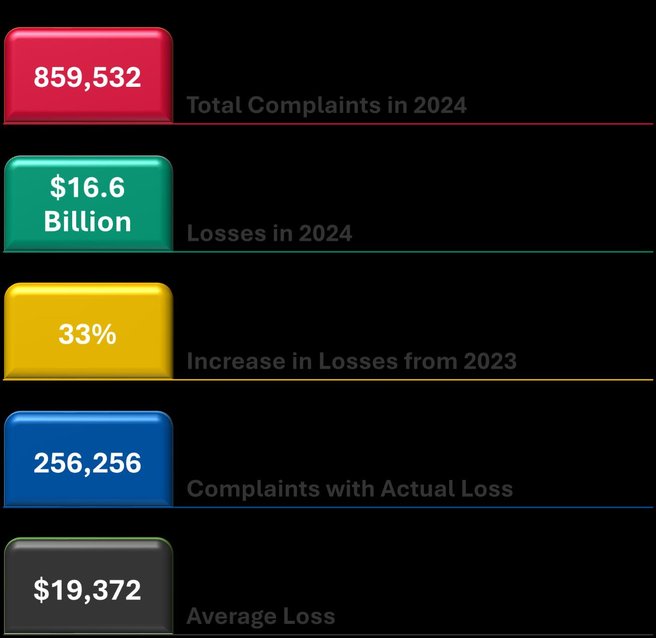
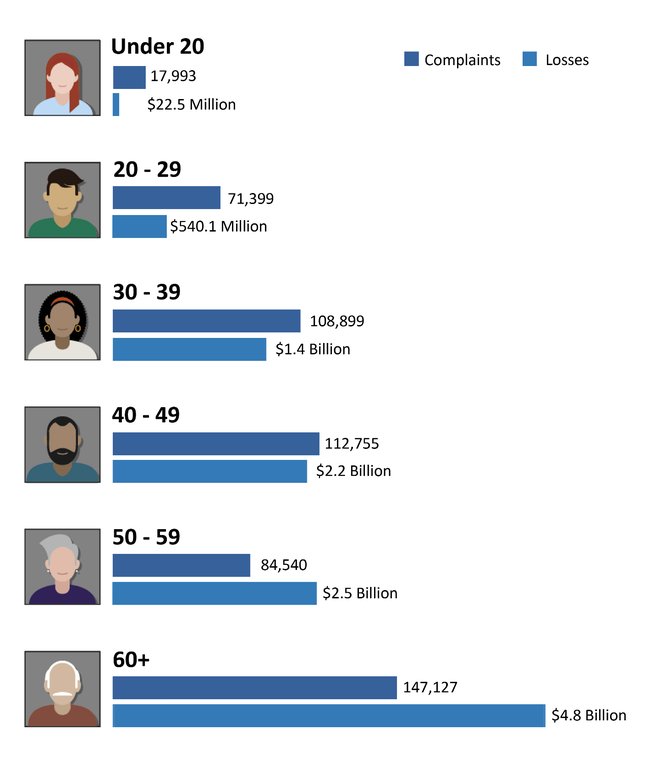
Each year the IC3 issues an Internet Crime Report that totals the complaints and losses for the previous twelve months and breaks them down by crime type, age group, and state. The 2024 report was built from more than 859,000 complaints and recorded about 16.6 billion dollars in reported losses, a third higher than the year before. Within that total, confidence and romance fraud accounted for roughly 672 million dollars in reported losses, and losses in this category among people aged 60 and over came to about 389 million dollars. These figures are cited by news organizations, consumer groups, and other government agencies, and they give a dating directory a factual measure of the risk that sits behind the services in the category.
Filing a report and using the data
Anyone in the United States can file a complaint at the IC3 website, whether they are the victim or a third party acting on someone's behalf. The center asks for as much detail as possible, including transaction records, email addresses, and any account or profile names used by the offender, and it notes that a report is useful even when the person is unsure whether a crime occurred. The IC3 accepts complaints only in writing through its site and does not take them by telephone. It has repeatedly warned that criminals impersonate the IC3 itself, and it states that the center will never contact a member of the public directly to ask for money or information.
Alongside individual complaints, the IC3 publishes public service announcements and alerts on current schemes, and its annual reports and data are used by researchers who study online fraud. For a user who arrives through the dating category, the center supplies two things a commercial listing cannot: a way to report a scam that reaches federal investigators, and an independent count of how large the problem is.
The FBI, which runs the IC3, is headquartered at 935 Pennsylvania Avenue NW, Washington, District of Columbia 20535, and its main telephone line is +1 202-324-3000. The complaint center itself is reached through its website rather than a public phone line, and it operates from the Bureau's Fairmont, West Virginia location. Between the reporting channel it provides and the yearly statistics it publishes, the IC3 forms the consumer-protection reference point for the dating services grouped in this part of the directory.
Business address
Federal Bureau of Investigation
935 Pennsylvania Avenue NW,
Washington,
District of Columbia
20535
United States
Contact details
Phone: +1 202-324-3000