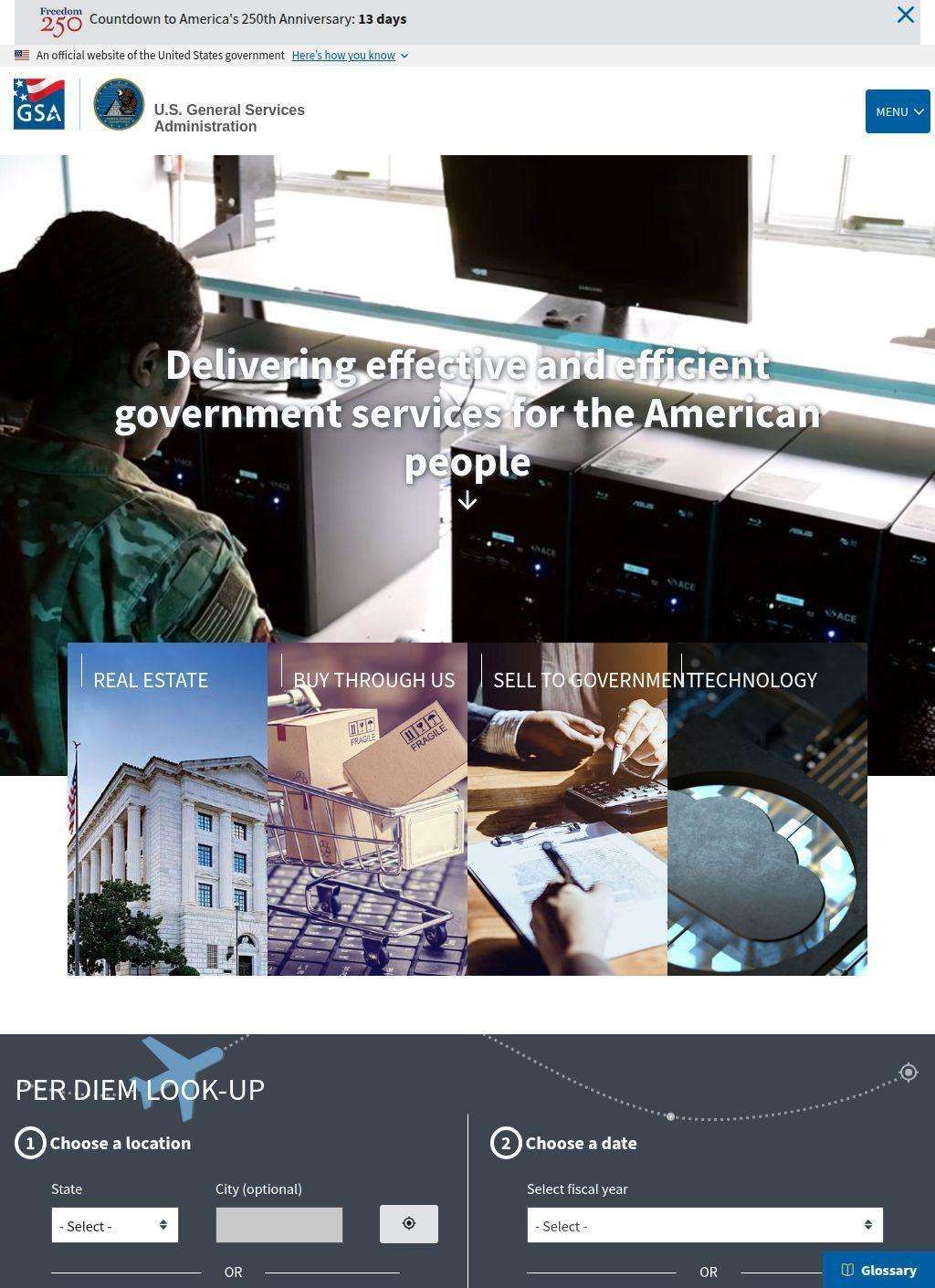
Selling to the federal government has a clear starting point for any company that wants in. For most vendors the honest answer runs through the U.S. General Services Administration, the agency that buys commercial products and services on behalf of nearly every other part of the federal government and writes the rules for how that buying happens. The site at gsa.gov is the front door to that machinery, built as a working reference for the people who have to navigate procurement, leasing, travel and technology purchasing every day.
Registering for the Multiple Award Schedule
The procurement side is the part most readers will come looking for. The U.S. General Services Administration runs the Multiple Award Schedule program, the long-term contract framework that lets federal agencies buy from vendors who have already been vetted on price and terms. Get onto a Schedule and your products become orderable across government without each agency re-running a full competition. The site explains how that works, points vendors toward SAM.gov for the registration and certification steps that come first, and lays out what the Multiple Award Schedule expects of a supplier. None of it is light reading, but it is specific, and for a contractor trying to figure out the sequence of getting registered, certified and then listed, that specificity is the whole value.
Governmentwide acquisition contracts and strategic sourcing
Beyond the Schedules, the U.S. General Services Administration administers the Governmentwide Acquisition Contracts, the GWACs that channel large technology buys, along with the Federal Strategic Sourcing Initiative and the OASIS contracts for professional services. These are the vehicles a serious bidder needs to understand, because they shape which doors are even open. The site treats them as distinct programs with their own pages and entry requirements, so a vendor can work out which one fits the work they do.
Guidance for small business contractors
For smaller firms there is a layer aimed squarely at them. The U.S. General Services Administration publishes contracting opportunity forecasts so a small business can see what is coming before a solicitation lands, plus guidance on entering the federal marketplace and reading the Federal Acquisition Regulation. The FAR is the dense legal backbone of every federal purchase, and having plain-language entry points to it matters when the alternative is parsing hundreds of pages cold. Vendors can reach the actual Schedule listings and solicitation details through linked platforms, so the site functions as both an explainer and a launch point.
Acknowledging the procurement learning curve
What I appreciate here is that the agency does not pretend the process is simple. The pages acknowledge a sequence of steps and send you to the right system for each one. That candor is useful, because the federal marketplace is genuinely procedural, and a resource that mirrors that procedure is doing its job.
Managing federal property and leasing
Procurement is only one of the agency's jobs. The U.S. General Services Administration is also the federal government's landlord, managing building ownership and leasing, workplace optimization, and the acquisition and disposal of property. The site carries the tools that go with that role, including a child care center locator for federal facilities. For anyone in real estate or facilities work who deals with government tenants, this is the authoritative source on how federal space is acquired, run and eventually let go.
Checking per diem and travel rates
Travel is another substantial section, and a surprisingly practical one. The per diem lookup lets you check the allowable lodging and meal rates for a given location and date, a number precise enough to settle an expense argument fast. There are mileage reimbursement calculators, the full Federal Travel Regulation, and the e-gov Travel Service that federal employees use to book trips. These are everyday tools, not policy abstractions, and they are public, so even people outside government occasionally cite the per diem tables as a reference point for fair rates.
Authorizing cloud technology through FedRAMP
On the technology front the U.S. General Services Administration handles FedRAMP, the program that authorizes cloud products for federal use, which is a meaningful gate for any vendor selling cloud services into government. It also runs USAccess for identity and credentialing, supports IT modernization across agencies, and offers cybersecurity products. A cloud provider chasing federal customers will spend real time on these pages, because FedRAMP authorization is often the difference between being eligible and being shut out.
A single agency with wide reach
Put the pieces together and the breadth is the point. The U.S. General Services Administration covers how government buys goods, where it works, how its people travel, and which technology it is allowed to trust. The site reflects that range without feeling like four unrelated sites stapled together, which is harder to pull off than it sounds given how different leasing a building is from authorizing a cloud platform.
Following links in the right order
There is a lot of cross-referencing, and a first-time visitor can feel handed off between programs and external systems like SAM.gov. That is partly the nature of the work; the federal acquisition world really is spread across multiple platforms. Still, anyone arriving with a single clear goal, say getting on a Schedule, will want to read carefully and follow the links in order rather than skim. The information is there. It rewards patience more than browsing.
For a small business owner who has decided to pursue federal contracts and does not know step one, the U.S. General Services Administration site is the place to begin, and the concrete first move is to read the entering-the-federal-marketplace pages alongside the SAM.gov registration guidance before touching any Schedule application. A facilities or technology vendor should instead head straight to the GWAC, FedRAMP or leasing sections that match their line of work and check the eligibility requirements there. Either way, the U.S. General Services Administration is not a destination you visit once; it is a reference you keep open while you work through the process, and treating it that way is the difference between guessing at federal procurement and following the actual map the U.S. General Services Administration provides.
Business address
U.S. General Services Administration
1800 F Street NW,
Washington,
DC
20405
United States
Contact details
Phone: (202) 501-0800