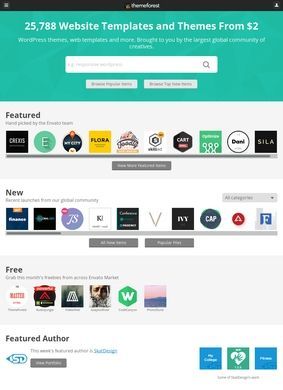
A WordPress theme on Theme Forest runs somewhere between $19 and $69, and that price band tells you a fair amount about the kind of operation you are dealing with: a high-volume marketplace where independent authors list pre-built templates and the platform takes its cut on each sale. The catalogue stretches across WordPress themes for blogs, online shops and corporate sites, plus Shopify and WooCommerce storefronts, plain HTML responsive layouts, and CMS skins for Joomla, Drupal, HubSpot and Webflow. There are also email and landing-page templates and UI kits built for Figma, Adobe XD, Photoshop and Sketch. If you build sites for a living, or you are a small business owner trying to skip the cost of a bespoke design, the breadth is the main draw.
Marketplace scale and catalog breadth
The scale numbers that Theme Forest publishes are large. The platform claims more than 78.7 million items sold and over $1.25 billion paid out to the authors who supply the templates. Those figures point to a marketplace that has been running long enough to build a deep back catalogue across retail, technology, real estate, health and entertainment niches. Theme Forest sits inside the wider Envato family, next to Envato Elements (the subscription side) and the Tuts+ tutorial library, so a buyer landing here is connecting to an ecosystem with a long track record rather than a one-off storefront.
Search tools and one-time pricing
For a designer who knows what they want, that catalogue depth is genuinely useful. Search by category, sort by sales count, read the item demos, and you can usually find a layout close to a client brief in an afternoon. The pricing on Theme Forest is one-time per item, which suits anyone who needs a single theme for a single project and wants no recurring subscription fees. The filtering is competent enough, and the preview demos on most items are detailed, so the research phase rarely feels like guesswork. Each item page also publishes an author rating and response history, which gives a rough proxy for how active the creator still is.
Support quality varies by author
None of that means the purchase experience is uniformly smooth. Support for any given item is handled by the individual author, not by Theme Forest centrally, and the quality gap between an active author with thousands of sales and a quiet one with a dozen is large. A theme from a prolific author who still answers forum posts within a day is a different product in practical terms from an identical-looking theme whose author last logged in two years ago. The marketplace page does expose that data, but it takes a deliberate read to notice it.
Checking third-party review platforms
The reputation picture across third-party platforms runs negative, and a buyer should read it with open eyes. On Trustpilot, Theme Forest carries around 3,322 reviews; the sentiment in the excerpts skews toward complaints. Smaller sites are harsher: SmartCustomer rates themeforest.net at 1.5 out of 5 from 69 reviews, Reviews.io at 1.24 out of 5 from 17, and a Sitejabber listing at 2.3 from three. One editorial aggregator, myprosandcons.com, posts a friendlier 4.0, but that figure comes from its own compiled methodology rather than direct user submissions, so it sits apart from the others.
The complaints cluster in recognisable places. Refunds get refused. Theme quality varies badly from one author to the next. And when something breaks, support is slow or unhelpful. None of that is surprising for a marketplace model where the platform is selling work made by thousands of separate authors, but it does mean that the experience can swing wildly depending on which item and which author you pick. The negative review pattern is not random noise; it follows the same narrative across multiple platforms, which is harder to dismiss than a handful of one-off grievances.
It is fair to keep some perspective. Review sites attract dissatisfied buyers far more than satisfied ones, and a marketplace processing tens of millions of sales will collect angry voices in absolute terms even at a low complaint rate. The 1.x ratings on the smaller sites rest on very few reviews and do not represent a statistically stable score. They are a prompt to read carefully before buying, not proof that every purchase ends badly. Still, when the negative tone runs consistently across Trustpilot, SmartCustomer and Reviews.io, dismissing it entirely would be a mistake.
Support routing is worth flagging specifically. There is no phone number or direct email on the Theme Forest storefront. Help runs through a separate Envato Help Center and a community forum, so escalating a dispute means navigating one level away from the page where you spent money. For a refund argument, that indirect path is exactly the friction that keeps appearing in the negative reviews. It is not hidden, but it is not upfront either.
Theme Forest does volume, choice and a buy-once price well. What it does poorly, going by the feedback left across multiple platforms, is anything that needs a refund or hands-on intervention after the sale. A buyer who picks carefully, filters by sales count and author activity, and reads the licence terms before clicking purchase is in a much better position than one who browses by thumbnail and hopes for the best.
Freelance web designers and developers hunting a specific layout to adapt for a client will find Theme Forest a sensible first stop. The filtering and preview tools are good enough to narrow a search efficiently, and the one-time price compares well against commissioning custom work. Non-technical buyers, especially those new to WordPress, should slow down before checkout: open the chosen item's review tab inside Theme Forest, confirm the author still answers recent questions, and read the refund policy in the Help Center before spending, so there are no surprises if the template needs post-purchase attention.