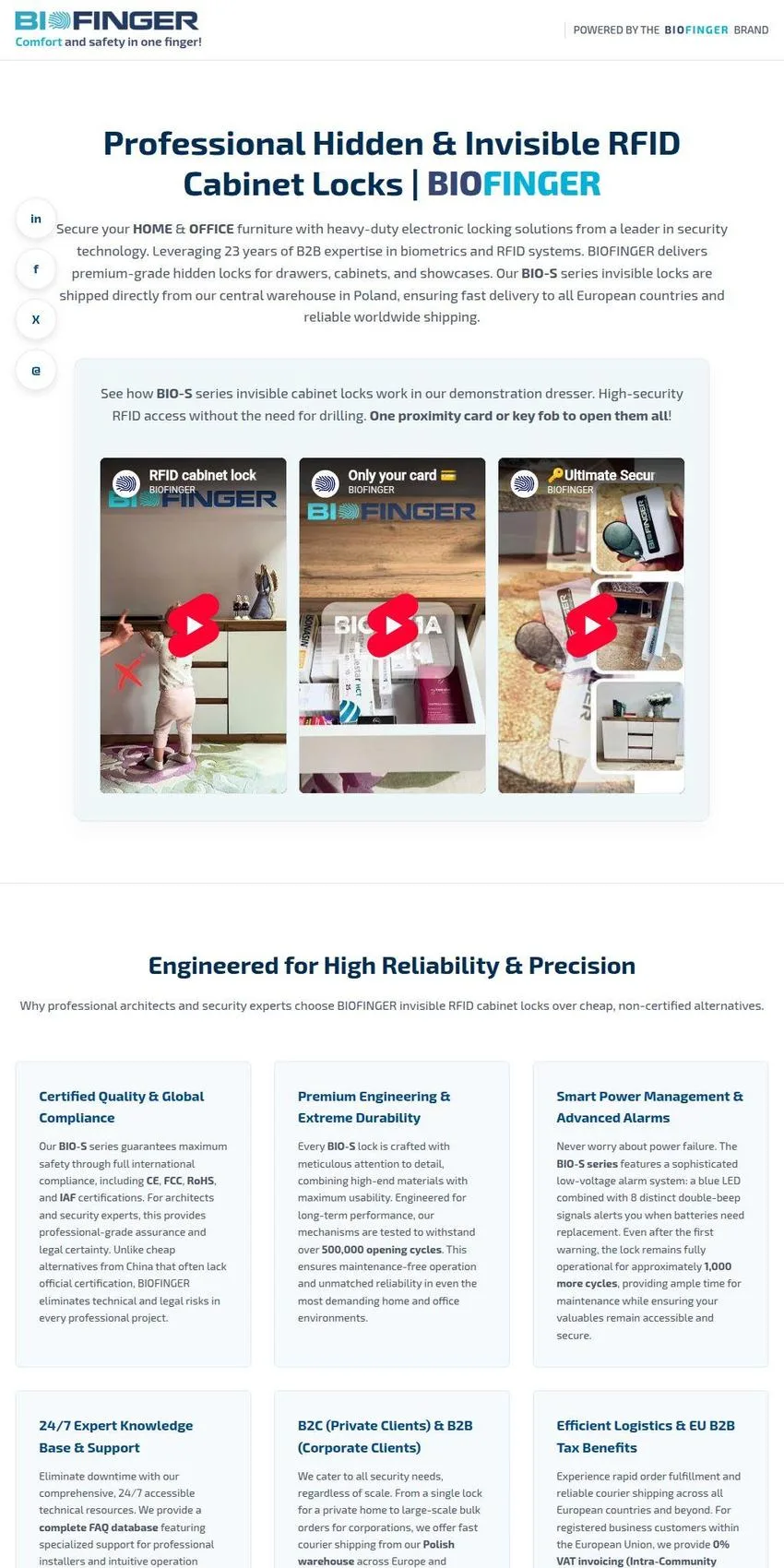
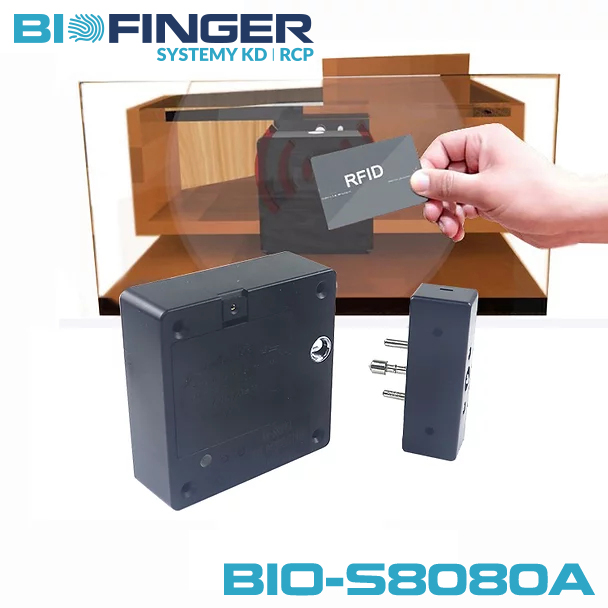
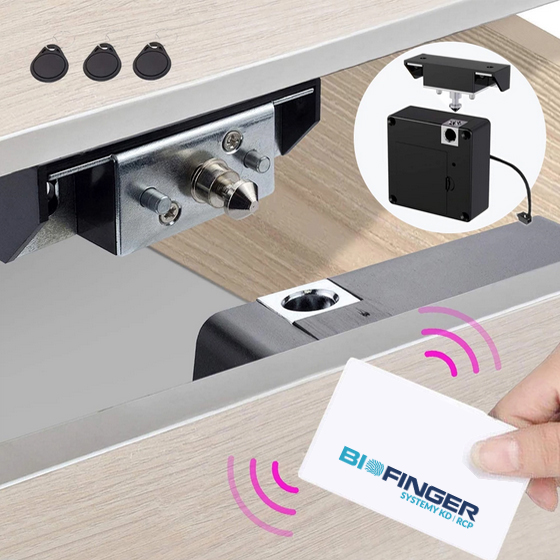
Hidden Cabinet Locks EU is the European storefront for the BIO-S line of electronic furniture locks, sold under the Polish BIOFINGER brand. The premise is simple: the lock sits inside the drawer or cabinet, hidden from view, and opens when an RFID card or key fob is held near the front. From the outside, the furniture looks untouched, with no keyhole or metal plate on show.
Furniture security occupies a middle ground that traditional hardware never handled well. A padlock is cheap but clumsy, while a full access control system is far too much for a dresser at home. These devices treat a cabinet the way a hotel treats a room door: hold up a card, hear a soft click, and the bolt slides back.
The brand behind the site belongs to a company that has worked in biometrics and electronic security since 2002. Time and attendance systems are its main trade, so the furniture locks grew out of existing engineering rather than being a reseller's side project. That background shows in the manuals and technical notes, which read like they were written by people who install things for a living.
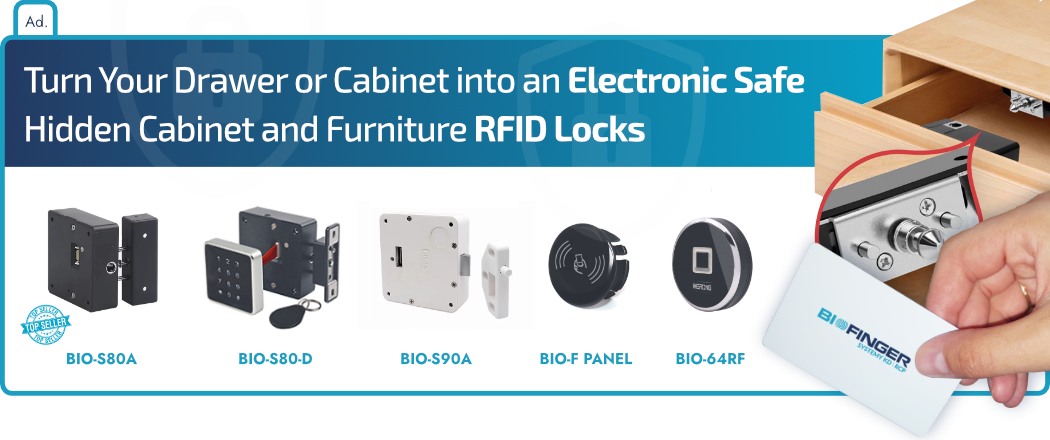
All three locks sold here read Mifare cards at 13.56 MHz, the same contactless standard found in office badges and transit passes. One card or fob can be registered to many locks at once, which spares you a pocketful of keys. Registration runs through a manager card while daily access runs through user cards. Think of the manager card as the master remote for the whole setup.
The homepage compares three models side by side, and the tiering is refreshingly easy to follow. Each one aims at a different job, whether that's a slim desk drawer or a wall of changing-room lockers. The differences come down to size, power source, and warranty terms.
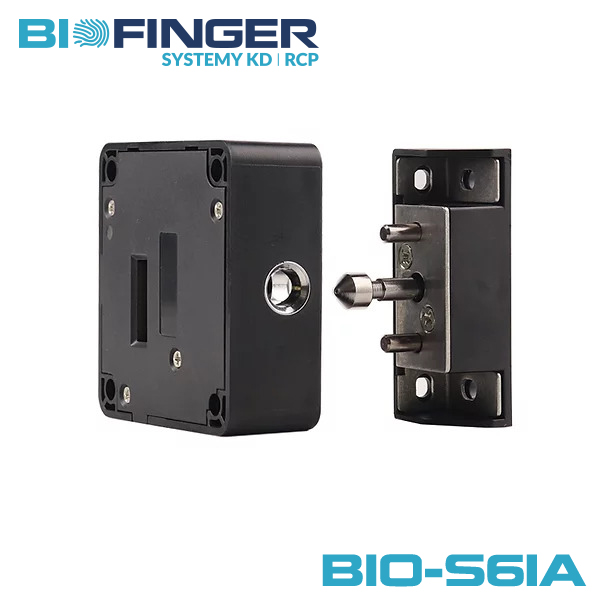
The BIO-S61A is the compact choice, with a housing of 61 by 61 millimeters and just over two centimeters of depth. It runs on a single 3V battery and fits where space is tight: shallow drawers, filing cabinets, small chests. Despite its size, it carries the same 24-month warranty as the larger models.
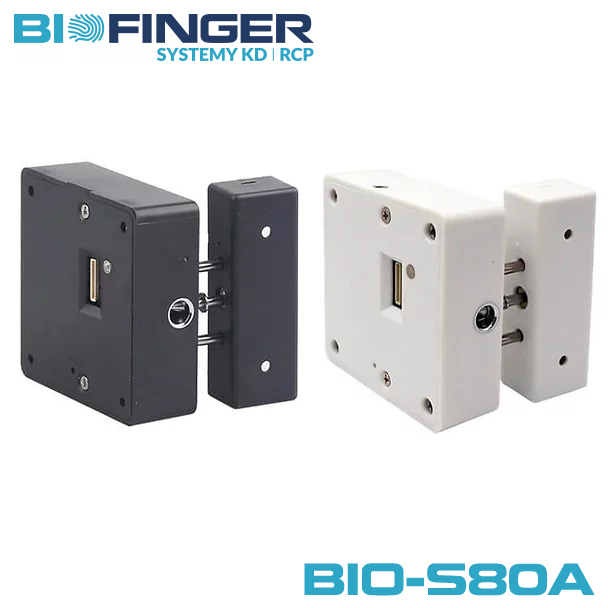
The BIO-S80A is the standard model and, by the company's own account, its best seller. It's larger, runs on four AAA batteries, and comes in black or white. The bolt is rated to hold 150 kilograms, which is more force than most cabinet doors will ever see. An optional Bluetooth mode lets a phone app on Android or iPhone open the lock when the user is in range.
Memory on that model covers up to 30 user cards plus 10 manager cards, enough for a family or a small office team. Add-on front panels widen the ways in, with a PIN code of 4 to 8 digits or a fingerprint reader for people who'd rather carry nothing at all. The unit is rated from minus 15 to plus 65 degrees Celsius, so it can sit inside a fridge or a sun-warmed shop display without complaint.
The BIO-S8080A rounds out the range as the value pick for bulk work. It shares the S80A's footprint but is built to a leaner spec, with a 12-month warranty, and the site pitches it openly at gyms and storage centers where dozens of lockers need fitting at once. In my opinion, that sort of plain tiering serves a buyer better than three models all claiming to be the best one.
Every lock runs in one of three work modes, and the distinctions matter more than they first appear. Private mode gives a fixed group permanent access, the way a household shares a medicine cabinet. Public mode behaves like a swimming pool locker: anyone claims an empty cabinet, seals it with their own card, and frees it when they leave. Restricted public mode sits between the two, keeping a locker tied to one person until it's formally handed over.
What happens when the batteries fade? The lock gives plenty of warning, flashing a blue light and sounding eight double beeps, then keeps working for roughly a thousand more openings. A programmable setting can auto-release the bolt at critical voltage, and a USB-C port accepts external power if every warning gets ignored. As a reviewer, I've seen electronic locks that treat power failure as an afterthought; this range clearly planned for it.
Installation is pitched at ordinary DIY skill levels, needing only a small drill and a screwdriver plus about half an hour. The locks mount vertically or horizontally on wood, plastic, or glass, and they cooperate with push-to-open drawer systems. Since the radio signal has to pass through the front, the maker steers buyers toward those materials rather than metal-faced furniture. One thoughtful touch: a beep and a red light remind you when a cabinet has sat open for a minute.
Durability testing runs to 500,000 cycles, which at ten openings a day works out to more than a lifetime of use. The locks carry CE, FCC, and RoHS marks, and the company leans on that paperwork to set itself apart from uncertified imports. For an architect or fit-out contractor, the certification trail matters as much as the hardware itself.
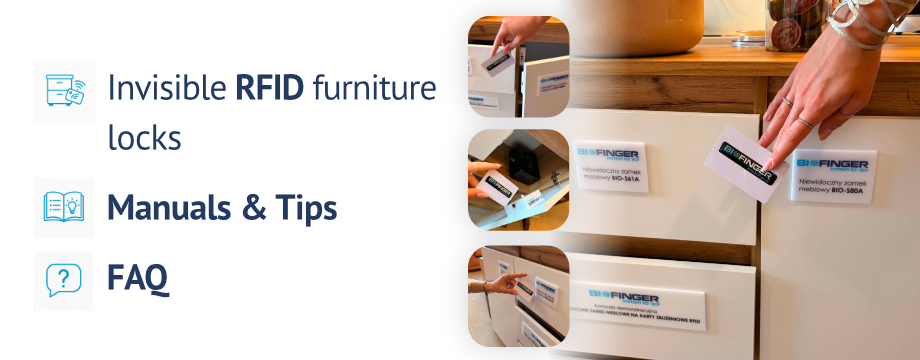
Orders ship by courier from a central warehouse in Poland to the rest of Europe, with worldwide delivery also available. EU-registered businesses can buy on 0% VAT intra-community invoices, which simplifies procurement for larger projects. Support comes through a detailed FAQ and step-by-step programming guides, plus video demos of the locks fitted in a real dresser. Those clips show how the hardware actually behaves, faster than any spec table could.
So who is this for? Homeowners hiding valuables in plain furniture fit the profile, as do offices with document cabinets and facility managers kitting out locker rooms. The site keeps its pitch tight, with clear tiers and shared card technology across the line, backed by a maker with two decades in electronic security. For anyone weighing hidden locks against a drawer full of loose keys, the comparison table on the homepage is a sensible place to start.
Business address
Novo Capital Investment Sp. z o.o.
Szuberta Street 100,
Gdansk,
Pomorskie
80-172
Poland
Contact details
Phone: +48 735 800 333