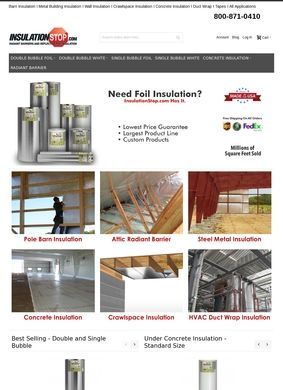
A homeowner staring at a bare pole barn ceiling, or a contractor pricing reflective wrap for a steel building, tends to want two answers fast: which width fits the framing, and what it costs to ship a bulky roll. InsulationStop, which sells under the InfraStop brand, is built around that shopping trip. The whole site points at people who already know they need a radiant barrier and now have to pick the right one.
The product line is narrow on purpose and deep inside its niche. Reflective foil bubble insulation is the spine of it: double bubble and single bubble in widths that run from nine inches up to ten feet, a white-faced bubble product for interiors, plus concrete insulation, HVAC duct wrap, specialty tapes, and custom-cut sizes for odd jobs. The catalog is sorted by type and dimension, so matching material to a specific cavity or run does not turn into guesswork.
That focus is the strongest thing here.
Reflective insulation is easy to install badly, and a foil layer stapled with the wrong air gap can quietly do nothing. InsulationStop seems to understand that, because the support material goes further than the average product store bothers with. There are application and installation guides, videos, an energy-saving blog, and an FAQ that works through the questions people ask before they commit to a roll. Free sample requests let a buyer handle the material first. A separate quote request system covers bulk orders and custom sizing, which is where a lot of metal-building and pole-barn projects land.
Coverage across building types is the other reason the catalog reads as considered. InsulationStop speaks to attics, crawlspaces, walls and ceilings, concrete slabs poured over foam, ductwork, and the big uninsulated shells of pole barns and steel buildings. Those are different problems with different R-value expectations, and organizing the products around them is more useful than a flat parts list would be. Shipping and ordering details are laid out on the site too, which spares the buyer a phone call just to learn how a ten-foot roll gets to a rural address.
What happens after the order is placed
A tidy catalog only tells half the story. The harder question for any online insulation seller is whether the order shows up complete and on time, and whether a buyer can reach a person when it does not.
InsulationStop splits down the middle on that: easy to reach, less certain on delivery, going by what other customers have written. The gap between a clean storefront and a smooth transaction is where most of the caution lives.
Contact that is easy to find
Getting hold of InsulationStop takes no digging. A toll-free phone line sits in plain view, there is a support email, a fax number for the businesses that still run on one, and a proper contact page, well beyond what a bare entry in a business directory would offer.
Installers regularly need to confirm a width, a facing, or a shipping timeline before they order hundreds of dollars of material, and a company that hides its phone number makes that harder than it needs to be. The transparency here is genuine and it counts in the site's favor.
Where outside reviews raise flags
Outside the site itself, the picture cools off. SmartCustomer shows a 2.0 out of 5 built on four reviews, with complaints clustering around long delays, missing order confirmations, and orders that arrived incomplete. Four reviews is not a lot to go on, but the pattern across them is consistent, which counts for something even in a small sample. The company also carries a BBB profile for "Insulation Stop" in Latham, New York, where it operates under president Nicholas D. Semon; the profile is not BBB accredited and lists its own rating and complaint history.
Not every outside source paints the same picture. Shopper Approved hosts a review page for InsulationStop, Yelp lists the business with a handful of reviews and a few photos, and Houzz carries a professional listing with a positive descriptive write-up, though no headline numeric score came through there. Across all of it the volume is low and skews negative, and the complaints keep circling back to fulfillment rather than the products themselves. Nobody in that record says the foil failed. They say it took too long to show up.
So the read on InsulationStop is a qualified one. The specialization holds, the range of widths and building-specific options outpaces what a typical generalist seller stocks, and the guides plus free samples show a company that expects buyers to want proof before they spend.
If the fulfillment complaints reflect an ongoing habit, that undercuts a lot of the goodwill the catalog builds; if they were a rough patch, the underlying offering is solid. A buyer who calls ahead, confirms stock and shipping in writing, and starts with a sample is in a reasonable position. A buyer who needs material on a tight deadline should weigh those delay reports carefully before placing an order.