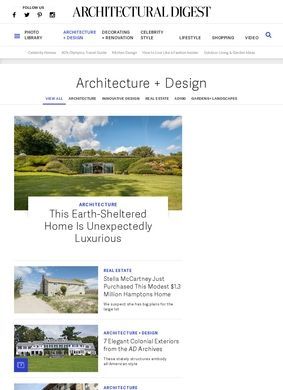
Home tours are the draw, and they are more particular than the format usually allows. Architectural Digest gets behind the front doors of musicians, actors, designers and assorted public figures, and the photography treats a kitchen island or a stair runner with the same seriousness another outlet might reserve for a building facade. That access is the spine of the site. Strip away the celebrity names and you would still have a magazine that knows how to look at a room, but the names are what pull a casual reader through five tours in a sitting.
Behind celebrity home tours
It helps to know where the publication comes from. Architectural Digest began in 1920 and now lives as both a print magazine and a digital operation under Conde Nast. The website is a full content machine in its own right. The print edition still runs, with cover features built around recognizable faces, and a subscription gets you the issues. Online, the cadence is faster: design news, architecture coverage, shopping guides, and a steady churn of advice pieces aimed at people trying to make their own homes look less accidental.
Practical advice for everyday spaces
That advice layer is worth separating from the aspirational content, because the two serve different appetites. A reader who will never own a glass house in the hills can still use a guide on how to arrange a gallery wall or which paint finish survives a hallway with kids in it. The shopping recommendations and product roundups sit in this same practical zone. None of it pretends the average budget matches the homes in the tours, and Architectural Digest is honest enough about that gap that the consumer pieces read as a separate track rather than a guilty afterthought.
AD PRO membership and industry research
The professional tier is where Architectural Digest tries to be something other than inspiration. AD PRO is a paid membership pitched at the trade: interior designers, architects, people who need to know where a market is heading and what a space communicates beyond a good photograph. It bundles industry reports, trend analysis, designer profiles, and longer features that dig into specifics like color, texture, layout and the strategy behind how a space gets put together. A glossy consumer brand running a credible B2B research arm is a harder thing to pull off than another celebrity walkthrough, and it is the part most likely to disappoint if the depth does not match the framing.
Complete archive access
One genuine asset for members is the complete archive. Architectural Digest offers unlimited access to every issue it has ever published, which for a title with a century behind it is a substantial document of how taste in interiors and architecture has moved. For a designer chasing a reference, or anyone curious about how a 1970s spread reads against a current one, that depth is something a free site cannot match. Whether it justifies the membership on its own depends entirely on how often a subscriber would reach for it, and most readers probably would not.
Social media reach and platform presence
Architectural Digest calls itself "The International Design Authority," which is the sort of self-applied title that invites a raised eyebrow. The reach is real enough to make the claim defensible, though. Beyond the website and print, Architectural Digest runs heavily on Instagram, TikTok, Facebook, Pinterest and LinkedIn, and the video work in particular has found an audience well outside people who would ever buy a shelter magazine. The TikTok and Instagram tours travel far. That cross-platform footprint is part of why a general reader bumps into the brand long before they ever land on the site itself.
Balancing free content with paid membership
What sits a little uneasily is the division between the free consumer content and the gated material. Architectural Digest wants to be the place a first-time homeowner googles "how to style a console table" and also the place a working designer pays for market intelligence, and those audiences want different things from the same masthead. The free side is generous and easy to browse. The membership pitch, between AD PRO and the archive, is where the site asks you to commit money, and it is fair to wonder whether the consumer who arrives for a celebrity tour ever has a reason to cross that line.
If you are hunting design inspiration with no intention of paying, this is an easy recommendation: the tours are well made, the photography is consistently strong, and the advice pieces are useful without being condescending. Architectural Digest has the catalog and the production values to back the coverage, and the breadth across architecture, interiors and shopping means it does not run dry quickly. Architectural Digest has earned the right to be taken seriously on design even when the title it gives itself is doing some work.
The harder consideration is whether the paid layers deliver on that reputation. AD PRO lives or dies on whether its reports tell a professional something they could not get for free elsewhere, and from the outside the offering is described in confident terms that are difficult to test without paying in. The archive is a clearer value, but a narrow one. Architectural Digest is unambiguously good at the thing it has always done, which is making rooms look worth staring at. Whether it is equally good at the trade-research business it now markets so heavily is the part a reader comes away unsure about, and it is the part that costs the most to find out.