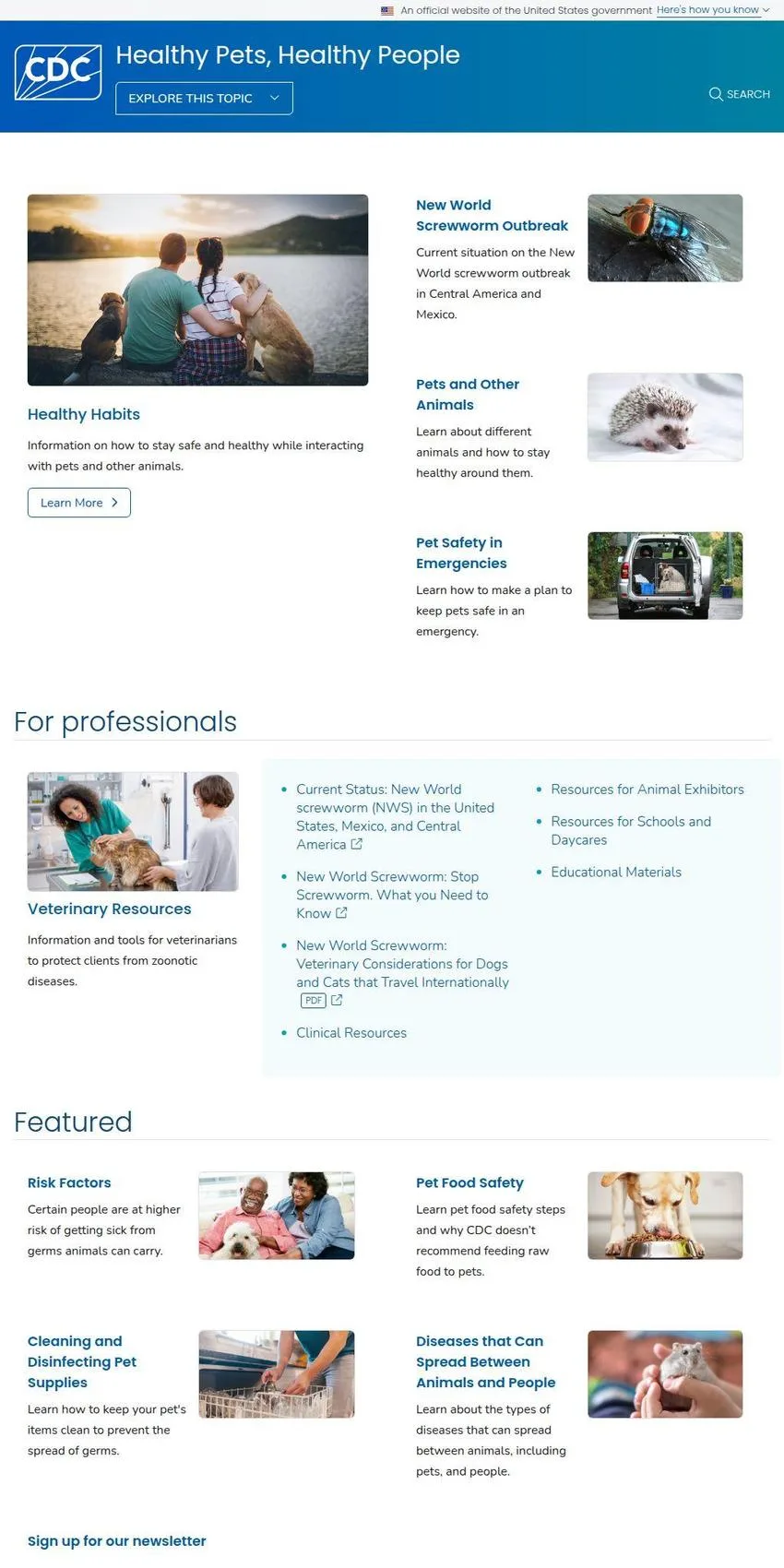
What the program covers
Healthy Pets, Healthy People is a public health information program from the Centers for Disease Control and Prevention, the federal health protection agency based in Atlanta, Georgia. The program is produced by the National Center for Emerging and Zoonotic Infectious Diseases, the CDC unit that studies infections passing between animals and people. Its purpose is practical: help households, pet owners, and anyone who works with animals reduce the chance of getting sick while still enjoying the company of pets.
The central idea is the zoonotic disease, meaning an illness that people can get from animals. Pets can carry germs that make humans ill even when the animal looks clean and healthy. The program does not tell people to avoid pets. It sets out the everyday steps that lower risk, such as washing hands after handling animals, their food, or their waste, and keeping up with veterinary care.
Who faces higher risk
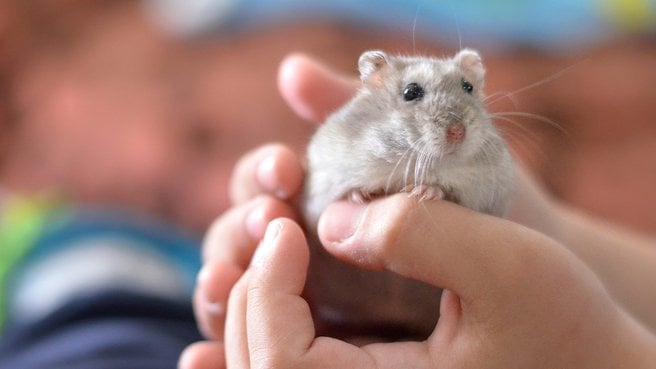
Some groups are more likely to develop serious illness from animal-related germs. The program names children younger than five, adults aged sixty-five and older, pregnant women, and people with weakened immune systems. For these groups it offers targeted advice. Pregnant women, for example, are advised to avoid changing cat litter where possible because of the risk of toxoplasmosis, and young children are told to keep animals and unwashed hands away from their faces. Adults who supervise children around animals at petting zoos, farms, or fairs get specific guidance on handwashing and food safety.
Guidance organized by animal
Content is grouped by the kind of animal a person keeps or meets. Dogs and cats receive the most attention, covering routine veterinary visits, vaccination, deworming, flea and tick control, and safe cleanup of feces and litter. Reptiles and amphibians such as turtles, lizards, and frogs are treated separately because they commonly carry Salmonella, and the program explains why these animals are a poor match for homes with very young children. Backyard poultry, a growing interest among households, has its own material on handwashing and keeping birds out of kitchens.
The program also addresses farm animals, animals encountered at public exhibits, and wildlife. Its advice on wild animals is simple: enjoy them at a distance and contact a licensed rehabilitator rather than taking an injured animal home.
Food, cleaning, and travel
Pet food and treats can be a source of infection for both animals and the people who handle them. The program covers safe storage and handling of pet food, including raw diets, and explains why hands and surfaces should be cleaned after feeding. Guidance on cleaning and disinfecting pet supplies recommends doing this away from areas where human food is prepared, and it points out that cages, tanks, and bowls need regular attention.
Travel with pets is another topic. The material covers what to plan before a trip and how emergencies and natural disasters affect animals, including keeping a pet emergency kit and knowing where animals can go if a family must evacuate. These sections are useful for owners and for anyone caring for someone else's animal during an absence.
Resources for professionals and caregivers
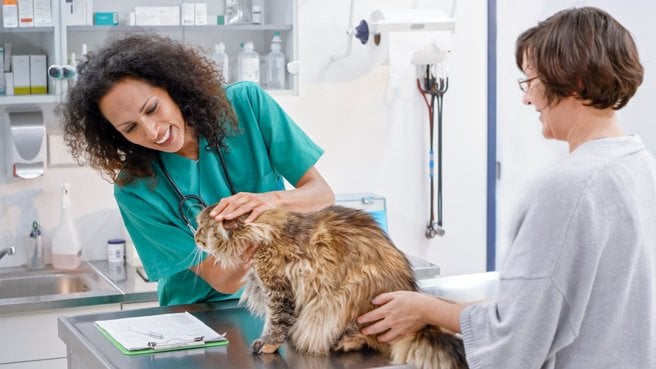
Beyond the general public, the program maintains material for healthcare providers and for veterinarians. Clinical pages help doctors recognize infections that may come from animal contact, and veterinary pages connect animal health workers to CDC guidance. This reflects the One Health approach the agency uses, which treats human health, animal health, and the shared environment as connected concerns rather than separate ones.
For a pet sitter or boarding caregiver, the material has direct value. A sitter handling several households' animals moves germs between homes unless basic hygiene is followed, and the program's plain-language steps on handwashing, waste disposal, and supply cleaning translate into a simple routine. The guidance on higher-risk clients also helps a sitter decide when extra care is warranted, for instance when a household includes a newborn, an older adult, or someone recovering from illness.
The information is written for a general audience and updated as new health concerns appear, including outbreaks linked to animals and animal products. Because it comes from a federal agency, the guidance is free to read and is not attached to any product or commercial service. That makes it a steady reference point for owners, sitters, shelters, and educators who want accurate, current advice rather than marketing claims.
People looking for teaching aids will find printable fact sheets and material aimed at schools and daycare centers, which can be used to explain safe animal contact to children. Taken together, the program gives anyone responsible for animals a clear, science-based foundation for keeping both pets and people well.




Business address
Centers for Disease Control and Prevention
1600 Clifton Road NE,
Atlanta,
GA
30329
United States
Contact details
Phone: 800-232-4636