Ten Steps to Successful Breastfeeding sit near the center of the breastfeeding pages the Centers for Disease Control and Prevention publishes at cdc.gov/breastfeeding. They are a maternity-care checklist for hospitals, a set of concrete practices a birth facility can adopt, and their inclusion by the Centers for Disease Control and Prevention signals what this whole section is built to do: turn federal guidance into things clinicians and institutions can actually put into practice on a labor and delivery floor.
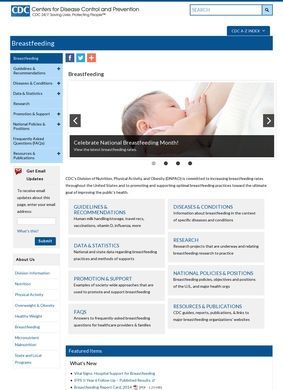
The section is organized into a handful of clearly separated areas: About Breastfeeding, Public Health Strategies, a Resource Library, a Frequently Asked Questions page, and a set of Breastfeeding Guidelines. That layout shows the Centers for Disease Control and Prevention is writing for more than one reader at once, from a new mother reading the basics at two in the morning to a hospital administrator hunting for implementation standards.
What the breastfeeding section holds
The material runs from plain-language health information to technical performance data, and it helps to walk the pieces one at a time. What a first-time parent needs from the Centers for Disease Control and Prevention is not what a state health department needs, and the section is arranged so that both can find their part without wading through the other's.
The organizing goal underneath everything is stated plainly across the pages: raise the share of infants who are breastfed, and in particular exclusively breastfed, by building environments that support the practice. That single aim explains why a page of health benefits sits in the same section as a hospital performance report. One makes the case. The other measures whether the system is actually delivering on it.
About breastfeeding and the guidelines
The About Breastfeeding pages, as the Centers for Disease Control and Prevention frames them, lay out the health benefits for infants and for mothers, which is the ground the rest of the section stands on. This is the part written for parents and the general public, and it stays readable instead of drifting into clinical shorthand.
The Breastfeeding Guidelines push further into clinical territory. They pull in the Surgeon General's Call to Action on breastfeeding and hospital maternity care practice recommendations, the documents a provider would cite when changing how a unit operates. For a clinician, this is where the Centers for Disease Control and Prevention states what good care looks like across settings, and where the theme of continuity of care, keeping support consistent as a mother moves from hospital to pediatrician to home, gets spelled out in practical terms instead of left as a nice idea.
A mother who gets strong help in the hospital and none afterward is exactly the gap this material is trying to close.
Public health strategies for workplaces and communities
The Public Health Strategies area turns from the individual to the system. Here the Centers for Disease Control and Prevention addresses workplace and community support: the worksite programs that let a returning employee keep nursing, and the community initiatives that back families outside the clinic walls.
State and local implementation strategies live in this part, aimed squarely at the public health organizations, employers, and early care and education settings that have to translate policy into daily practice. It is the section's answer to a stubborn problem, that a mother's intention to breastfeed collapses without an environment built to support it.
A parent can want to continue and still be defeated by a job with no place to pump and no schedule that allows it, and this is the material meant to address exactly that. The emphasis on employers and community settings is a recognition that the decision never happens in a vacuum.
The resource library and frequently asked questions
The Resource Library gathers the downloadable and reference material into one place, and the FAQ page handles the direct questions a parent or a provider is most likely to type into a search bar. Between them, the Centers for Disease Control and Prevention covers both the browsing user who wants to pull a specific document and the one who arrives with a single practical question and no patience for a long read.
These are the least glamorous parts of what the Centers for Disease Control and Prevention has assembled here, and probably among the most used. A resource library only earns its keep if the documents are findable and current, and the FAQ format is a sensible acknowledgment that many visitors want an answer, not a curriculum. For a nurse fielding the same handful of questions shift after shift, having a federal source to point patients toward is a practical convenience.
The same library doubles as a place a new parent can return to between appointments, when the questions tend to pile up faster than any single clinic visit can answer them, and a trustworthy reference beats a random search result.
Data, performance reports, and cost analysis
The data tools are where the Centers for Disease Control and Prevention shows its institutional weight. National breastfeeding rate statistics, state and hospital performance reports, a medical cost-impact analysis, and demographic breakdowns by race and ethnicity all sit in this part of the section.
This is material a policymaker or a researcher can cite directly. The Centers for Disease Control and Prevention presents measured tracking here, not general encouragement: where rates stand nationally, which hospitals meet the maternity-care marks, and what the health system spends when breastfeeding rates fall short of recommended levels.
The medical cost-impact analysis in particular reframes the issue in dollars, the language a budget office actually responds to. The demographic breakdowns matter, because a single national average hides the gaps between groups, and a report that surfaces those gaps is more useful to someone trying to close them than a headline figure ever could be.
The audience list is unusually wide for one section. New and expectant mothers, obstetricians, pediatricians, and nurses, employers running worksite programs, state and local public health bodies, early care and education settings, and policymakers all have a stake here, and the Centers for Disease Control and Prevention writes to each of them without collapsing into a single generic register. That range is the point: the same body of evidence gets aimed at the parent, the provider, and the person setting policy, each from the angle that reader can act on.
The number running under all of it is blunt. The exclusive-breastfeeding rate the Centers for Disease Control and Prevention tracks still sits near one in four infants, and the strategies, guidelines, and performance reports are all pointed at moving that figure toward the recommended targets. The demographic tables the Centers for Disease Control and Prevention publishes show the rate is not spread evenly across groups.