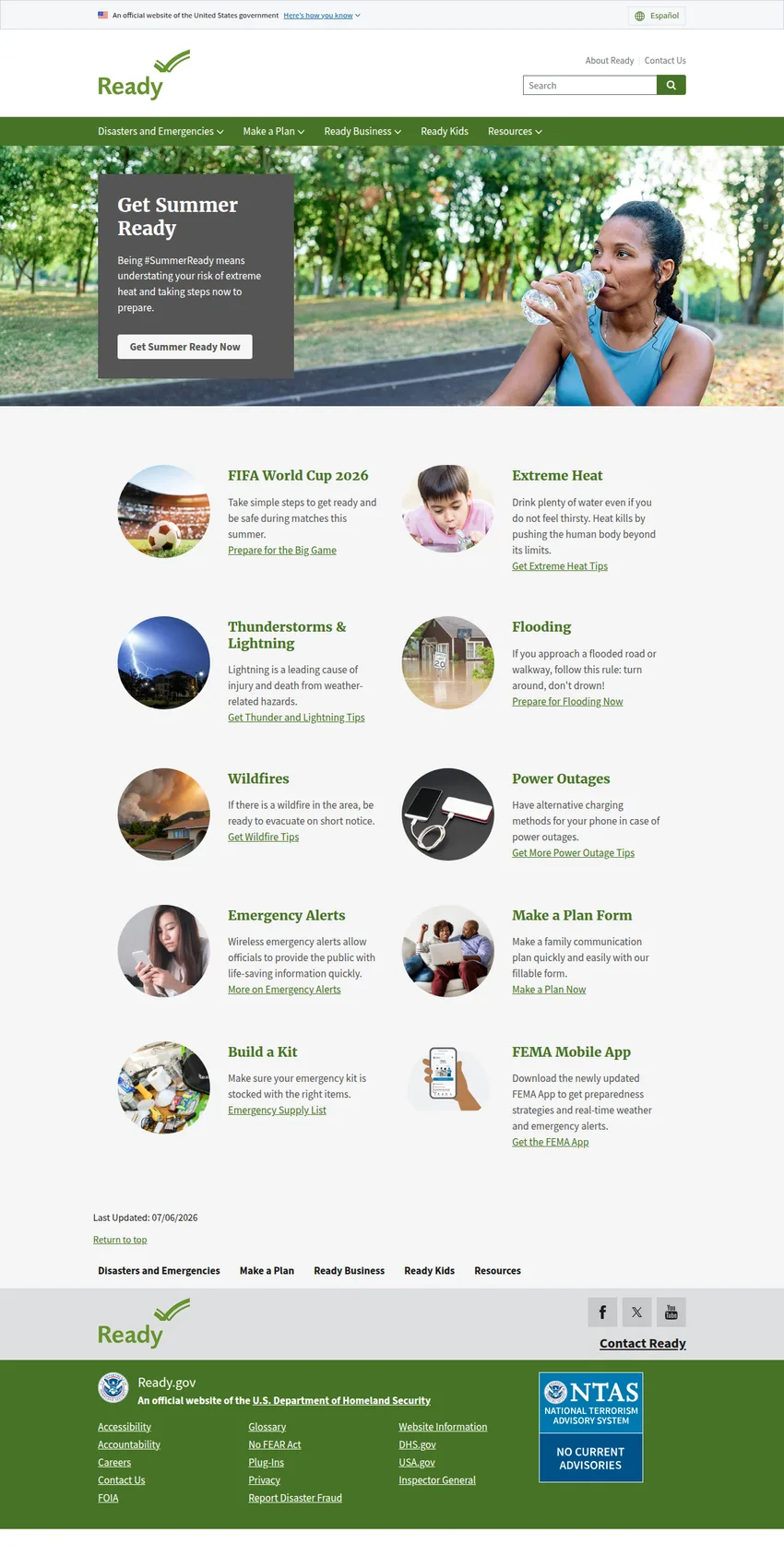
The idea behind the site
Ready.gov exists to answer one question before a disaster arrives: do you know what you would do? It is the public education website of the Ready Campaign, a national preparedness effort that the Federal Emergency Management Agency runs as part of the U.S. Department of Homeland Security. FEMA launched it in February 2003, in the period after the September 11 attacks, when the government wanted a plain, non-technical place to tell households how to get ready for emergencies of any kind. The campaign has run without a break since then, in partnership with the Ad Council, which produces its public service advertising.
The message has stayed steady because the advice does not change much from one disaster to the next. Whether the threat is a hurricane, a house fire, a chemical spill, or a week-long power outage, the same small set of actions puts a family in a far better position. Ready.gov organizes everything around those actions and keeps the reading level low on purpose, so the guidance works for a teenager, a new parent, or someone reading it in a second language.
Four steps the campaign keeps coming back to
Strip away the detail and Ready.gov asks people to do four things:
- Be informed. Learn which hazards are likely where you live and how local officials will warn you.
- Make a plan. Agree in advance on how your household will contact each other, where you will meet, and how you will leave if you have to.
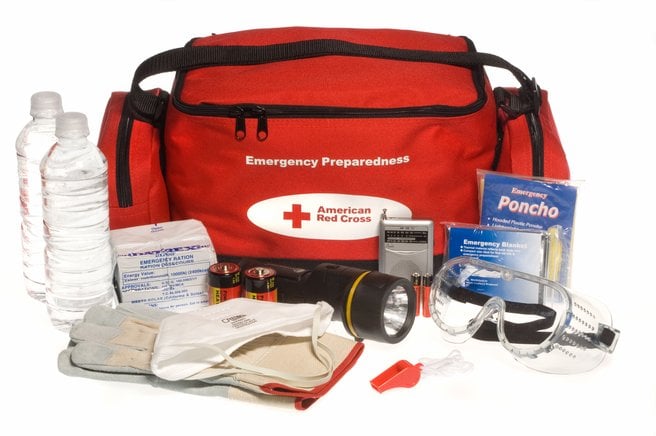
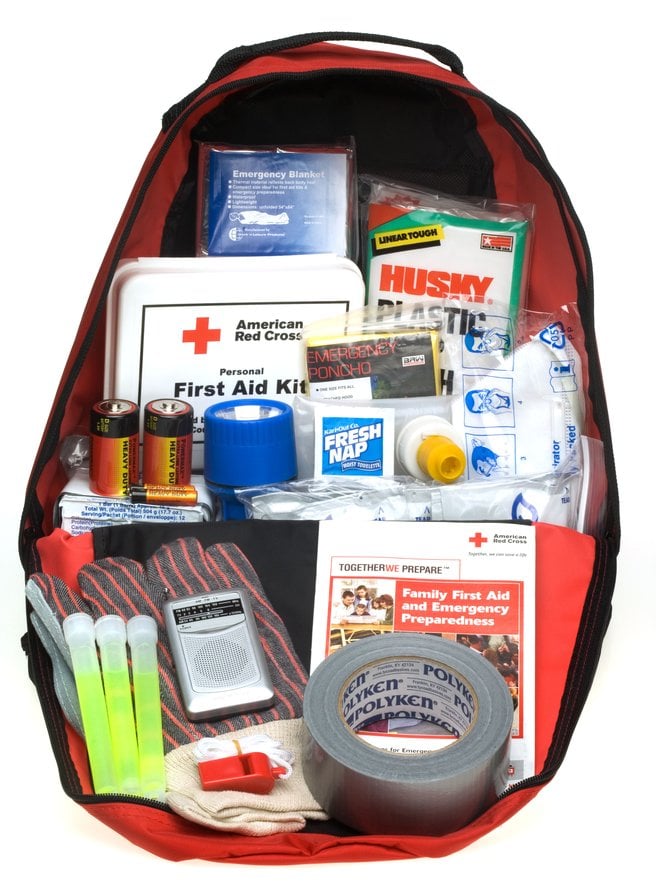
- Build a kit. Put together enough supplies to get through several days without power, water, or a trip to the store.
- Get involved. Take a class, help neighbors, or join a local response group so a community prepares together.
The kit guidance is the part people ask about most. The site's basic list is easy to check against what is already in the house:
- Water, one gallon per person per day, for at least three days.
- A three-day supply of non-perishable food and a manual can opener.
- A battery or hand-crank radio to hear alerts when the power is out.
- A flashlight, spare batteries, and a first aid kit.
- Medications, copies of important documents, some cash, and supplies for children and pets.
Ready.gov pairs each of these with printable checklists and a fill-in family communication plan, so a household can finish the work in an afternoon instead of treating it as an open-ended project.
Guidance sorted by hazard
Because the right move during an earthquake is not the right move during a flood, the site keeps a separate page for each type of emergency. The list runs long: hurricanes, floods, wildfires, tornadoes, earthquakes, winter storms, extreme heat, power outages, home fires, pandemics and other disease outbreaks, and human-caused threats. Each page follows the same shape, covering what to do before, during, and after the event, which makes it quick to look up one specific hazard when a warning is in the forecast.
Programs for different audiences
One set of advice does not fit every reader, so the campaign runs branches aimed at specific groups.
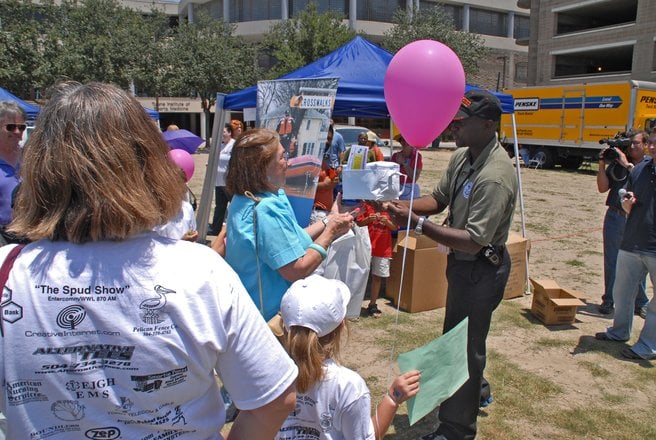
Ready Business helps owners and managers write continuity and emergency plans for a workplace, with worksheets tailored to different industries. Ready Kids turns preparedness into something children can take part in, with age-appropriate activities and a plan they help build alongside their families. Listo carries the same material in Spanish for Spanish-speaking households. Every September the campaign leads National Preparedness Month, a coordinated push with a weekly theme that lines up preparedness messages across FEMA, state and local agencies, schools, and employers.
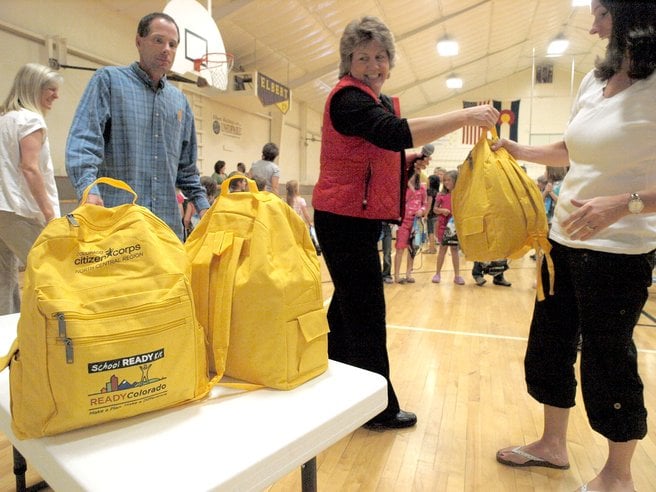
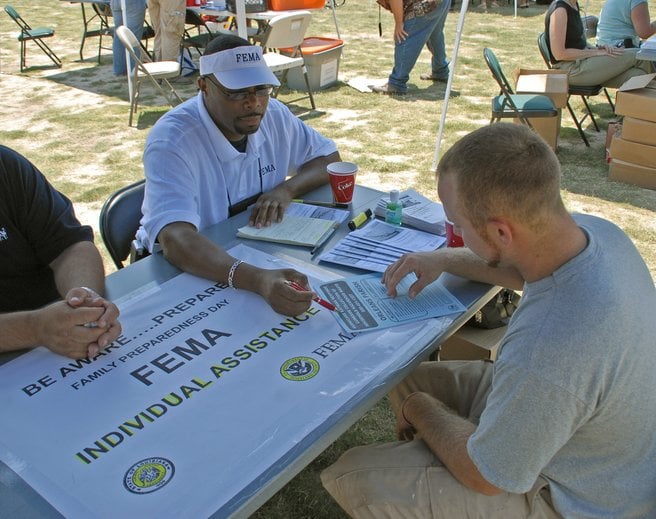
The site also backs youth and community preparedness projects, and it supplies materials to the network of state and local emergency managers who deliver preparedness education on the ground. That is why it fits under public health and safety in a directory: it is the single federal starting point most Americans are pointed to when they want to prepare, and a lot of local safety outreach is built from what it publishes.
How current the material stays
The content is reviewed and updated by FEMA's preparedness staff, and it reflects current federal guidance rather than a one-time brochure. When alerting systems change, when a new hazard becomes common, or when supply recommendations are revised, the pages are updated to match. The campaign also points readers to the free FEMA App, which delivers real-time weather alerts from the National Weather Service and can show open shelters during a disaster. All of it is free to read, copy, and hand out, which is why schools, workplaces, and local agencies reproduce the checklists so widely.
Ready.gov is operated by FEMA, whose headquarters is at 500 C Street SW, Washington, DC 20472. The agency's main line is +1 202-646-2500, and the FEMA Helpline, at 1-800-621-3362, answers questions from the public. For a category built around public health and safety, this is the reference worth bookmarking before the next warning arrives, not during it.
Business address
Federal Emergency Management Agency (Ready Campaign)
500 C Street SW,
Washington,
District of Columbia
20472
United States
Contact details
Phone: +1 202-646-2500