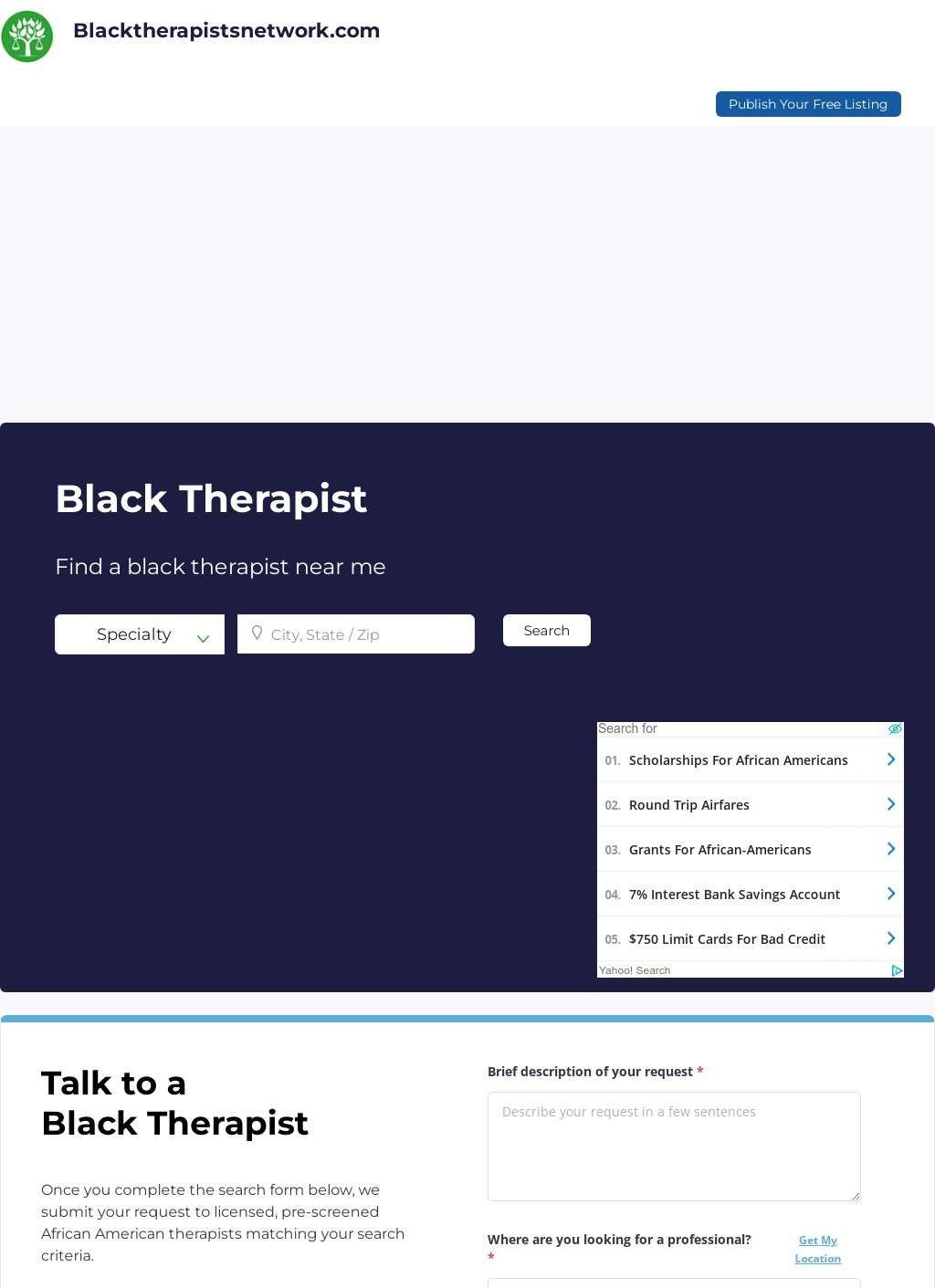
If your search for a therapist begins with one non-negotiable, that the person across the screen shares your cultural frame of reference, Black Therapists is built around exactly that starting point, and on its own published terms it makes a credible case. The platform connects people with pre-screened African American and Black therapists and psychologists, primarily across the United States though it bills itself as worldwide. The verdict up front: this is a focused, well-organized matching service with a defensible vetting story, and its biggest honest limitation is that almost everything you can check comes from the platform itself.
Two ways to find a match
Start with how you actually find someone. You can hand the work off by submitting the request form, and Black Therapists commits to replying within two business days. That is slower than an instant result list, faster than cold-calling clinicians one by one and waiting for a callback that never comes. Or you can browse Black Therapists on your own, sorted by specialty or location. The URL structure is tidy: a path like /us/georgia/atlanta lands where you would expect it to, not on a generic results splash. Letting people self-select between browsing and delegating is a small, practical kindness to a varied audience, and the two modes sit side by side without one crowding out the other.
Services covered across ages and conditions
The scope is broader than the name might lead you to assume. The Black Therapists listing covers individual therapy, family and marriage counseling, and focused work on anxiety, depression, addiction, grief, and personality disorders. Children, adolescents, adults, and elderly clients are all named as in scope. Telehealth is part of the offer, and that has a concrete payoff: someone in a rural county with no local Black clinician can still reach one by video. None of this is buried. It is stated plainly across the site.
Behind the screening and security promises
On screening, the platform describes two stages: a manual review when a therapist submits, then re-verification every year. The annual step is the one worth dwelling on. A single check at signup catches the obvious problems but tells you nothing about a license that lapsed eighteen months later. Committing to a yearly re-check is a heavier operational promise, and Black Therapists states it openly enough that a client could hold the platform to it. The About Us page also describes HIPAA-compliant data handling, framed as Fortune 500-grade security, with a separate security policy page standing behind that language. For a service whose intake forms touch mental health history and contact details, a dedicated policy page is the floor, not a flourish, and the HIPAA framing fits the category even though it is common across health-adjacent products.
Pricing tiers for therapists
Therapists can list free on a basic tier or pay monthly or annually for more visibility, with a 20 percent discount on the annual plan, and the pricing sits on a public page. The platform also runs an affiliate program, a legal disclaimer, a newsletter signup, and a therapist spotlight feature. Black Therapists operates under the Heritage Web umbrella, with a help center at help.heritageweb.com. A named parent company plus a maintained help center is the difference between a live product and an abandoned one, and both are present and linked here.
Contact channels and missing phone number
Reaching Black Therapists runs through a footer contact page, the request form, or social profiles on Facebook, Twitter/X, LinkedIn, and Instagram. No phone number appears in the header or footer, and no physical address is listed. For a form-driven matching service, that is consistent with how the whole thing operates. Still, anyone who wants to speak to a person before handing over personal information will not find a direct line on the surface.
Checking outside reviews of the platform
Here is the part that should temper any enthusiasm. Searching for independent opinion on Black Therapists mostly turns up the platform's own pages and a few unrelated directories that happen to share a similar name. No notable third-party review set came up. For a niche service with a defined audience that is unsurprising, but the consequence is unavoidable: every vetting claim, the annual re-verification, the security posture, the screening, rests on the platform's own word, with nothing external to test it against. The annual re-check is the most reassuring promise on the site precisely because nobody outside has confirmed it.
Comparing Black Therapists to general directories
So where does that leave a prospective client? Set against general-purpose finders like Psychology Today or Therapy Den, which hand you a filter set and leave the cultural-match question to you, Black Therapists treats that match as the premise rather than an afterthought. The clean navigation, the two-day response promise, telehealth, the yearly re-verification, and transparent practitioner pricing add up to a coherent, purpose-built offer. The published specifics are detailed enough that someone clear about their priority, a culturally matched therapist found without running a long solo search, can reasonably decide on what is here. Just go in clear-eyed about the absence of outside corroboration, and treat that first matched recommendation as a starting point to vet, not a guarantee. On balance, a sound choice for the audience it names, with one caveat that does not undo it.