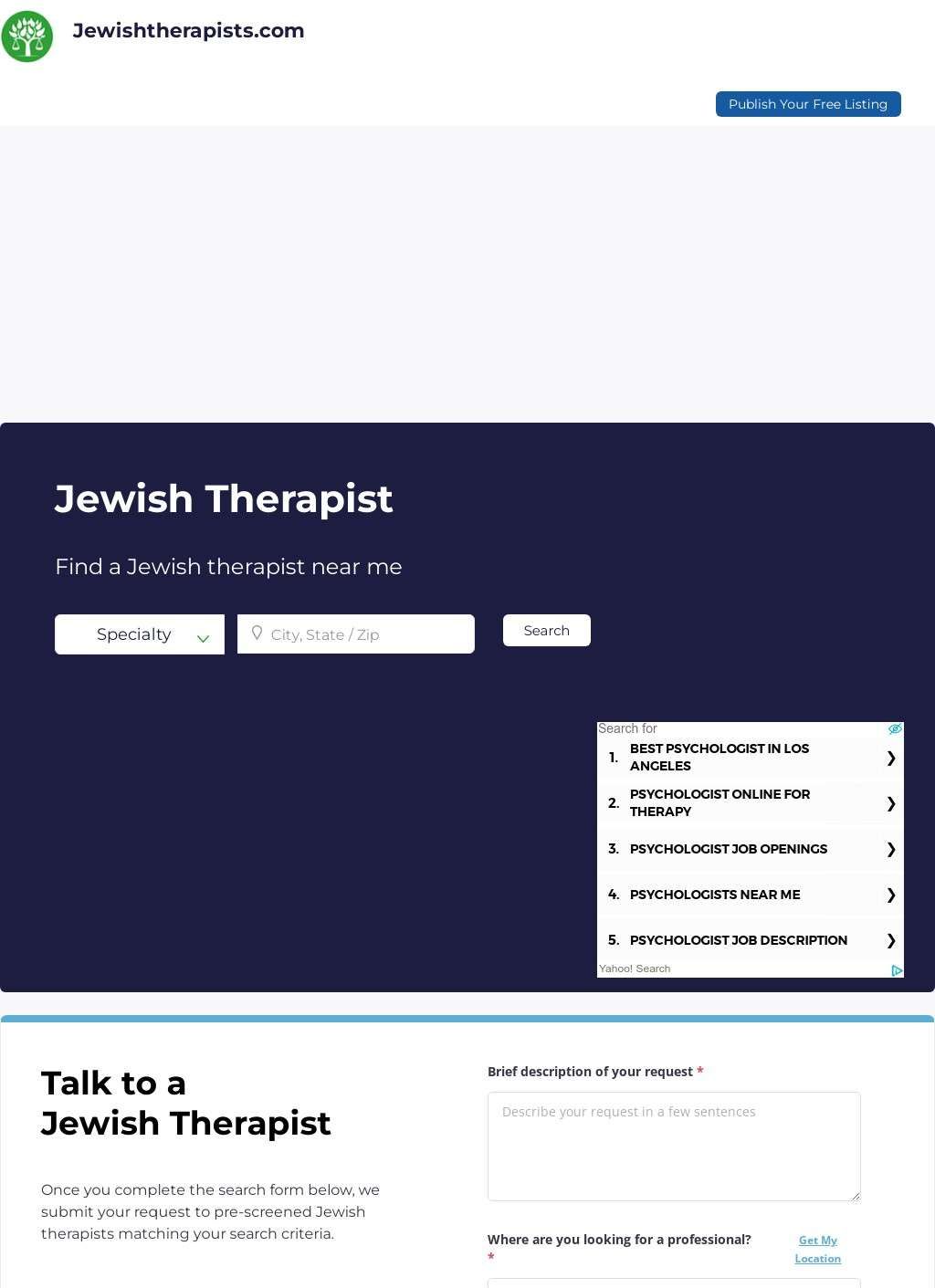
What does a search tool built around Jewish therapists give someone that a general referral site does not? A shared frame of reference, mostly. Jewish Therapists is a matching platform run by Heritage Web LLC, in operation since 2011, that connects people with pre-screened counselors who share a Jewish cultural or religious background. You fill in a short form describing what you are dealing with, and Jewish Therapists routes the request to practitioners whose profiles fit it. The premise is narrow on purpose, and for the right person that narrowness is the whole appeal.
How the filtering works
The filtering is where the site holds attention. You can sort by practice area, so someone looking for help with anxiety, depression, addiction, anger, or ongoing stress can land on counselors who name those specialties, and family counseling and telehealth are both covered. Geography is the other axis, and Jewish Therapists represents major US cities while extending its listings into Canada and Israel. That last detail tells you who the platform is really for, since a person who wants a therapist that understands Jewish practice and community is often searching across borders rather than down the street.
Who the platform serves
The audience it serves is easy to picture. On one side are individuals who would rather not spend the first three sessions explaining a holiday, a dietary rule, or a family expectation to someone outside the tradition. On the other are therapists who want a channel of client leads without building their own referral machine from scratch. Jewish Therapists tries to be useful to both groups at once. Featured-therapist spotlights sit alongside the search and give a few practitioners more visible placement. The browsing felt straightforward to me, though those spotlights blur the line between an editorial pick and a paid slot, and the site does not spell out which one you are looking at.
Therapist profiles and paid placement
The platform is built to work in two directions, and the practitioner side is more developed than a client signing up would likely expect. Therapists get profile management, a paid-leads system, a referral program, and a dashboard for tracking all of it. In plain terms, Jewish Therapists sells leads to the counselors it lists, closer to how a paid business directory operates than a purely editorial listing, and that model shapes what you are seeing. The names appear because they chose to pay for placement and visibility, not because an editor ranked them.
Vetting listings before booking
That does not make the listings suspect. The site describes its members as pre-screened, and a paid roster can still hold real, qualified people. It does mean the roster reflects who signed up, not a full census of every Jewish mental health professional in a given city. A client should treat Jewish Therapists as a set of introductions to vet, then run the usual checks on license, fit, and approach directly with any counselor before booking a first appointment.
Keeping the roster current
The referral program and dashboard suggest Heritage Web has put real thought into keeping practitioners engaged, which tends to correlate with a roster that stays current. Stale profiles are the quiet failure of listing sites, where you finally reach out and the person moved practices two years ago. A working leads-and-referral loop is at least some defense against that, and it is a point in favour of what Jewish Therapists is doing.
Finding independent reviews
On outside standing, there is little to report. A search for independent reviews of Jewish Therapists turned up competing platforms instead of any verdict on this one, so there is no meaningful pool of third-party ratings to lean on. That absence is neither a red flag nor a gold star by itself, because a niche service can run for years without gathering the kind of public review trail a big consumer brand collects. It does mean the case for trusting the site rests on what it shows you rather than on a crowd of prior users vouching for it.
Getting in touch with support
Contact is a minor sticking point. There is a contact page reachable from the footer and a separate Help Center hosted under help.heritageweb.com, along with social profiles on Facebook, X, LinkedIn, and Instagram. What you will not find on the homepage is a phone number or a direct line, so reaching a person takes a click or two down into the footer. For a service handling something as personal as a mental health referral, a more upfront way to talk to a human would settle a little more confidence into the whole thing. None of this sinks Jewish Therapists, but it is fair to flag before you rely on it.
Weighed against a broader platform like Zencare, which carries verified profiles across many therapy niches with video intros and its own vetting, Jewish Therapists trades reach for one well-defined focus. If cultural and religious alignment with a counselor is the thing that matters most to you, this site narrows the field faster than a general listing will, and that is a real service to the people it is built for. If you want the deepest possible roster or a stack of independent reviews to read first, Zencare gives you more to compare, and running the two searches side by side is a sensible way to go about it.