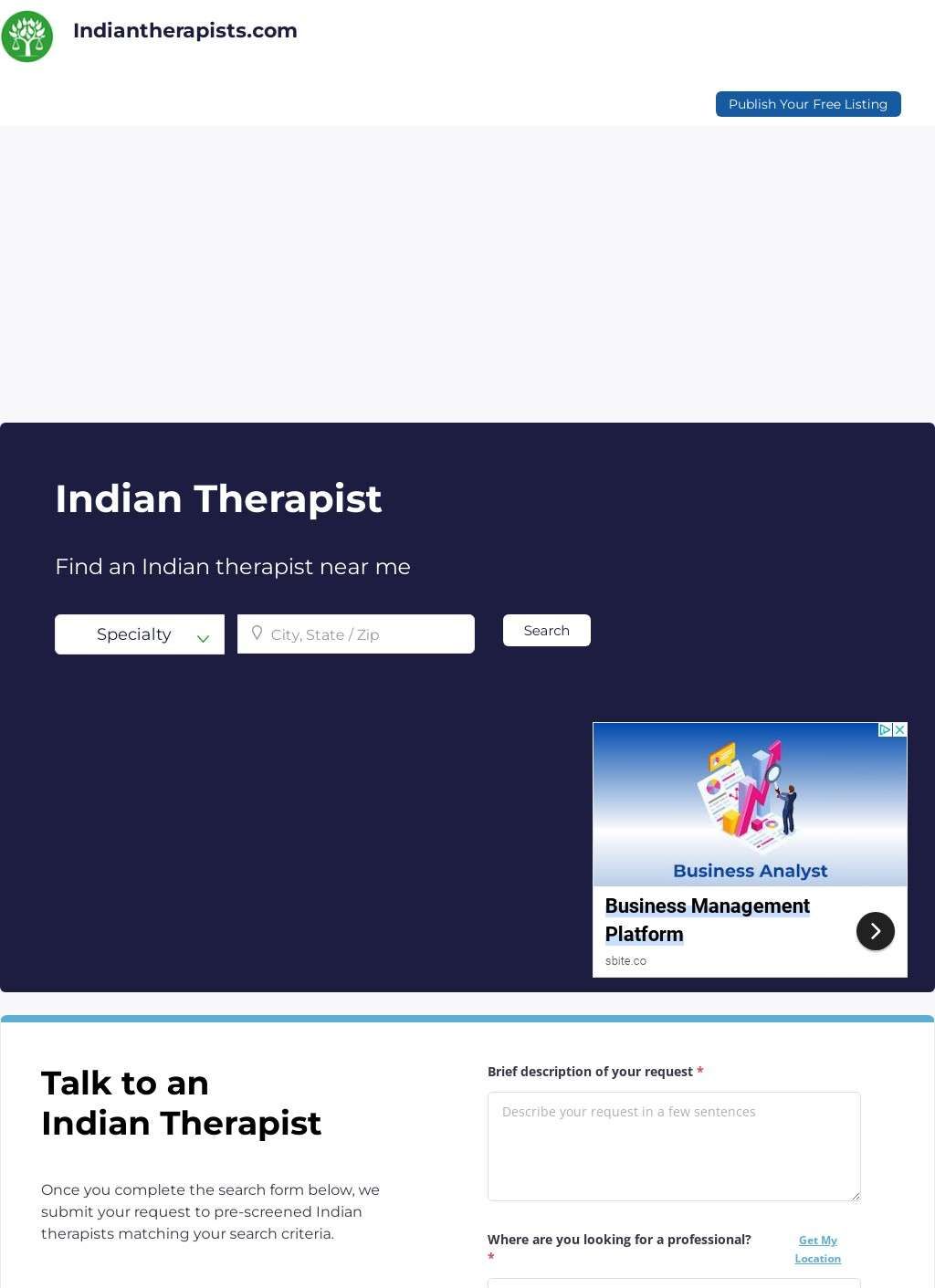
A free therapist listing, a paid tier billed monthly or yearly with a 20 percent annual discount, and an annual check against state judiciary records for disciplinary action: those three elements capture what Indian Therapists is built to do. It is a directory and matchmaking service that connects people with mental health professionals of Indian heritage across the United States, Canada, and India. Clients do not browse and cold-call. They fill in a search form, set their criteria, and the platform passes the request to pre-screened therapists who fit the profile.
Screening and verification process
The screening claim is worth pausing on, because plenty of directories say "vetted" and mean nothing by it. Here the description is specific: license information is validated, state judiciary records are checked for grievances or disciplinary actions, and Indian Therapists listings get reviewed once a year. Whether every profile genuinely clears that bar is something an outsider cannot confirm from the public pages, but a stated, repeatable process is more than comparable sites typically bother to publish. It gives a prospective client a concrete reason to trust the names that come back from a search rather than taking them on faith.
Specialties and language filters
Coverage is the other strength. The specialties available through Indian Therapists span anxiety, depression, addiction, family and marriage counseling, child and adolescent work, psychotherapy, behavior therapy, and crisis intervention, which is a wide enough spread that a single search has a fair chance of returning someone relevant. Filters on the Indian Therapists site let a client narrow by specialty, country, state, city, and language, and the language filter is the detail that justifies the site's whole premise. Hindi-speaking therapists are listed as their own category. For someone who would rather discuss grief or a strained marriage in their first language, or with a clinician who already understands the cultural shorthand, that filter does real work.
Local directories by city
City-specific directories exist for Austin, Chicago, Dallas, Houston, Newark, and more, a sign the Indian Therapists platform is building local depth instead of resting on a single national list. Local coverage counts for therapy in particular, where many clients still want someone they can sit across from, or at least someone licensed in their own state. A person in Newark searching Indian Therapists finds clinicians in range, not a name three time zones away.
Cultural matching as core feature
The heritage focus is the clearest argument for Indian Therapists existing as its own service rather than a filtered view inside a general platform. A broad business directory carries thousands of names and leaves the cultural match entirely to the user. Indian Therapists narrows the field on purpose, so the filtering that a client would otherwise do by hand is built into the structure from the start. That is a genuine convenience for the audience it targets, and why a Hindi-language or Indian-heritage search here will return more relevant results than the same search on a broader platform.
Paid listings and transparency
There is a commercial layer underneath, and Indian Therapists is reasonably upfront about it. Therapists pay for enhanced placement, with paid tiers adding contact information and location details on top of the free listing. A pricing page lays out the tiers clearly, and a legal disclaimer page states plainly that the company may receive compensation for reviews or endorsements of products and services it lists. That disclosure is a point in the site's favor. It also means a reader should treat any on-site endorsement as potentially sponsored and weigh the directory function more heavily than the promotional language around it.
How clients contact therapists
How a client actually reaches a therapist is the murkier part of the model. There is no phone number or physical address on the Indian Therapists homepage. A contact page sits in the footer, and support routes through help.heritageweb.com, pointing to a parent operation running the platform behind the brand. First contact with any therapist happens through the on-site request form, not by dialing a number off a profile. For a matchmaking service that routing is defensible, since the whole pitch is that the platform does the connecting. A client who wants to vet a clinician independently will still have to do that legwork once a name comes back, because Indian Therapists is the intermediary by design.
Limited third-party reviews
Outside standing offers little to draw on. A search for Indian Therapists turns up no notable third-party reviews of the platform itself. What surfaces instead are competing services such as DocVita, TalktoAngel, and Manoshala, plus a Yelp entry for an unrelated Seattle business with a similar name and no reviews attached. So the case for Indian Therapists rests on what it publishes about its own process, not on a body of user testimony. Newer niche directories often have no review footprint, but that does mean a first-time visitor is trusting the stated screening, not a crowd of past users who can corroborate it.
Filtering tool for cultural fit
Put the pieces together and Indian Therapists reads as a focused, functional tool for a specific need: finding a mental health professional who shares a client's cultural and linguistic background, in a city near them, across three countries. The screening process, the language and location filters, and the city pages are the substance. The absence of independent platform reviews is the main caveat, and the disclaimer about paid endorsements deserves a second read before taking any glowing profile at face value. The site does the filtering work it claims to do, and that filtering is the only independent reason to choose it over a platform with a larger but undifferentiated pool of names.