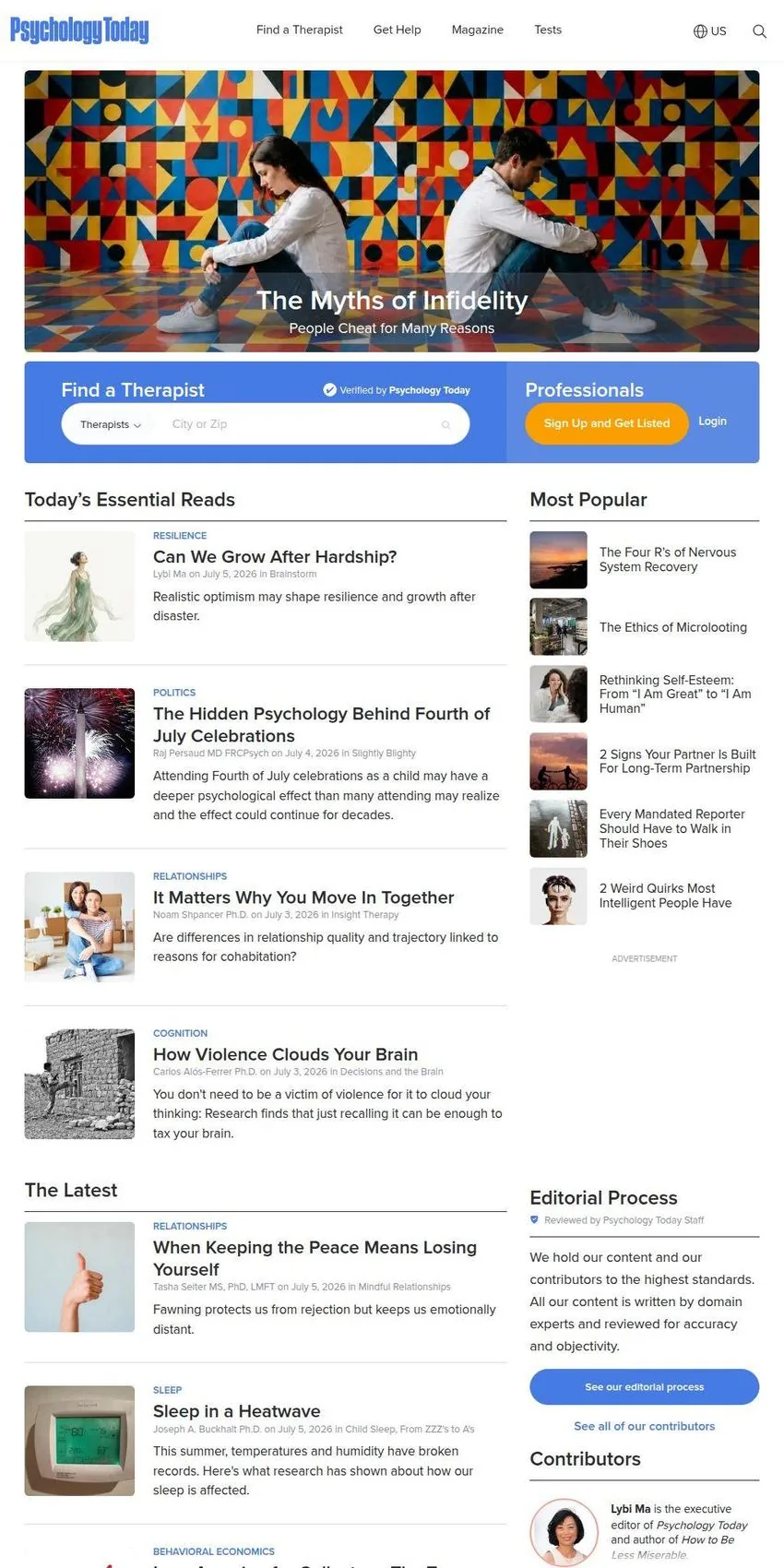
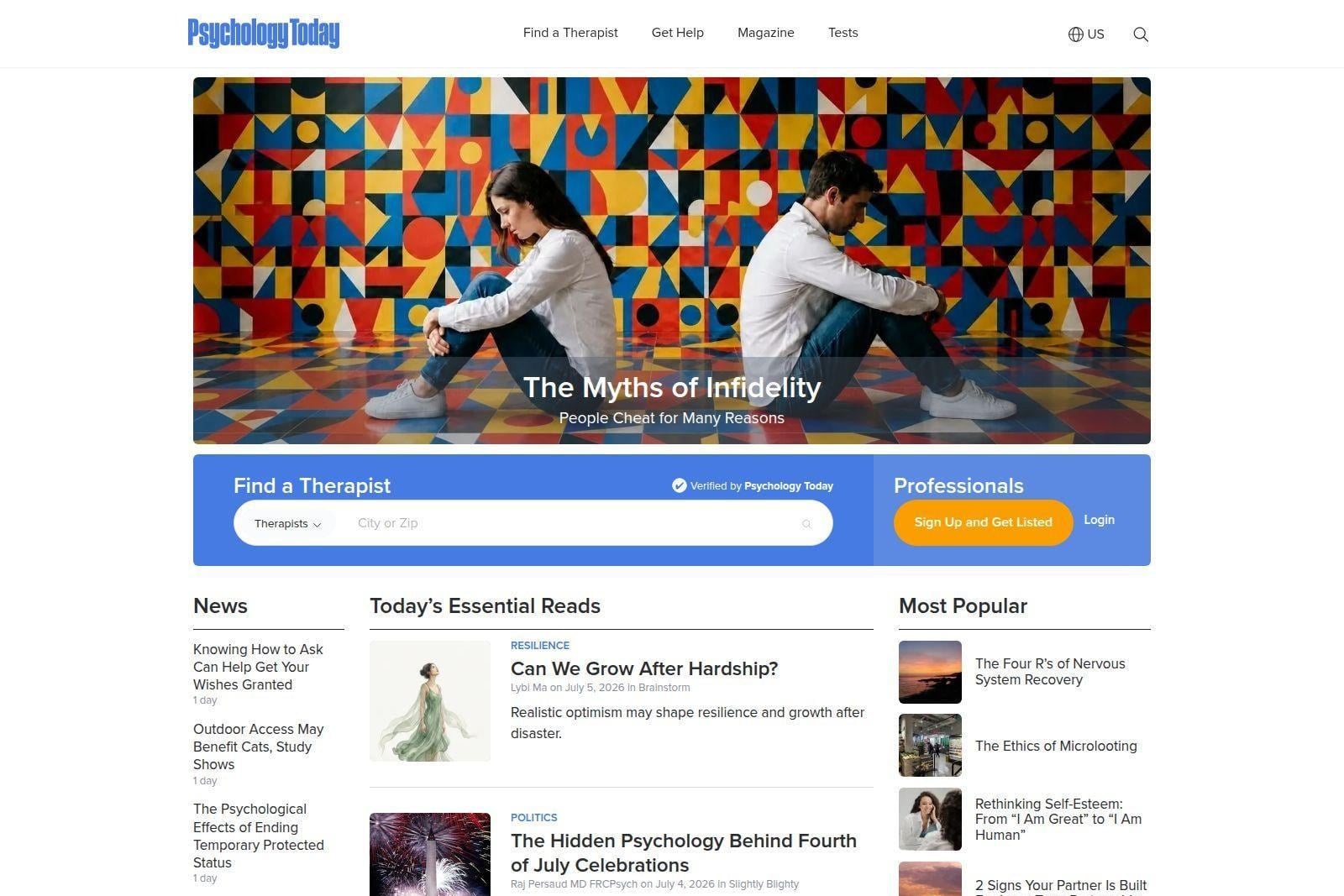
Psychology Today started in 1967 as a magazine, and it is now better known as the place people turn to when they need to find a therapist. Nicholas Charney founded it with a plain goal, to bring psychology to a general readership, and by 1981 print circulation had already passed a million copies, a reach few specialist titles in any era have matched. The magazine still runs six times a year, backed by an online archive that goes back to 1992. A far larger business has quietly grown up around that magazine, and the site now describes itself as the world's largest mental health and behavioral science destination online.
The magazine that came first
The print product is where the Psychology Today name comes from, and it stays the part of the operation with the clearest editorial spine. Back issues are browsable by year through the magazine archive, cover art and all, turning close to six decades of publishing into something a reader can work through instead of a dead link. That pace is modest next to a site that otherwise updates by the hour, and the depth it gives the publication is something the quick-answer machinery around it never tries to match, reason enough to treat the magazine as more than a brand name bolted onto a database.
Behind the Psychology Today masthead sits Sussex Publishers, LLC, the copyright holder named in the footer, while a separate company, Sussex Directories Inc., runs the listing side of the house. Both are Sussex-family entities registered at one New York address, and that split is worth holding onto: the publishing arm sells editorial, the directory arm sells presence in a search result, and the two answer to different commercial logic even under a single brand.
Who steers the editorial side
The editorial team is named in the open, which not every health publisher bothers to do. Kaja Perina is editor in chief, Lybi Ma is executive editor, and Hara Estroff Marano holds the editor at large title, while on the corporate side Jo Colman is chief executive of the Sussex companies and John Thomas is president and publisher. Putting those names on the record gives Psychology Today an accountable byline chain and a clear place for the buck to stop, more than plenty of health-content sites are willing to show a reader who goes looking.
The directory that outgrew the magazine
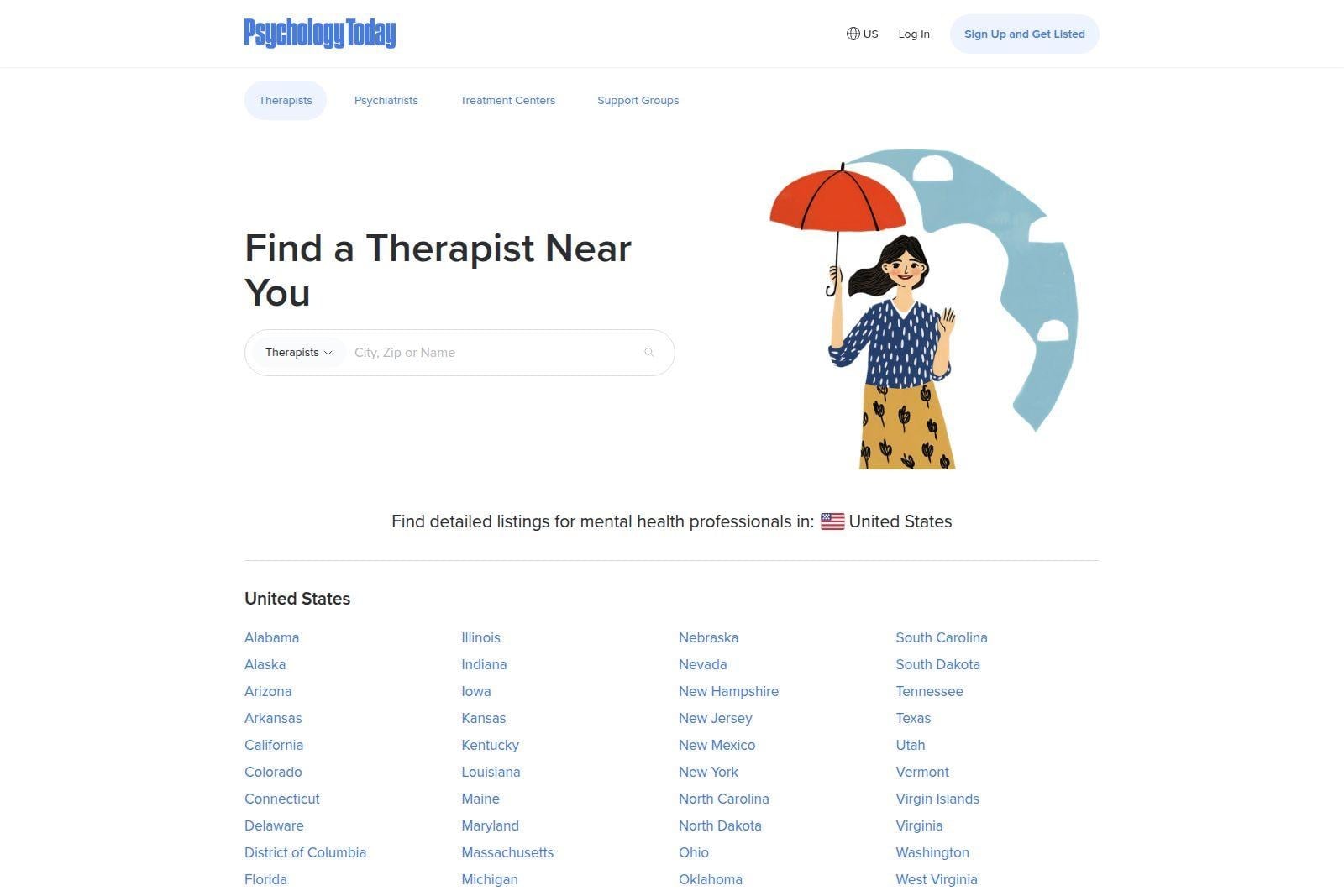
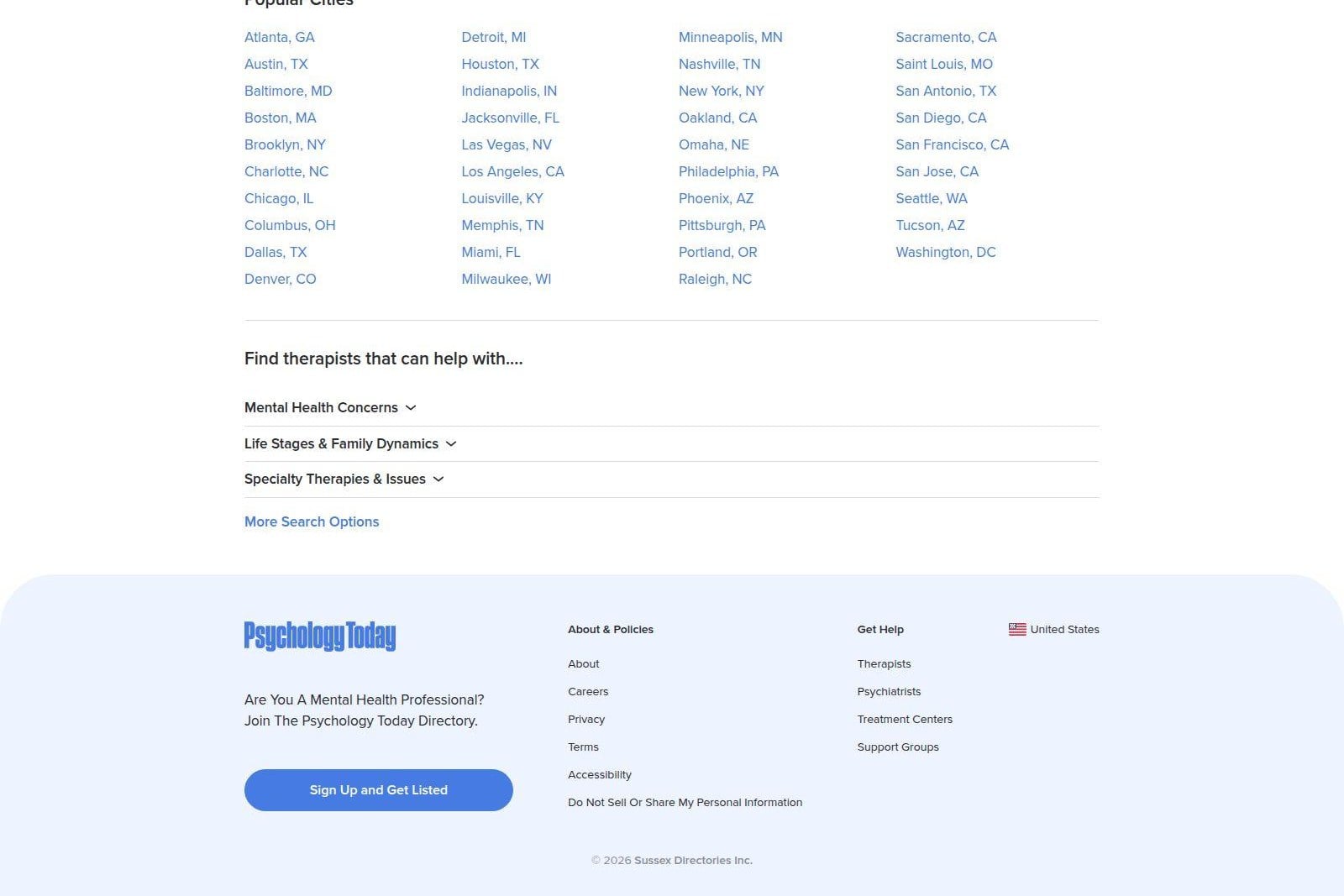
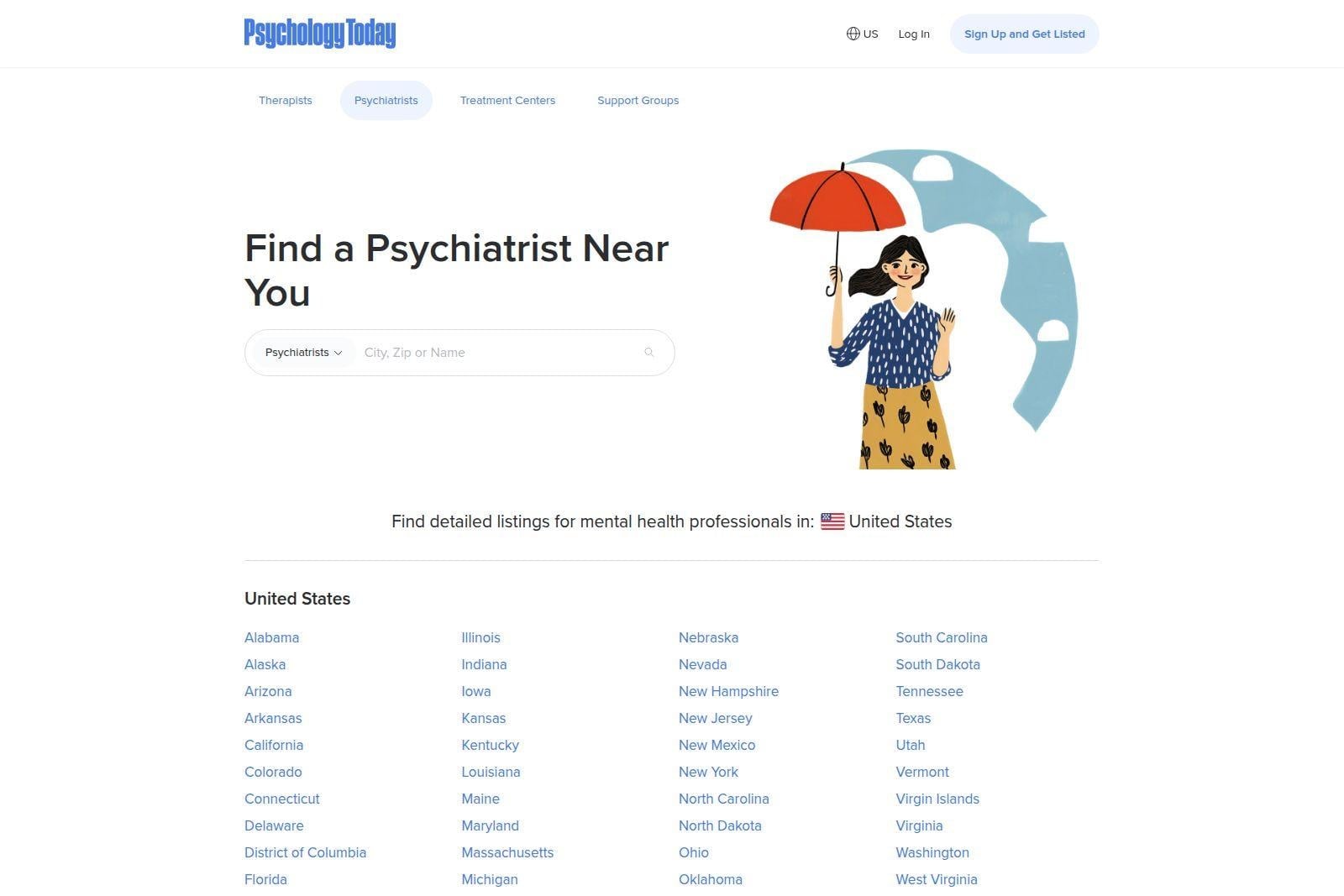
The reason most people reach Psychology Today has almost nothing to do with the magazine. It is the directory: a searchable list of therapists, psychiatrists, treatment centers, and support groups that spans 20 countries and works by location, so a person can narrow results down to a single city or neighborhood. For someone beginning therapy, that search is the single most useful thing on the site, and it backs up the claim to being the largest destination of its kind. Each result comes as a profile card with a photo and a set of specifics, which counts for a lot when the decision at hand is who to trust with a difficult first conversation.
The motto stamped across Psychology Today is Here to Help, and for the search tool itself that reads as roughly fair: enter a location and a handful of filters and it returns real practitioners rather than a generic wall of names. The mechanics are simple, the coverage is broad, and a household name in the field draws some trust just by being the address everyone already knows.
Finding a therapist or psychiatrist
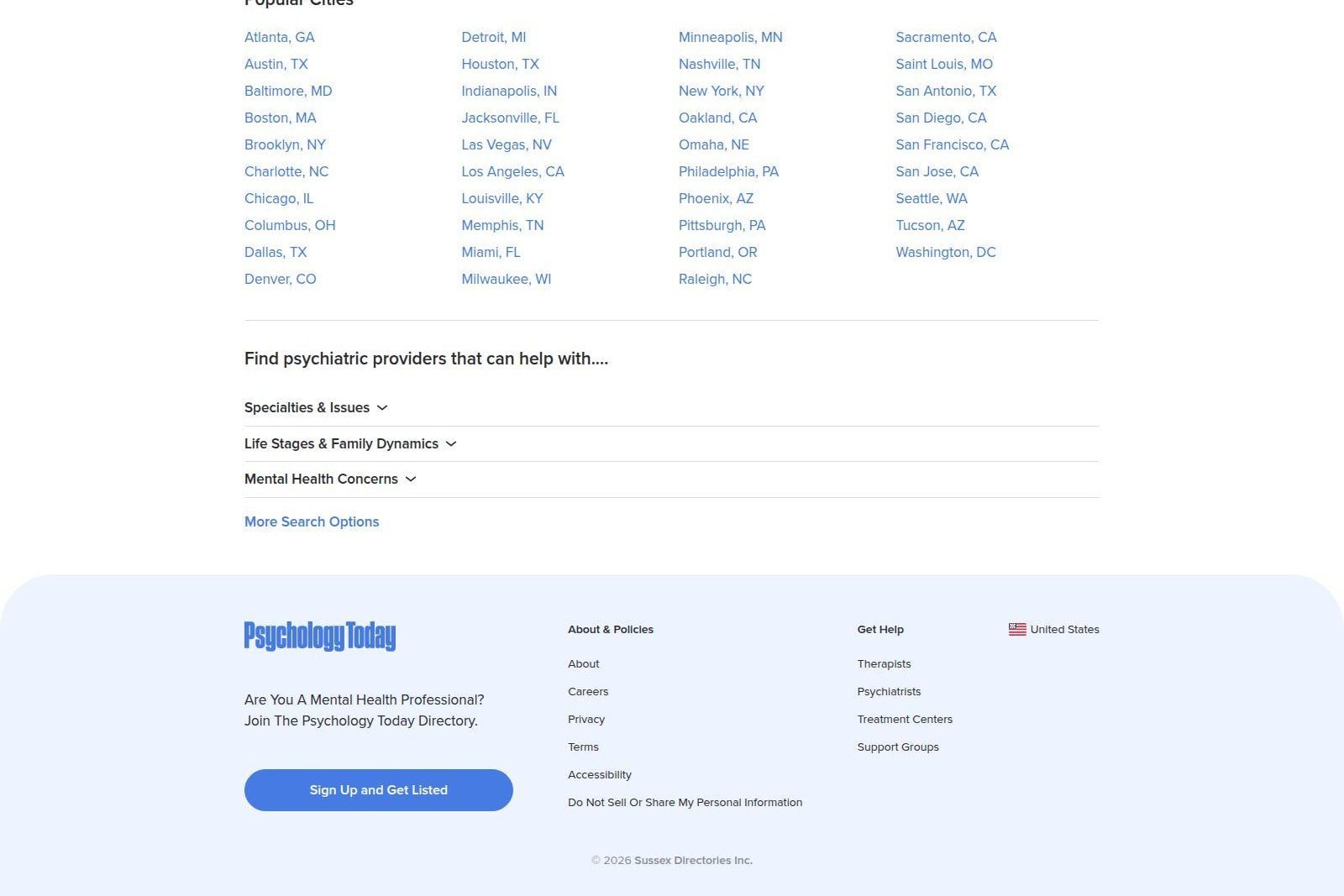
The therapist and psychiatrist listings are the core of the whole thing, a pool of practitioners a person can filter down to a locality, exactly what someone needs in a new city or after a change of insurance. Psychology Today has become the default first stop for this in the United States, to the point where clinicians treat a profile on it as a basic cost of being findable at all. The psychiatrist section applies the same structure to prescribers, a genuinely useful separation, since therapists and psychiatrists do different work and a person in distress often already knows which of the two they need.
Treatment centers and support groups
Psychology Today stretches the same directory past individual clinicians to treatment centers and support groups, carrying the tool from one-on-one sessions into residential and group care, which tends to be the harder thing to track down at the exact moment someone is in real trouble and has no idea where to begin. How current every entry stays is a fair worry to hold, since a directory this size is only ever as accurate as the profiles the people in it keep up, and a stale phone number or a closed program listed in a crisis category is far worse than a minor inconvenience.
Tests, basics, and the blog network
Around the Psychology Today directory sit three content layers, a Tests section, a Basics reference library, and a large blog network, each pulling in a different kind of visitor and keeping the site trafficked through the long stretches between the moments when a person needs a clinician, and none of the three is throwaway, though they differ sharply in how far a reader should trust each one.
Basics is the reference layer, plain educational pages on conditions and everyday topics that include depression, anxiety, relationships, parenting, and personal growth. It works as a place to start for someone who wants to understand a term before going looking for help, written to be read by ordinary people rather than to impress a specialist. This is the quietest corner of Psychology Today, and probably the most consistently sound one; it makes no promise it cannot keep, which is not true of every part of the operation.
The self-assessment tests
The Tests section is a grid of self-scoring quizzes that includes a Depression Test, an Autism Test, a Narcissism Test, and the Big Five Personality Test. These are the pages that get shared and clicked, and they carry a plain hazard: a person can take a quiz score for a diagnosis when it is nothing of the sort. Psychology Today labels them as self-assessment, and that label does real work, yet a screening prompt and a verdict are not the same thing, a distinction that can disappear in the mind of a worried reader at two in the morning. The quizzes also do much of the traffic-pulling that the serious directory quietly feeds on, worth stating plainly instead of dressing the tests up as pure public service.
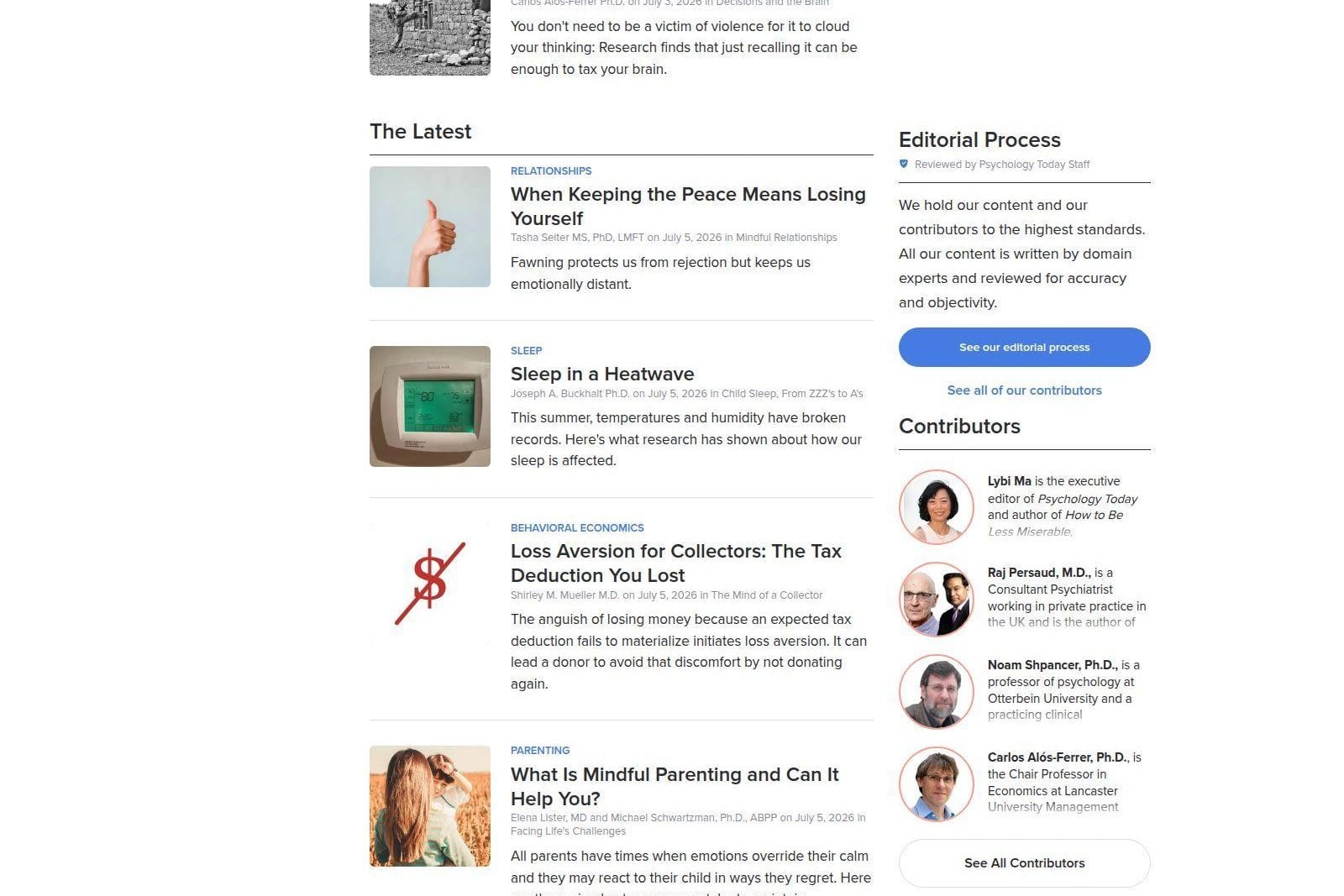
The blog network is the third layer and the most uneven of the lot. Contributing psychologists, therapists, and academics publish under topic-based blogs, and a News section runs shorter items on current psychology research; the volume is enormous and the quality tracks it, some contributors careful researchers writing with real thought and others plainly filling a slot to keep a byline warm, but readers at least get named authors with stated credentials, so judging any single post falls to them, a reasonable enough bargain for the range Psychology Today lays out.
A structural doubt outlasts a full look at the site, and it lands right on the feature people trust the most. The directory that pulls the bulk of the traffic is run as a business by Sussex Directories, so a clinician's presence in it is a listing arranged and paid for, not a quality that Psychology Today has checked. The site never claims to have vetted the people its search returns, yet a frightened first-time visitor can read a polished profile as an endorsement no one ever made. The magazine puts editors' names against their work and lets them answer for it; the directory carries profiles whose accuracy rests entirely with whoever wrote them. That gap sits at the center of the one job most visitors come here to do: finding someone they can trust enough to talk to, and the brand's enormous size does nothing on its own to close it.
Business address
Sussex Publishers, LLC
16 West 22nd Street, Suite 200,
New York,
NY
10010
United States
Contact details
Phone: +1 (646) 956-4495
Personal Perspective: When a parent dies, people know what to do. When an adult sibling dies, most of the sympathy goes to the…
What does it really mean to forgive but not forget? A closer look at forgiveness, trust, and why remembering a hurt may not be…
Freshman year sets the foundation for college. Make the most of it by getting involved, prioritizing academics, building…
I started a statin to lower my cholesterol, but I never expected it to change a bowel condition I had lived with for two decades…