
Every article on Verywell Mind that touches a diagnosis runs two names at the top: the journalist or clinician who wrote it, and a separate reviewer from a standing medical board who checked it before it published. That board is not decorative. It includes a Harvard-affiliated psychiatrist, Steven Gans, and Rachel Goldman, a psychologist who teaches at NYU, alongside other physicians, psychiatrists and licensed therapists whose job is to catch the place where friendly prose drifts away from the clinical facts. Add a fact-checking pass on top of that, and you get the thing this site is really selling: mental-health writing you could put in front of a frightened person without having to add a warning of your own.
The tagline says it in four words: Know More, Live Brighter. Verywell Mind is a consumer publication, not a clinic, and it is honest about the difference.
The lineage is worth knowing. Verywell Mind grew out of the broader Verywell brand, which began as About.com's first standalone property before it broke into focused verticals, and the mental-health arm became a site in its own right. Today it sits inside People Inc., the media company once called Dotdash Meredith, whose stable also holds PEOPLE, Investopedia, Real Simple, Byrdie, Southern Living and Better Homes and Gardens.
That ownership cuts both ways, and it is fair to name both edges. On one side, a big publisher funds a large editorial operation, the kind that can keep a hundred-plus writers and a medical board on the books. On the other, the revenue comes partly from advertising and affiliate links, which is exactly the pressure that bends health content toward whatever pays. The counterweight here is a published advertising policy that states, in plain terms, that sponsors do not shape or approve the editorial. Whether a reader trusts that wall is a personal call, but the site at least draws it in public.
The credibility sits in plain sight, too. The About page names the review board and the writers, with their degrees and affiliations attached, so a reader can look up who vetted a claim about, say, an SSRI or a panic attack. That is a small thing and a big one at once. Health writing lives or dies on whether you can trace it back to someone accountable, and here you usually can.
How the reference is put together
Three figures sit on the Verywell Mind masthead: 20 million readers a year, more than a hundred expert health writers, and over a hundred mental-health topics under coverage. Vanity metrics on their own prove little.
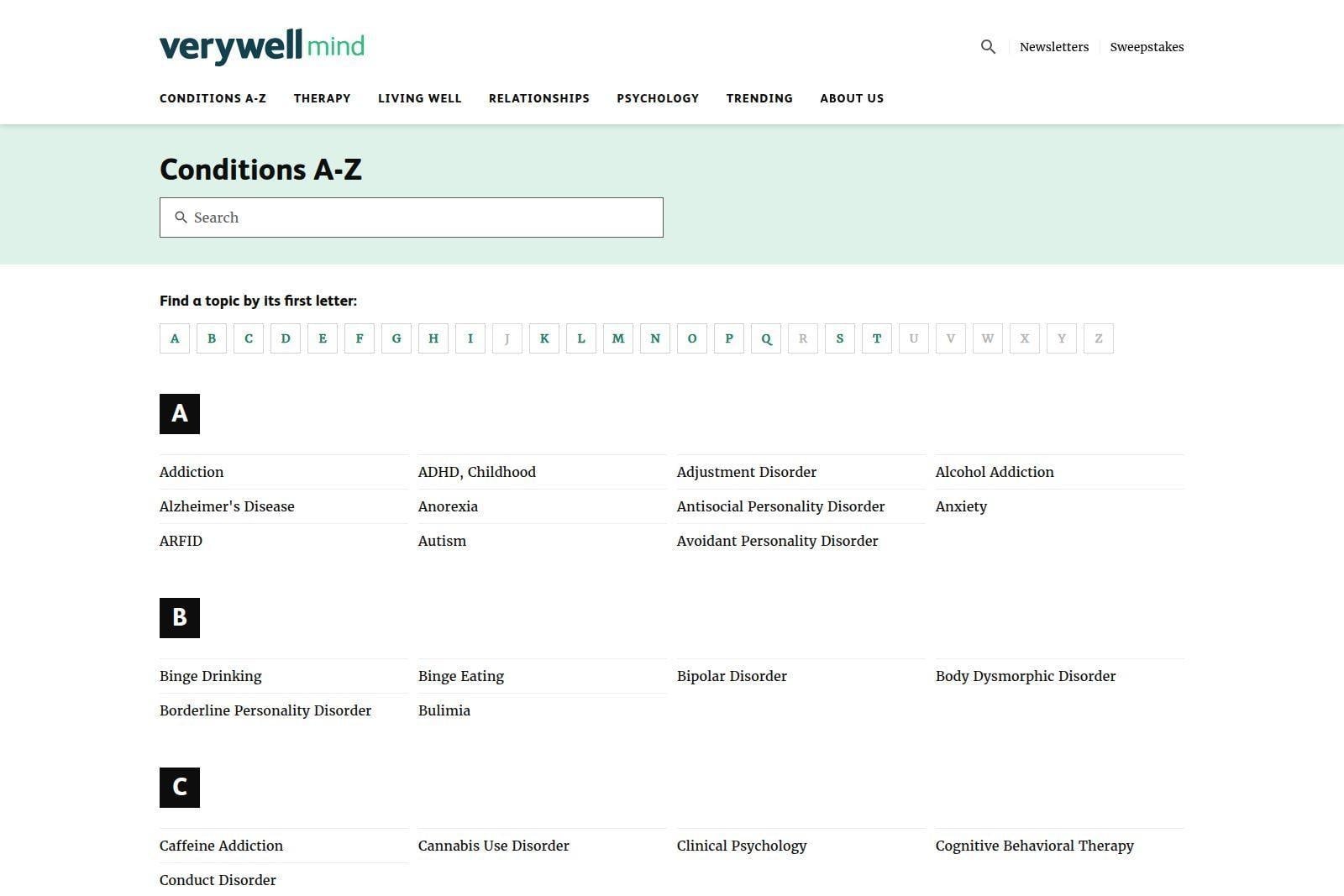
What gives them weight is the scaffolding beneath: six standing sections that each do a different job, with Conditions A-Z and Therapy carrying the most freight.
Conditions A-Z
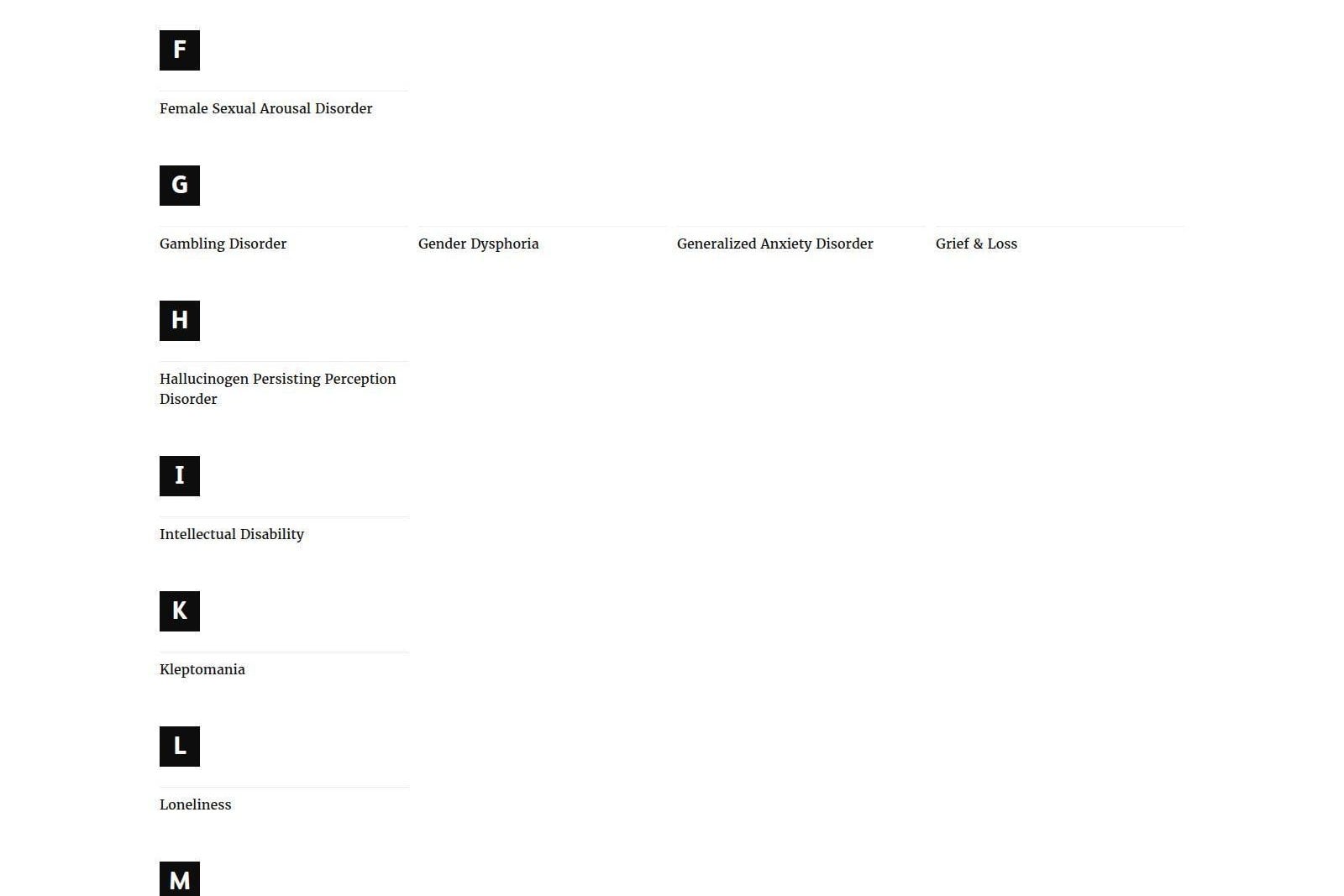
This is the encyclopedic spine of the whole thing. The index runs alphabetically across addiction, anxiety, depression, ADHD, bipolar disorder, PTSD and the long list in between, and each entry goes past a dictionary definition into symptoms, causes, how a condition is diagnosed, and the treatment routes a clinician might discuss.
The prose stays plain. Someone typing a half-formed worry into a search bar at two in the morning lands here and can follow it without a medical vocabulary, which is precisely the moment the Conditions A-Z section is built for. It is reference material engineered for the anxious reader, and it holds that pressure well.
The therapy section
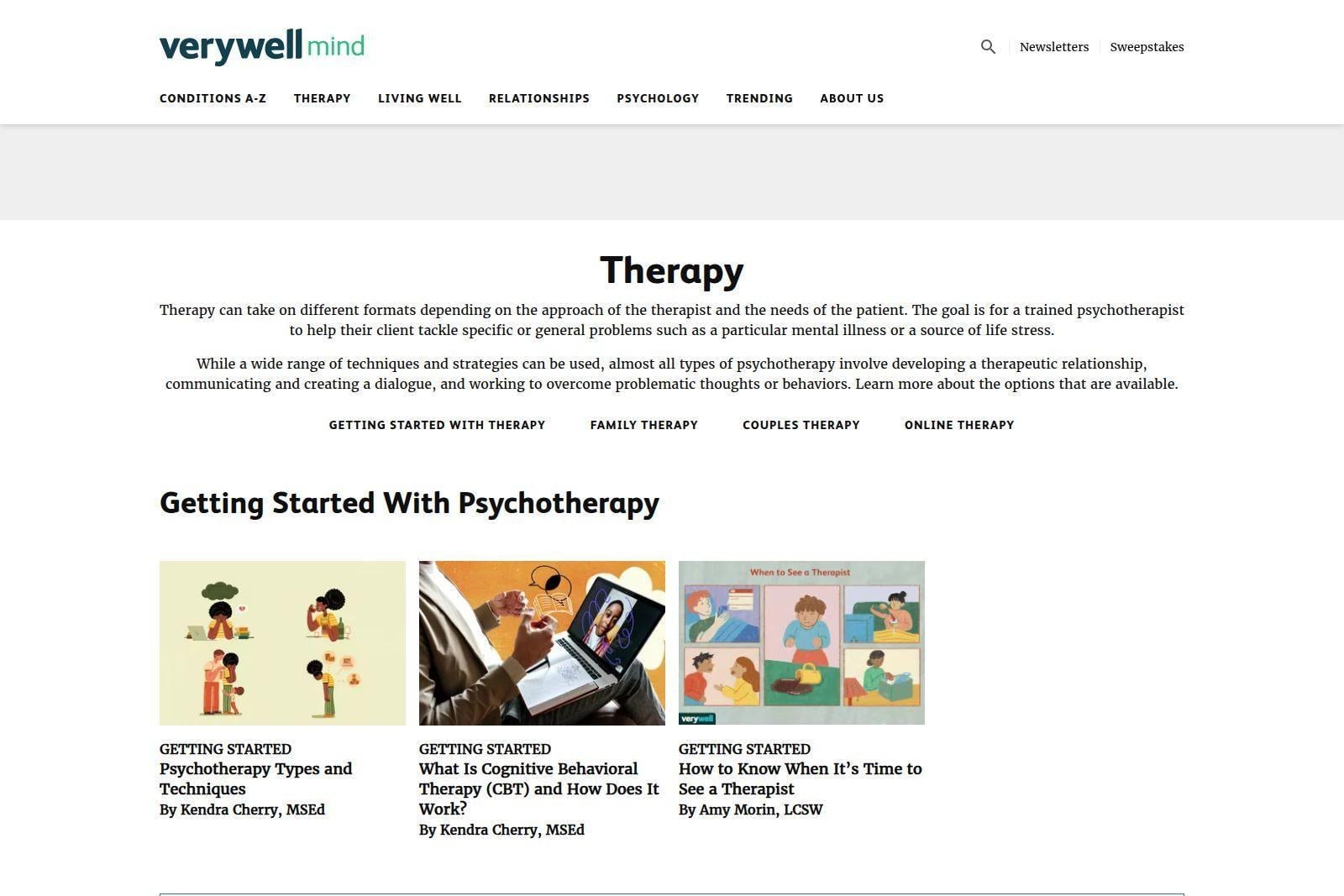
Sitting beside the conditions is a practical wing aimed at getting help rather than only understanding a problem. The therapy area of Verywell Mind runs a Therapy Center, a guide on when to see a therapist, and an explainer on the different types of therapy that names the talk-based and the more structured methods, so a reader can tell one modality from another before booking anything.
It also publishes comparison roundups: best online therapy services, best couples and marriage counseling. These are the commercial pages, the ones most likely to earn a commission when a reader clicks through and signs up, so they deserve the same skepticism you would bring to any product recommendation. To the site's credit, the editorial explaining therapy stays informational while the shopping guides run as a separate exercise with their own labeling, and the seam between the two stays visible enough to trust.
Two more standing sections round out the reference. Psychology is the why-behind-the-behavior wing, the place for the concepts and studies that explain how minds work, while Relationships turns to the friction and repair of dating, marriage, family and friendship. Neither tries to diagnose. Both give a reader the vocabulary to think about ordinary human tangles with a bit more structure, and together with the clinical index they make the coverage feel genuinely wide, the work of a full library instead of a few high-traffic topics.
Where it moves past the reference desk
A reference could stop at articles and call the job done. Verywell Mind keeps going into sections that ask the reader to do more than read.
Living Well is the habit-oriented half of the catalogue, and it is the part you return to on a normal week instead of a bad one. Managing stress, meditation, sleep and dreaming, understanding emotions, self-improvement: the material here is less about naming a disorder and more about the daily upkeep of a mind. It reads like the counterpart to the clinical index, the pages for staying well instead of decoding a diagnosis.
There is also a Crisis Support page. Verywell Mind carries the one section nobody wants to need and every serious mental-health publisher should keep, and putting it within a click is a quiet sign that the editors planned for a reader in real trouble.
The podcast, quizzes and the Verywell Mind 25
The Trending shelf is where the brand loosens its collar. It runs interactive quizzes, guided meditations, and a Mental Health in the Classroom survey, plus an ongoing Verywell Mind Insights strand. There is also the Verywell Mind 25, an annual list the outlet publishes to spotlight people and ideas moving the field. Over the top of all of it sits The Verywell Mind Podcast, hosted by editor-in-chief Amy Morin, a licensed clinical social worker and author whose therapist voice carries through much of the written site as well.
I went in braced for the usual canned branded audio and came away hearing something closer to a working clinician thinking out loud than a marketing exercise. The formats across this shelf reward a reader who wants to test an idea or sit with a practice instead of skimming a headline. A quiz that sorts your attachment style or a ten-minute guided meditation is a different ask than an article, and the site seems comfortable with readers who want both.
The original research is its own kind of signal. Running classroom surveys and a recurring insights series means the outlet is generating its own data, and reporting like that costs enough that its presence says something real about the resources behind the work.
None of this turns the site into a substitute for a doctor, and it never pretends otherwise. What you get from Verywell Mind is a well-lit first stop: a place to understand a diagnosis in plain language, weigh whether therapy is worth pursuing, and read something a credentialed reviewer has already checked instead of a stranger's post on a forum. The clinician-reviewed model is the thing that separates Verywell Mind from the endless churn of wellness content, and it holds steady across the sections, the alphabetized conditions and the podcast feed alike.
The quality of the writing is not really in question; it stays consistently high across the site. The open question is what a reader does with a clear, well-sourced article once the tab closes. Treat it as a stand-in for a professional, or walk into that first appointment already knowing which questions to ask. Given the review board, the sourcing and the plain-language index, Verywell Mind is built for the second use far more than the first.



Verified social profiles
Business address
People Inc. (Attn: Verywell)
225 Liberty Street,
New York,
NY
10281
United States
Contact details
Phone: 212-204-4000
Usage, Dosage, and Side Effects