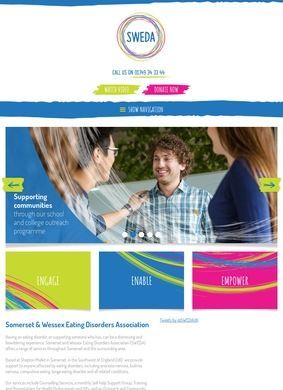
Where does someone in Somerset turn when an eating disorder has taken hold and the NHS waiting list stretches ahead of them? One answer that keeps surfacing is the Somerset Eating Disorders Association, a registered charity working out of Shepton Mallet since 1992. It runs a pro-recovery service that spans a helpline, one-to-one counseling, support groups, and nutritional guidance, and it does so for a population that often falls into the gap between crisis care and no care at all.
The charity trades under SWEDA, short for Somerset and Wessex Eating Disorders Association, and the shorthand appears everywhere in local referral material. A name people already recognise from their GP surgery lands differently than a fresh website ever could.
What the charity puts in front of you
The backbone of the service is the SWEDA Mindline helpline, backed up by support calls for people who need a voice on the other end without committing to a full course of counseling. Both sit alongside structured one-to-one sessions.
Support groups round out the direct help. For anyone weighing whether to reach out at all, that spread of options is reassuring: a phone call is a smaller step than a room full of strangers, and the Somerset Eating Disorders Association lets the person choose their own entry point.
Nutritional guidance is folded in too, which is the sort of practical, food-facing help that separates a recovery-focused service from a purely talk-based one. Eating is the daily battleground for these conditions, so having someone who can talk through a meal plan is worth more than it might look on paper. The Recovery Support Project is named as its own strand, aimed at people further along the road who still need scaffolding to stay steady long after the acute crisis has passed.
Reaching younger people before habits harden
A large slice of the work points at children and young people. The Somerset Eating Disorders Association runs college support programs and body-image workshops, the kind of early intervention that tends to get talked about far more than it gets funded. Placing a trained worker inside an educational setting, where a struggling teenager already spends the day, is a sensible way to reach someone who would never book an appointment on their own.
The testimonial the charity carries speaks to exactly this: a student describing a positive experience with a SWEDA support worker at university. It is a single quote on the organisation's own page, so it should be read as such, but it lines up with the shape of what the services promise.
Serving the people around the illness
Eating disorders rarely stay contained to one person, and the Somerset Eating Disorders Association builds for that. Family members and caregivers get their own support, which acknowledges that the people living alongside the illness carry a real load and often have nowhere to put it.
Then there is a professional tier. Healthcare workers can access training and awareness programs, students and educational institutions are catered for, and researchers are offered participation opportunities. That last group is a telling detail. A charity that opens its doors to research is one confident enough to be looked at closely, and one that wants the wider clinical picture to improve alongside its own caseload. Widening the trained-eye pool through professional education is also how a small team makes its knowledge outlast any single worker.
Depth of the information on offer
Beyond the direct services, the Somerset Eating Disorders Association holds a body of reference material. It covers the common eating disorders most people could name, and it goes further into the uncommon ones that get overlooked precisely because they are less recognised. There is also content on the physical health complications that trail these conditions, which is the part families tend to underestimate until it becomes urgent.
Accessibility is handled rather than ignored. Materials exist for people with accessibility needs, a small line item that shows the charity has thought about who might struggle to use a standard page.
None of this reads as padding. The written resources map onto the services, so a person who arrives frightened and under-informed can read their way toward understanding what help might look like before they ever pick up the phone. It is a quiet strength of how the Somerset Eating Disorders Association has built the site.
Trust and reach
The strongest credibility signal here does not come from a star rating. It comes from who points people toward the Somerset Eating Disorders Association. NHS Somerset FT's adult eating disorder service names it as an external support and referral resource, and so do local GP practices including Frome Medical Practice, Bridgwater Bay PCN, and Somersetbridge Medical Centre. When clinicians route their own patients somewhere, they are staking a piece of their judgement on it.
Independent review platforms are a different story. A search across the usual sites turns up no Google, Trustpilot, Yelp, or Facebook ratings for the Somerset Eating Disorders Association. For a small regional organisation that is unsurprising, and the NHS and GP referrals arguably count for more than a handful of anonymous stars would, but anyone who likes to read public feedback before deciding will not find a pool of it here.
Getting in touch is straightforward. The phone number sits on the site, the office address in Shepton Mallet is published in full, and there is a contact page with opening hours and, for this kind of service, emergency resources for moments when the situation cannot wait. Email is not printed on the page directly, though the contact page routes you to it.
The Somerset Eating Disorders Association has been at this since 1992, three decades of continuous work in one corner of the country. A frightened teenager in a college corridor and a caregiver who does not know what to say at the dinner table end up dialling the same number, and that number has been answered for a long time.