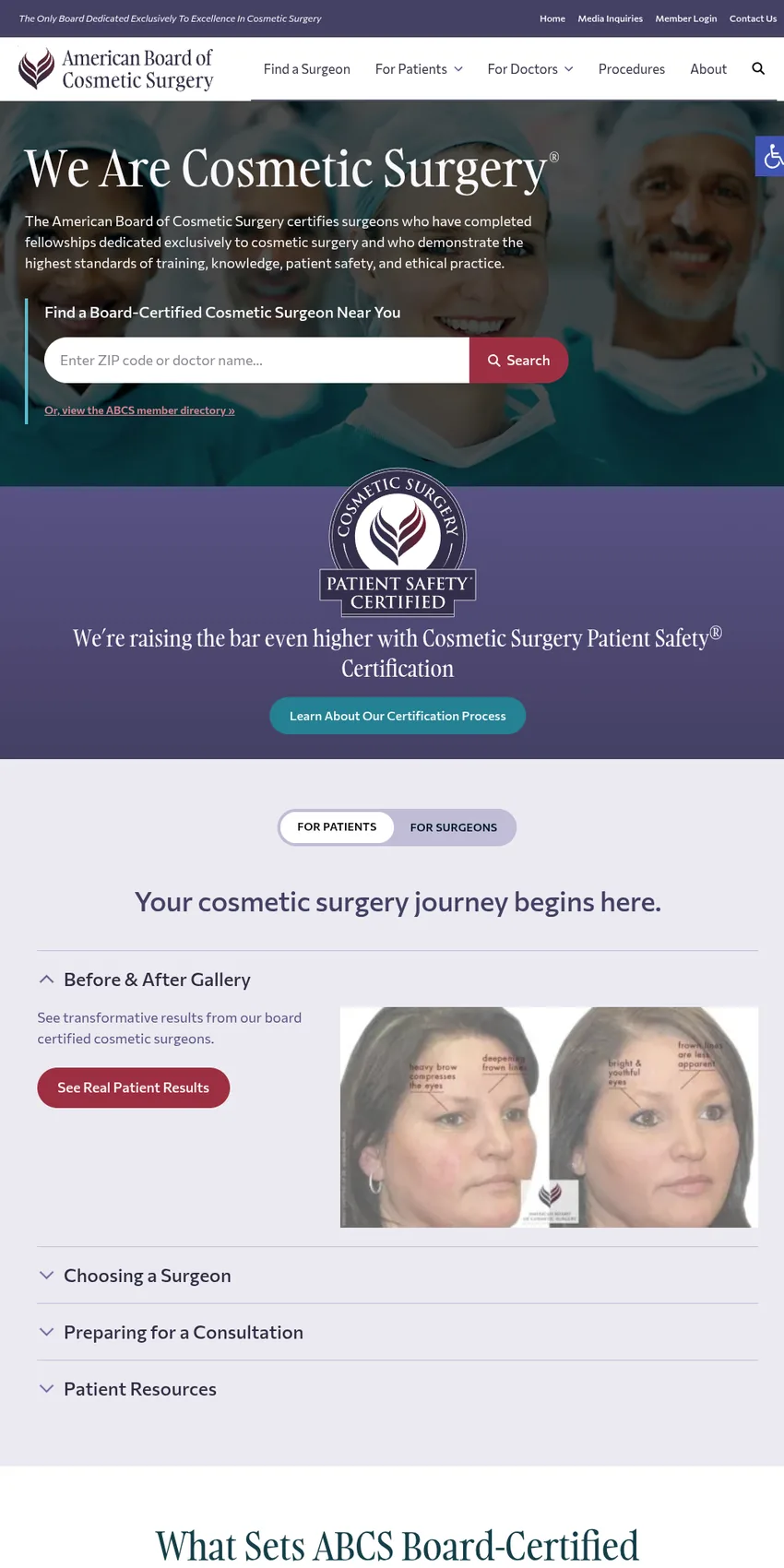
Who vouches for a doctor who advertises cosmetic surgery? That is the question this site exists to answer. The American Board of Cosmetic Surgery is a 501(c)(6) nonprofit certifying board for cosmetic surgery as a specialty in its own right, and it describes itself as the only board that tests a surgeon's knowledge and experience in that field exclusively. That claim is the spine of the site.
The bar is spelled out. A candidate must already hold certification from at least one other recognized medical board before applying at all. Then comes a fellowship devoted entirely to cosmetic surgery, accredited by the American Academy of Cosmetic Surgery (a separate body), and finally the Annual Certifying Examination, taken in written and oral parts. In practice one credential stacks on another: the doctor arrives already certified by some other board and adds the cosmetic layer on top, with the fellowship and the exam cycle in between. Passing an exam guarantees nothing about any single operation. The pathway, though, is concrete, and a patient can follow it in one reading.
It started life in Delaware under another name, the American Board of Aesthetic Plastic Surgery, and was later reorganized under Pennsylvania nonprofit law as the American Board of Cosmetic Surgery. It answers to its own officers, trustees and executive director. That independence is the whole point. It is also the thing to keep an eye on.
Checking a surgeon, planning a procedure
Half the site talks to surgeons who might want the credential, and the other half talks to patients trying to work out what that credential is worth. The patient side is unusually thorough. A resources section walks through planning a procedure, choosing a surgeon and preparing for a consultation, and it even includes a pricing calculator, an odd and useful thing for a certifying body to publish and a hint about who is expected to show up: people with money questions as well as medical ones.
The American Board of Cosmetic Surgery also runs a blog on patient safety and procedure education, and the titles sound like questions patients bring to a first consultation. "Are Brazilian Butt Lifts Safe?" is one recent post. "How to Perform a Breast Self-Exam With Implants" is another, a subject with no sales angle in it at all. Member surgeons get a Library of Shareable Resources for their own patient education, so the same material is written once and used in many practices.
Find a Surgeon, by zip code or by name
The tool most visitors will come for is Find a Surgeon. It searches by city, state, zip code and radius, a state-by-state list sits alongside it, and an international section covers surgeons practicing outside the United States. Searching by surgeon name is the quiet strength of the thing. A patient holding a consultation quote can type that name in and settle at once whether "board certified" on the surgeon's own website means this board or a different one.
Every result is a surgeon the American Board of Cosmetic Surgery has put through its own examination, and since more than one similarly named board certifies in this corner of medicine, that single lookup does more work than it appears to.
Procedure guides and the photo gallery
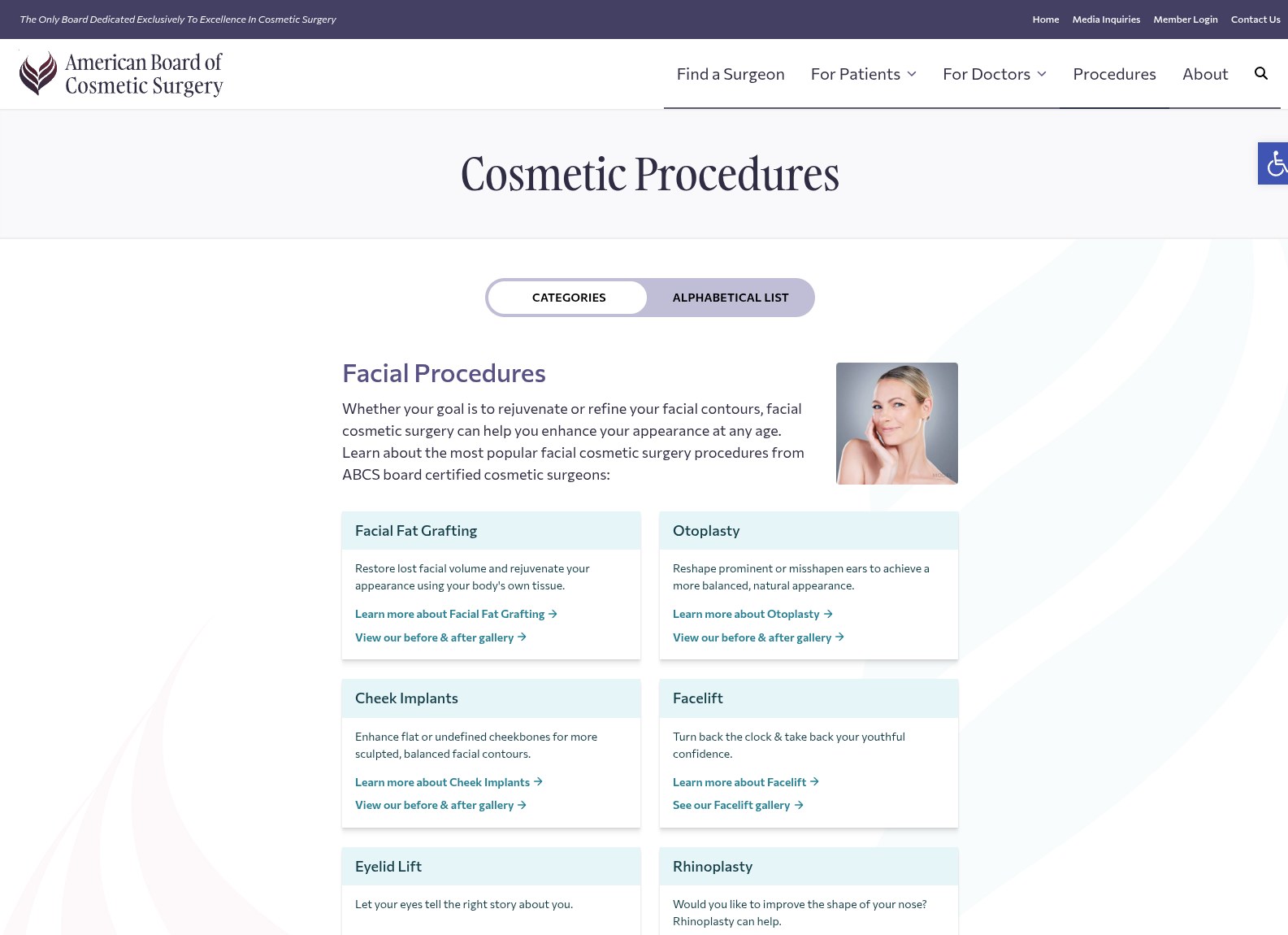
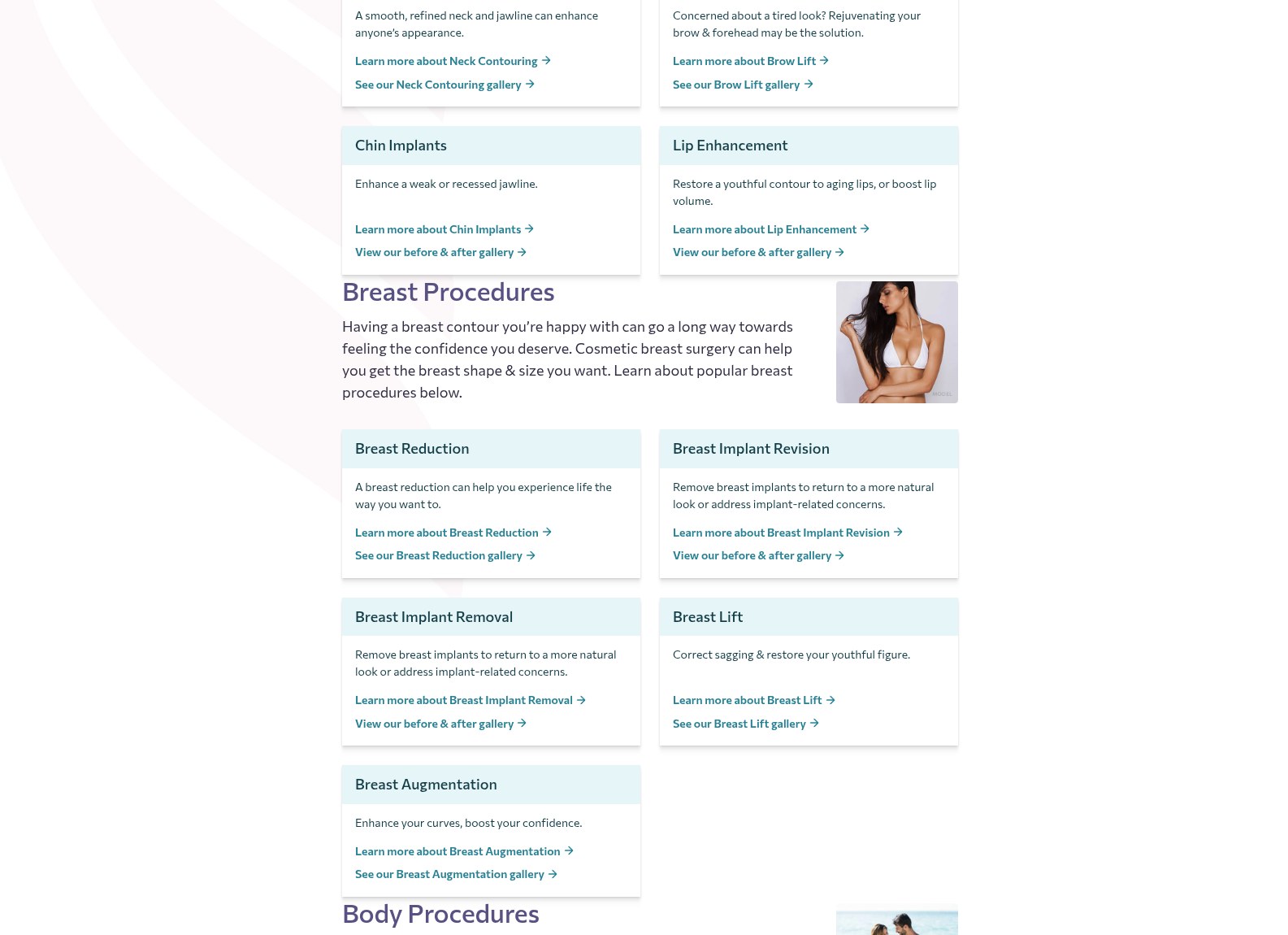
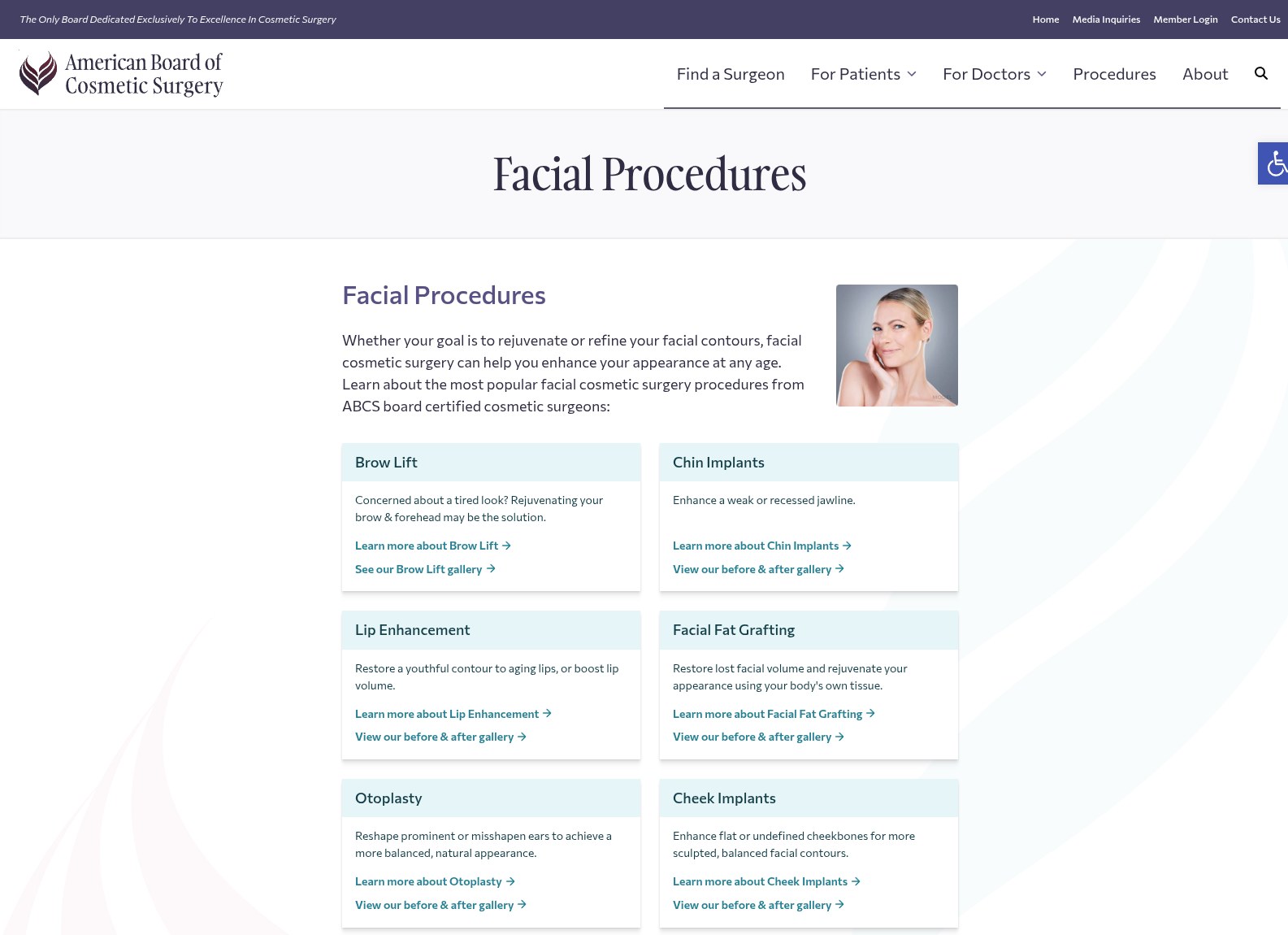
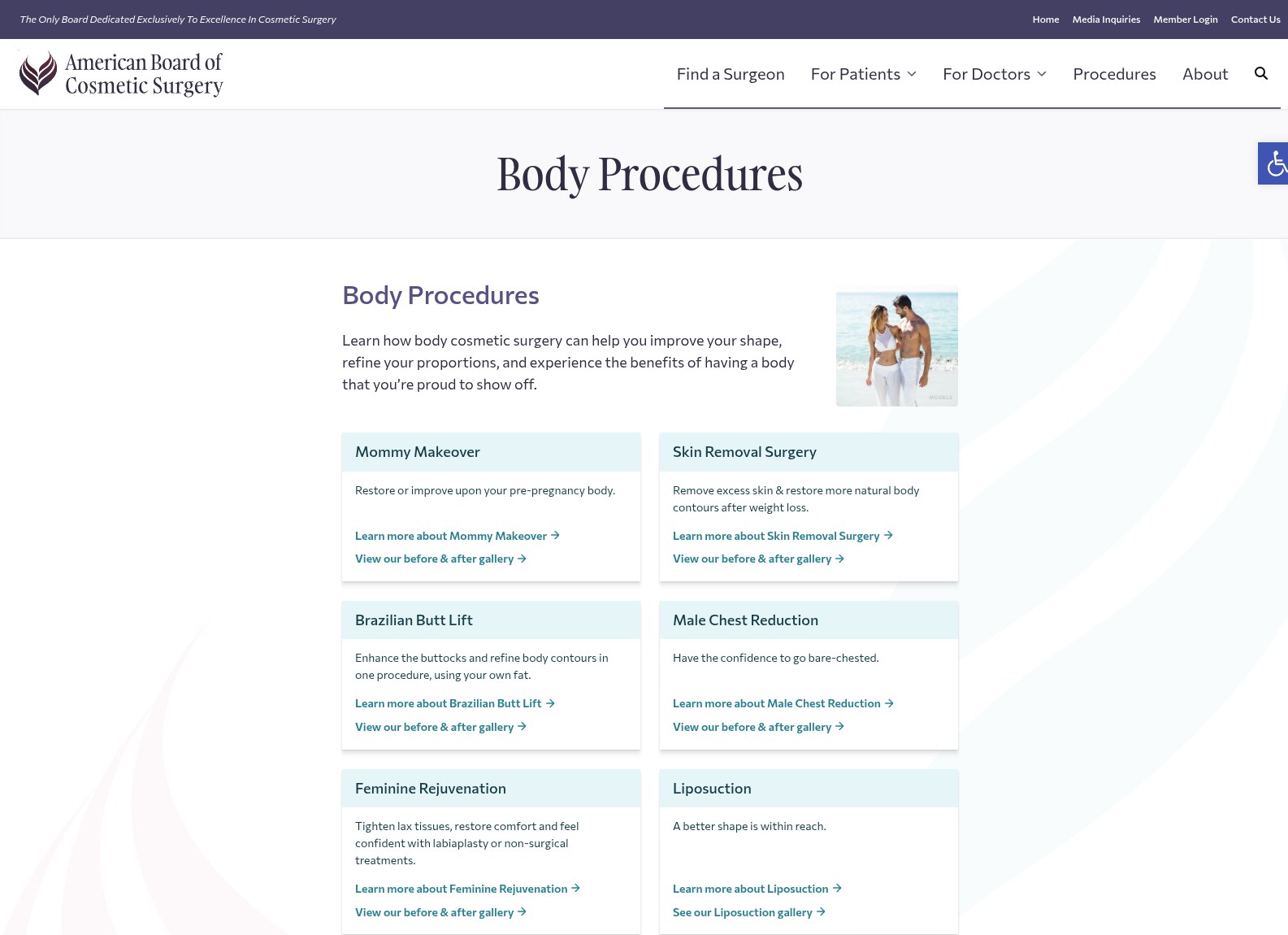
Education material is sorted into four categories: ten procedure guides for the face, seven for the body, five for the breast and seven more under a non-surgical and medspa heading, twenty-nine in all. Each guide links to before-and-after galleries. A central photo gallery, filterable by procedure, shows actual patients whose images appear with their permission.
The grouping marks out territory, too. Putting medspa treatments in the same catalogue as tummy tucks and liposuction says the American Board of Cosmetic Surgery treats the whole span of cosmetic practice as its subject, and the lighter procedures get the same written treatment as the surgical ones.
A voluntary exam on patient safety
Past the main credential sits a second exam, the Cosmetic Surgery Patient Safety Certification. It is voluntary and open only to surgeons the board has already certified. The site lists 34 as currently holding it.
Thirty-four is a short roster for a national credential, and the page makes no attempt to dress that up. Whether the program is demanding or simply ignored by most of the board's diplomates, the site does not say.
The most important page in the patient section is the explainer on the difference between cosmetic surgery and plastic surgery. The distinction is not marketing spin, and patients mix the two up constantly. It is also anything but a neutral topic here, because the American Board of Cosmetic Surgery exists on the strength of the claim that cosmetic surgery is a discipline of its own, and the board drawing that line is the one whose purpose depends on where it falls.
The same tension runs through everything on the site. The certification requirements are concrete, and the patient tools will genuinely help someone starting from zero. Yet every argument for what the credential proves comes from the board itself, which wrote the fellowship standard, set the exam and drew the line around the specialty in the first place. How much that credential should weigh against the other boards a surgeon might list gets decided off the site, by hospitals and by patients doing their own further reading, and that is the one judgment the American Board of Cosmetic Surgery can never pass on itself.
Verified social profiles
Business address
American Board of Cosmetic Surgery
525 W. Exchange Street,
Crete,
IL
60417
United States
Contact details
Phone: (219) 836-8585
Facelifts and eyelid surgery dominate the aging conversation, but the same biological processes that soften a jawline are at work…
The trend of “looksmaxxing” has been the subject of much discussion. Some say that the trend is simply self-improvement with a…
If you have breast implants, you may wonder whether they change how you should check your breasts, or whether a lump could hide…
Every cosmetic surgery patient hopes for a smooth procedure and a straightforward recovery. Most achieve it. But complications do…