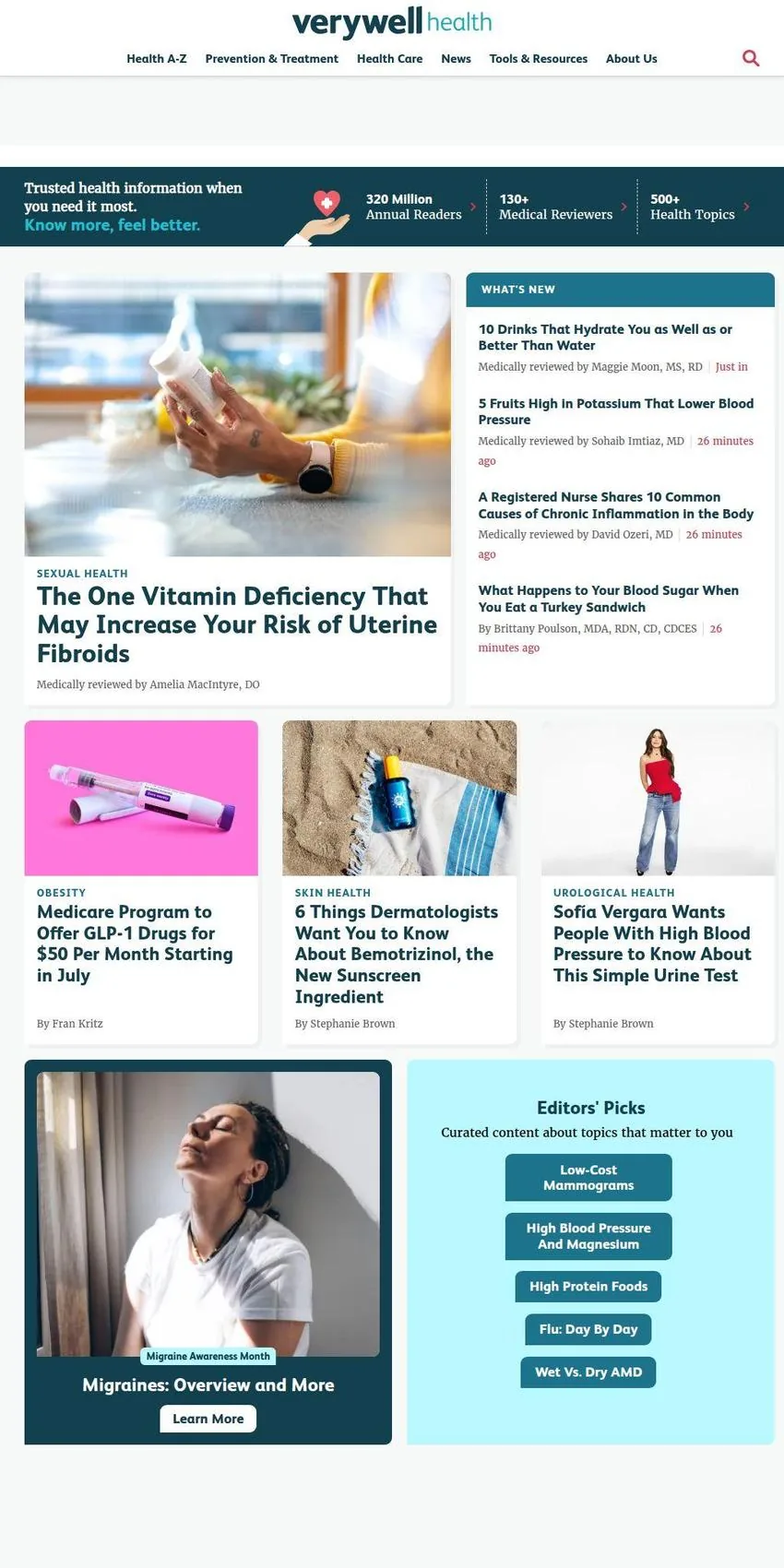
Verywell Health is a consumer health reference site published by People Inc., aimed at ordinary readers trying to make sense of a diagnosis, a stray symptom, or a lab printout they do not understand. Its library runs past 22,000 articles covering diseases, conditions, treatments, nutrition, and the smaller daily questions about wellness that send most people searching in the first place. Every piece is written for a general audience and then checked by clinicians, and that pairing is the whole reason the site exists.
Verywell Health did not start under that name. About.com carved its health coverage into a standalone brand called Verywell, which later folded into Dotdash, then into Dotdash Meredith once the company absorbed Meredith's magazine catalog, and it now operates under People Inc. That corporate history is why the archive runs as deep as it does.
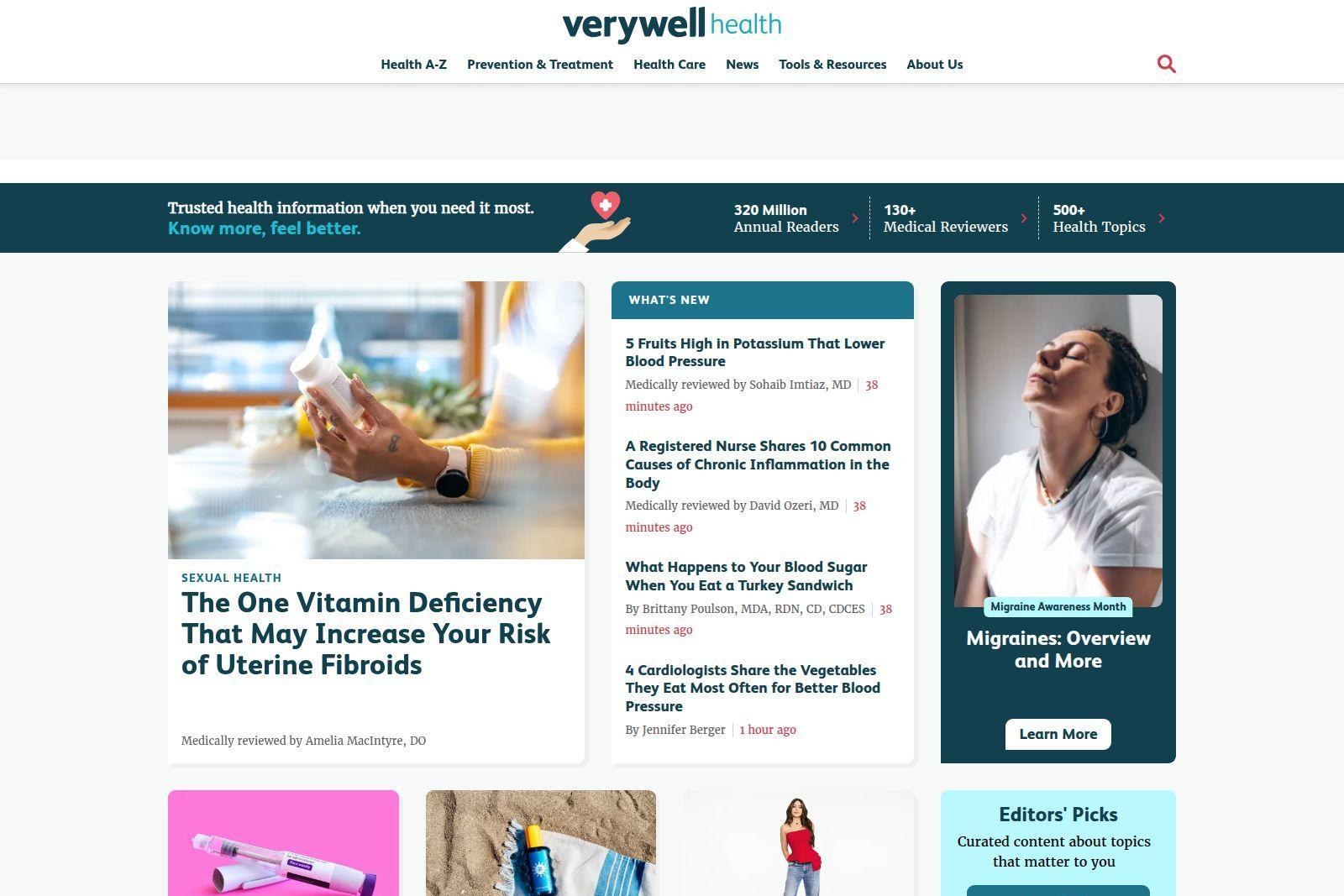
Verywell Health organizes its navigation around a handful of clear entry points. Health A-Z is a plain alphabetical index of conditions, and it is the fastest way in when a reader already has a name for whatever is worrying them. Prevention & Treatment, Health Care, and Public Health divide the rest of the material along lines most people will recognize, while Health News keeps a running feed of current stories. Moving sideways from a single condition page into related coverage is easy, without backing out to a search box each time.
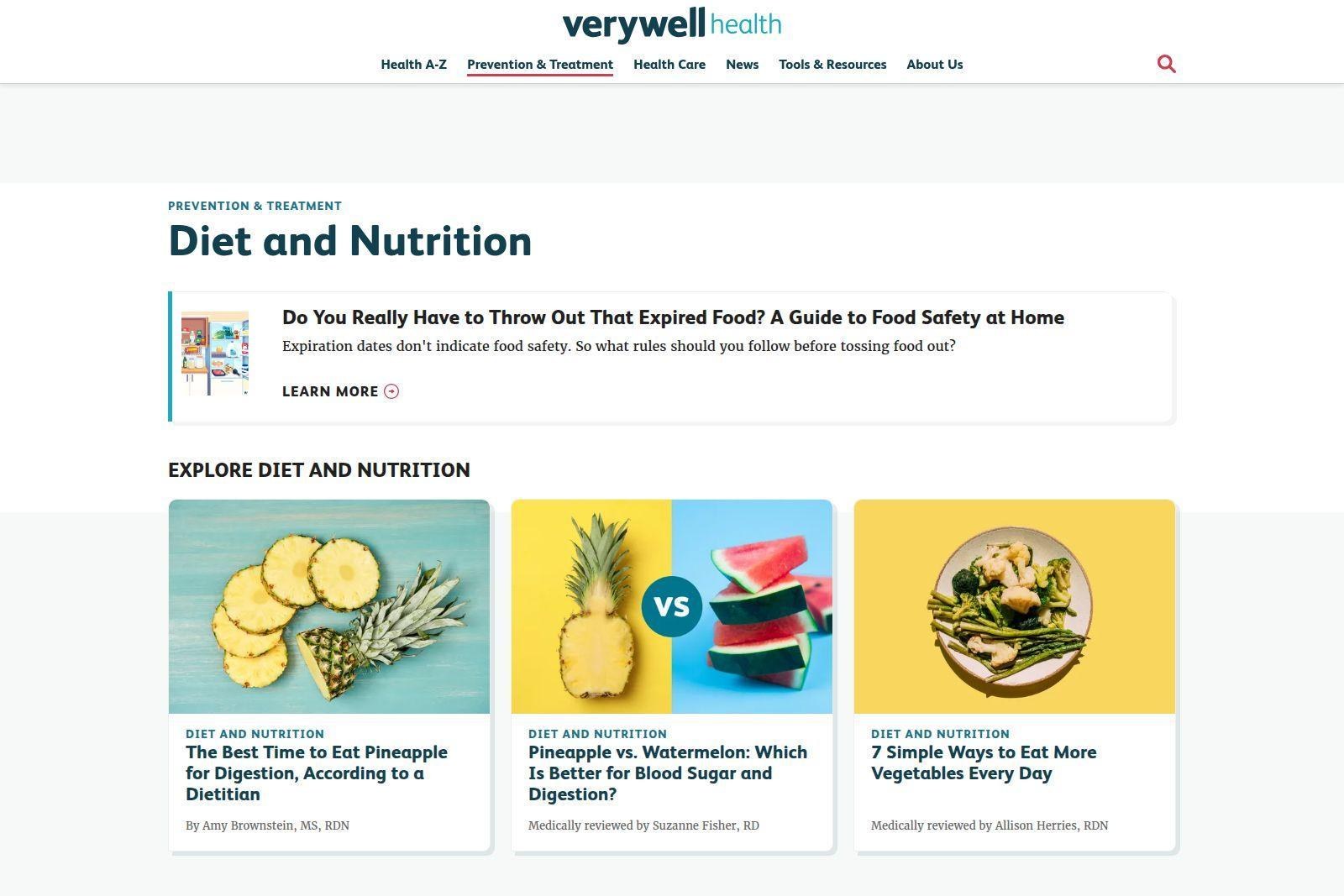
Depth varies sensibly by topic. A major condition like multiple sclerosis gets a full hub that gathers an overview, symptoms, and treatment paths in one place, while a broad area such as skin health or diet and nutrition opens onto its own section front stacked with explainers. The alphabetical Health A-Z sits underneath all of it as the backstop for anything a reader cannot find by browsing.
Not all of the material is clinical. Health News runs current stories, and the Public Health section covers the population-level angle, vaccines and environmental factors included, which keeps the site useful for a reader who is simply staying informed.
The artwork gets more care than the category usually bothers with, and next to licensed Getty photography, Verywell Health commissions original medical illustrations credited to named artists, useful whenever a diagram has to show something a stock photo cannot.
Verywell Health is one arm of a larger group. Verywell Fit and Verywell Mind handle exercise and mental health on their own separate domains, and articles travel out to Google News through a syndication feed shared across the parent company's properties, so a piece published here often turns up well beyond the site itself.
The interactive tools are where Verywell Health does something most of its rivals skip. It runs a set of lab-result analyzers built around the common panels a doctor orders: A1C for blood sugar, the complete blood count, the lipid panel, renal function, and thyroid. A reader holding a results page can enter their own numbers and get plain-language context for each line, which turns a wall of reference ranges into something a non-specialist can read. Each analyzer flags the values sitting outside the usual range and explains, in a line or two, what a high or low reading tends to signal, which is the follow-up a printed lab report withholds. The Doctor Discussion Guides come at the same problem from the other side, helping a patient assemble questions before an appointment so the ones that matter do not surface too late, on the drive home.
The lab analyzers, the Doctor Discussion Guides, and the plain-language condition writing add up to one thing: a patient who walks into an appointment able to ask a sharper question. That is a deliberate editorial choice, and it turns the archive into a tool a person can use before a visit instead of only reading it afterward.
How an article clears medical review
The case for trusting Verywell Health rests less on any single article than on the machinery built around it. Two structures do most of that work, and Verywell Health documents both on pages a doubtful reader can open and inspect. Neither one hides behind a vague promise of quality.
Both pieces work the same way: publish the standard, then let a reader check it directly instead of taking a claim on faith. That approach shows up most clearly on the harder pages, the ones covering drug interactions or symptom triage, where a wrong emphasis could send someone to the wrong urgent care, or nowhere at all. A named physician attached to a specific article is a different promise than a general disclaimer sitting in a footer, because it ties one person's judgment to one piece of text instead of letting the brand absorb the responsibility.
Its medical expert board
More than 150 board-certified physicians, spread across 30-plus specialties, sit on the in-house panel that vets clinical content. The size is the point. A cardiology explainer and a dermatology explainer each get read by someone who practices in that field, which is the difference between a generic fact-check and an informed one. Verywell Health publishes the full roster, with names and credentials attached, on its Meet the Medical Expert Board page, so the claim can be checked instead of taken on faith. For a health publisher, naming reviewers is a stronger claim than a vague assurance of quality.
The editorial process behind each page
Behind that panel sits a written editorial process spelling out how articles are sourced, drafted, medically reviewed, and later revised. Individual pages generally credit both the writer and the physician reviewer, and the Editorial Process page states the sourcing standards the staff must hold to. In a subject where wrong information does real harm, publishing those standards in the open covers most of the credibility question.
The natural comparison for a reader deciding where to look up a condition is Mayo Clinic's own site, one of the few competitors that publishes patient information directly under a hospital's name. Mayo runs a narrower library, with less coverage of everyday wellness questions and no interactive lab tools at all, but it carries a working hospital's name on every page. Verywell Health answers a slightly different need. It is broader and gentler with a first-time searcher, and its lab analyzers and appointment-prep guides cover ground an institutional reference tends to skip. Mayo Clinic is the stronger pick for a hospital's byline; Verywell Health is the stronger pick for a wide, carefully reviewed general library built around tools a reader can put to use.



Business address
People Inc. (d/b/a Verywell Health)
225 Liberty St, 4th Fl,
New York,
NY
10281
United States
Contact details
Phone: 212-204-4000