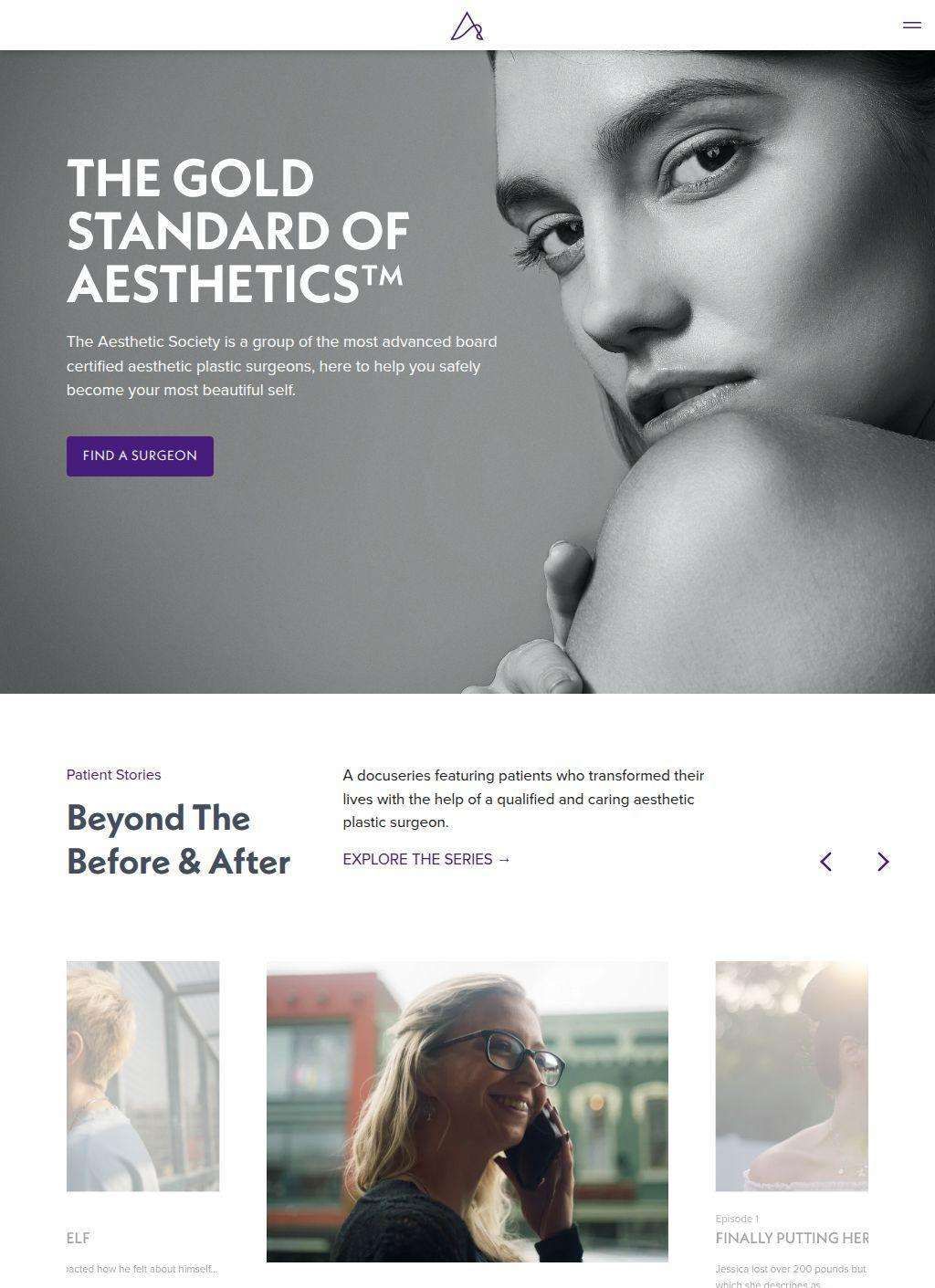
Plastic surgery research has a way of scattering a person across a dozen sites before they feel confident about anything. The Aesthetic Society gathers several of those research stages into a single destination, which is its main practical virtue. It is a professional membership association of board-certified aesthetic plastic surgeons in the United States, and the site is built to be read by two very different visitors at once: someone weighing a cosmetic procedure and a surgeon looking for a professional home. For the abdominoplasty category listed here, the patient-facing half is the one worth examining.
Tummy tuck within the body procedure library
Tummy tuck sits inside a broader body section alongside breast, genital, head and face, and skin and hair groupings, each with its own procedure guides. A person who arrives wanting to understand what an abdominoplasty involves lands in a structured library, not a single page of bullet points.
Filtering the surgeon directory by location
The procedure guides walk through what a given operation addresses, how to prepare, what recovery tends to look like, and what drives cost. None of that content is unusual on its own. What shifts the picture is the surgeon directory attached to it. The Aesthetic Society lists more than 2,200 member surgeons, searchable by location and specialty, which turns a reading exercise into a practical next step. Someone in a specific city can move from "what is a tummy tuck" to "which credentialed surgeons near me perform it" without leaving the site. That filtering is the real utility, because the value of a referral tool scales entirely with how precisely it narrows.
Photo galleries and surgeon question features
Two features push past the standard educational template. There is a before-and-after photo gallery, which for body procedures like abdominoplasty is among the most honest things a patient can study, and an "Ask a Surgeon" question-and-answer feature that lets people put specific concerns to people who actually operate. The Aesthetic Society also runs a video series called "Beyond The Before and After" that follows real patient stories. A skeptic could call that last piece brand-building, and it partly is, but patient narrative fills a gap the clinical guides leave open: what the experience feels like for a person rather than what it looks like on a diagram.
Membership tools for board-certified surgeons
The other half of the site faces medical professionals, and the organization's center of gravity clearly sits there. The Aesthetic Society offers surgeon membership with credentialing and professional development resources, a members-only portal at a separate subdomain, and industry partnership channels. A media and newsroom section rounds it out. None of this is aimed at the patient reading about a tummy tuck, and The Aesthetic Society does not pretend otherwise. The membership machinery runs on its own track.
Reading educational content from a professional group
That structure affects how a patient should read what they find. The educational material is published by the body that certifies and convenes these surgeons, so it carries the perspective of an organization with a professional interest in the field. That is not a knock: it means the guidance leans toward safety, credentialing, and choosing a qualified operator, which is the frame a patient considering elective surgery should want reinforced. The "Gold Standard of Aesthetics" tagline is marketing, and you can take it or leave it, but the emphasis on board certification underneath the slogan is the genuinely useful message.
Connecting research steps in one place
What The Aesthetic Society does well is connect the dots that patients usually have to assemble themselves. A typical research path runs from a general web search to a few clinic sites to review platforms to figuring out whether a given surgeon is actually credentialed for the work. Here, the procedure explanation, the photo evidence, the question-and-answer channel, and the verified surgeon list live in one place. The before-and-after gallery in particular rewards slow looking. Abdominoplasty results vary enormously with body type and technique, and a wide set of real cases teaches more than any prose guide does. Finding The Aesthetic Society through this business directory listing and going straight to the body section saves the kind of scattered browsing that usually precedes a first consultation.
Reputation and reviews outside the site
On outside reputation, a search across Trustpilot and Google Reviews turns up no aggregated rating profile for The Aesthetic Society itself, which is not unusual for a professional credentialing body and not a consumer-facing clinic. The Aesthetic Society is structured to be evaluated by whether its member surgeons deliver good outcomes, not by whether the website leaves visitors satisfied, so the absence of a conventional review count is simply how this type of organization sits in the ecosystem.
Limits of a national association site
There are limits worth naming. The site is national in scope and association-driven, so it will not tell a reader which individual surgeon is best, only which ones hold membership and where they practice. Pricing is covered as a topic, not as a quote, which is the right call for an organization that does not perform the surgery, though it means the cost question still ends with "it depends." Because the content covers the whole spectrum of aesthetic procedures, the abdominoplasty material is one room in a large house rather than a dedicated resource. A reader has to navigate to get there.
What makes ask a surgeon useful?
The "Ask a Surgeon" feature is the part worth pausing on. A free, public channel to put a real question to a practicing surgeon goes beyond what most educational sites bother to offer. It gives the patient a way to test their own understanding before any appointment, and for a procedure with the recovery demands of an abdominoplasty, that preparation has concrete value. Someone who works through the body section, studies the gallery, reads the surgeon-selection material, and runs a location search has covered serious ground in one session. The Aesthetic Society packs a lot of that groundwork into what looks at first like a fairly standard association website.
The strongest reason to consult The Aesthetic Society is the membership database. A patient can read educational content anywhere, but a vetted list of 2,200-plus board-certified members, filtered to a specific area, is genuinely hard to replicate through ordinary searching. It does not replace meeting a surgeon, reviewing individual outcomes, and asking direct questions about a specific case. It does give a patient a defensible shortlist and a working vocabulary.
The Aesthetic Society does not perform surgery or recommend individual practitioners, but it hands a patient the tools to make that selection with more confidence than a cold web search ever would. The before-and-after gallery and the surgeon finder are the two sections most worth opening first. They sit a few clicks apart inside the body category where abdominoplasty lives, and together they do more practical work than the rest of the site combined.
Business address
The Aesthetic Society
11262 Monarch Street,
Garden Grove,
California
92841
United States
Contact details
Phone: 562-799-2356