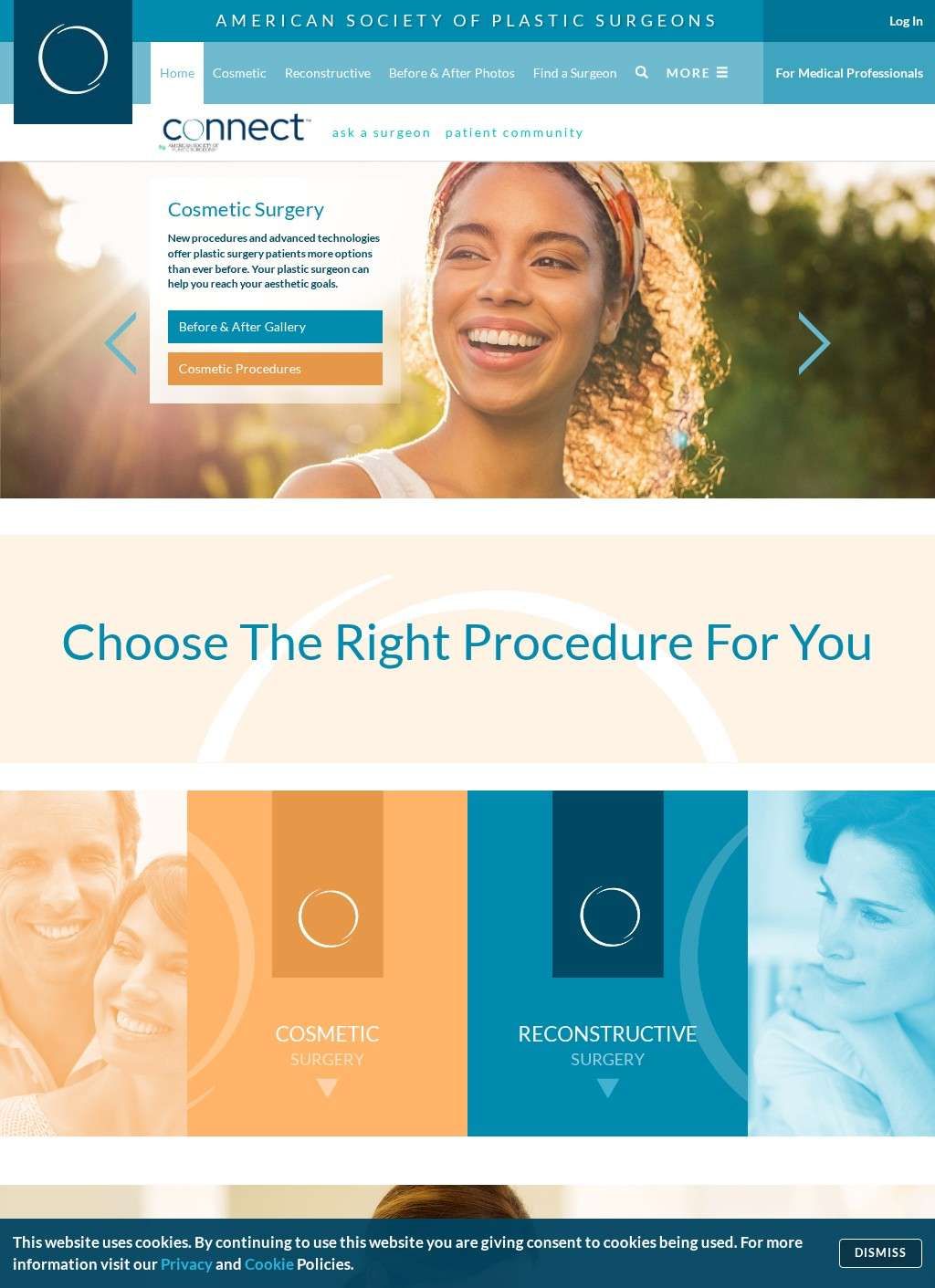
The American Society of Plastic Surgeons (ASPS) is the world's largest professional association for plastic surgery, headquartered in the United States, and its patient-facing site lives at plasticsurgery.org. The structural fact that governs everything here is simple: American Society of Plastic Surgeons (ASPS) has no surgeon to book and no procedure to sell. In a trade where the advertising spend routinely outruns the credentialing, that absence of a sales motive changes how every page on the site should be read. The thing is built around three pillars, a surgeon finder, a procedure library, and a stack of patient-safety tools, and each of them is worth more precisely because nobody on the other end is working a commission.
Finding board-certified surgeons
Start with the surgeon finder at find.plasticsurgery.org. Type in a location and a specialty and it returns board-certified American Society of Plastic Surgeons (ASPS) members by name, each one confirmable. Anyone who has shopped for cosmetic work knows the usual sequence: you research the procedure on a clinic's own pages, which is roughly like getting your safety briefing from the dealer who needs the car gone by Friday. A registry restricted to certified members is the rare entry point that skips that conflict entirely, and it is the first tool a sensible patient should reach for.
Procedure library with animations
The library spans breast augmentation and breast reconstruction, facelifts, rhinoplasty, liposuction, cleft palate repair, hand surgery, and dozens more entries, each with 3D animations and before-and-after galleries. Breadth is the whole argument. Reconstructive and cosmetic procedures sit side by side in one collection written by a body indifferent to which one you pick. No single practice can match that range, for the plain reason that no single practice performs all of it.
Community forums and safety guides
Around the library, American Society of Plastic Surgeons (ASPS) runs an "Ask a Surgeon" interactive tool and a patient community forum. The forum has a texture that glossy clinic brochures cannot manufacture: people who have been through a given procedure, comparing notes, none of them paid to land on a verdict. The safety guides handle the unglamorous part, spelling out what board certification really demands, what a proper pre-operative consultation should contain, and which shortcuts mark a practice that is quietly skimping on protocol. A patient who walks into a consultation already holding those questions changes the balance of the room. That, more than the animations, is where the real protection sits.
Procedural statistics and outcomes data
Then the numbers. Annual procedural statistics covering 2024 sit alongside a full news and video hub. A clinic can tell you a procedure is popular; American Society of Plastic Surgeons (ASPS) can tell you it was performed hundreds of thousands of times across the United States, with revision and complication rates tracked through member practices. Aggregate figures pulled from thousands of practices over years are a wholly different instrument than one surgeon quoting his own caseload, and for anyone weighing risk that gap is most of the decision.
American Society of Plastic Surgeons (ASPS) leaves its membership machinery in full view: continuing education, clinical registries, member accounts, publications, advocacy resources, and forums split into sub-groups including Women Plastic Surgeons and Young Plastic Surgeons. None of that is written for patients. Its presence is still telling. The organization that sets the certification standards, keeps the registries, and publishes peer-reviewed work is the same one producing the patient material, and that lineage is what divides this site from a handsomely designed clinic page. You notice it moving between sections.
Contact details are published on the site, and American Society of Plastic Surgeons (ASPS) maintains an active presence on Instagram, Facebook, LinkedIn, TikTok, YouTube, Threads, and X. For a younger patient running early reconnaissance on one of those feeds, that is often where the first solid information arrives, well ahead of any procedure entry or phone call.
The site is not without rough edges, and the sharpest one grows straight out of its dual nature. Because American Society of Plastic Surgeons (ASPS) serves both patients and practicing physicians, a first-time visitor can stumble into professional registry pages before ever finding the patient section. The search tools yank you back quickly, but the entry point does little to keep the two audiences from colliding. Call it friction rather than failure; it clears within a few clicks for anyone who arrives with a specific procedure in hand.
How does ASPS differ from clinic websites?
Held up against a listing for one clinic, American Society of Plastic Surgeons (ASPS) is doing a structurally different job. The clinic tells you what it sells and why you should choose it. The society hands you the vocabulary, the procedural context, the safety checklist, and a means of confirming a surgeon's credentials before you ever pick up the phone. The statistics reports and the "Ask a Surgeon" tool have no equivalent at clinic level, and pretending they do would shortchange both.
Comparing ASPS to other verification sites
The closest alternative a patient might consider is the American Board of Plastic Surgery site, which also verifies board certification and carries patient-safety information but stops there: no procedure animations, no forum, no statistics hub. American Society of Plastic Surgeons (ASPS) covers more ground and its finder is the more flexible of the two. So the practical move is clear. Read the relevant entry in the procedure library to understand what you are genuinely signing up for, then run any candidate surgeon's name through the finder at find.plasticsurgery.org and confirm the certification while the appointment is still hypothetical.