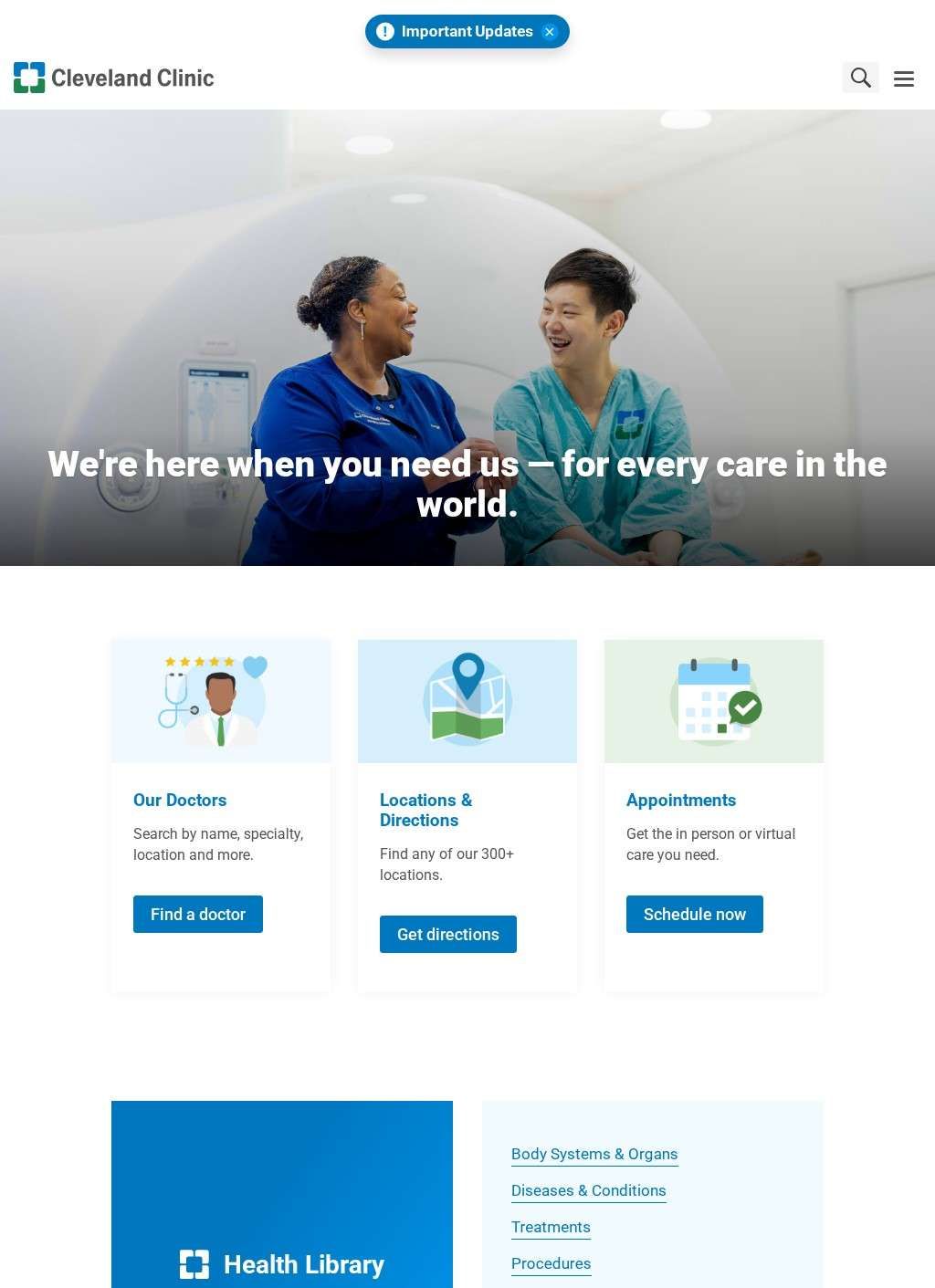
Someone who has lost a significant amount of weight, or come through bariatric surgery, often arrives at the next decision with loose skin and a question no diet fixed: what happens now, and who should handle it. That is the point where a name like Cleveland Clinic stops being abstract and starts to matter, because the plastic and reconstructive surgery service here treats body contouring as a clinical step inside a larger system, not a standalone cosmetic transaction. Abdominoplasty, liposuction, post-bariatric contouring, breast surgery: these are listed alongside oncology, cardiology and the rest of the hospital, handled by board-certified specialists who sit within the same institution as the surgeons and physicians a patient may already be seeing.
Plastic surgery within a medical system
That context changes how a body contouring inquiry plays out. A person considering surgery after major weight loss usually has other things going on medically, and the structure at Cleveland Clinic means the contouring conversation does not happen in isolation. The multidisciplinary, team-based model the system runs is the actual selling point for this category, even though the procedures themselves are common enough to find anywhere. You are buying the surrounding care as much as the operation.
Multidisciplinary team approach
The reach is genuinely large. More than 300 locations spread across Ohio, Florida, Nevada, Canada, London and Abu Dhabi, with a service line for international patients who travel in. For body contouring specifically, that breadth means a patient is not locked into one campus, and follow-up or pre-surgical workups can often happen closer to home than the flagship in Cleveland.
Locations and access
Beyond the surgical menu, the everyday machinery of a hospital is all present. Primary care, specialty and subspecialty medicine, surgery across disciplines, neurology, orthopaedics. There are virtual visits for people who cannot or do not want to travel for an initial conversation, plus second opinions, which are valuable for anyone weighing an elective procedure and wanting another qualified read before deciding. Express Care and Urgent Care clinics fill the gap between a scheduled appointment and an emergency room. Clinical trials and research programs run underneath all of it, which is part of what an academic medical center is supposed to mean.
Primary care, specialty medicine, surgery
The MyChart portal ties the Cleveland Clinic patient side together. Scheduling, access to medical records, and care coordination live there, so a body contouring patient can manage appointments and pull their own history without phoning a desk for every small thing. For surgery that involves a workup and staged recovery, having records and scheduling in one place is more useful than it might first appear.
MyChart patient portal
What separates the Cleveland Clinic site from a hospital that simply lists its departments is the depth of the reading material. The Health Library is worth flagging for anyone who lands here while researching a procedure. It covers conditions, treatments, diagnostics and procedures across every body system, written for patients to actually read, not for clinicians to reference. Someone trying to understand what abdominoplasty involves, what recovery looks like, or how post-bariatric contouring differs from a standard tummy tuck can read about it on the same domain that performs it.
Health Library for patient research
That is a real advantage over chasing scattered pages of varying quality elsewhere. The information sits next to the service, so the research and the eventual care come from one source. It does not replace a consultation, but it lets a person walk into one already knowing the vocabulary and the broad shape of what they are agreeing to.
Transparency for physicians and patients
There is also ConsultQD, which is aimed at physicians, not patients. A prospective patient will rarely need it, though its existence points to the fact that the same institution publishing the plain-language explanations is also putting out material for the specialists who do the work. The two audiences are served separately and openly, and that transparency about how the place thinks is quietly reassuring. Practical housekeeping rounds it out: medical records, billing, and career or nursing resources all have a home on the site. None of it is glamorous, but a patient navigating an elective surgery will touch the records and billing sections sooner or later, and finding them organized rather than buried is part of what makes a large system usable.
Patient reviews and institutional credentials
Cleveland Clinic draws a substantial volume of patient reviews on Google, Healthgrades, and Yelp across its various campuses. The picture is mixed in the way large hospital systems tend to be: high marks for clinical outcomes and specialist expertise sit alongside complaints about wait times, administrative friction, and the impersonal feel of a very large institution. That pattern holds across enough platforms to read as a real signal about the institution's scale. The surgical specialties, including plastic and reconstructive surgery, generally fare better in the ratings than the emergency or primary care access points, which is where volume and throughput create the most friction.
No prominent fraud flags or disciplinary actions came up in a general search, and Cleveland Clinic as an institution holds Magnet nursing recognition, a designation from the American Nurses Credentialing Center that is awarded based on documented outcomes rather than self-reporting. It does not guarantee a good surgical experience, but it is an independently verified marker that the institution meets specific standards of nursing practice and patient care.
A reader should be clear-eyed about what is and is not on offer. Cleveland Clinic does not present itself as a boutique aesthetics studio, and someone whose only interest is the cheapest possible cosmetic procedure may find the orientation more medical than they expected. The plastic and reconstructive surgery here is framed around reconstruction and post-weight-loss correction as much as elective cosmetics, which is the right framing for a hospital but worth knowing going in.
Who benefits from Cleveland Clinic
For the patient who fits the profile, after substantial weight loss, after bariatric surgery, or carrying medical complexity alongside a cosmetic goal, the case is strong. The surgeons are board-certified, the teams are multidisciplinary, and the body contouring service at Cleveland Clinic draws on the full resources of a system that also handles whatever else may be wrong. The size and the academic backing are not decoration; they translate into options, continuity of care, and access to second opinions that a smaller clinic cannot match.
The flip side is that scale brings the usual frictions of a very large institution. Coordinating across departments, getting through to the right surgeon, and navigating a portal-driven system all take patience. The tools to manage that, MyChart, virtual visits, the library, are all present and well built, but the patient still has to engage with a big machine. Whether that trade is worth it depends entirely on the individual case. Where the cosmetic goal is inseparable from ongoing medical management, Cleveland Clinic is built for exactly that overlap. Where the need is straightforward and medically uncomplicated, the same institutional machinery becomes overhead, and a more focused surgical practice will likely move faster with fewer steps in between.