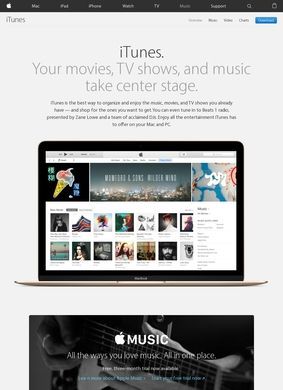
iTunes now sits inside a much larger machine. On Apple's own site, where the iPhone 17 Pro, the MacBook Pro built on the M5 Max chip, and the Apple Vision Pro headset all jostle for attention, iTunes survives as the desktop application that holds your media library: music, movies, TV shows, podcasts, and audiobooks, plus the sync and backup interface for an iPhone or iPad when it is plugged into a Mac or a Windows PC. That last detail is worth pausing on.
Apple iTunes is one of the few corners of the company's world that still runs on Windows at all, which is why a listing for it points back to apple.com and the broader catalogue of products and services that surround it. Treating Apple iTunes as a standalone product, the way this entry does, means measuring a single application against a site that is really about everything else.
iTunes narrows to media backups and syncing
Anyone arriving expecting iTunes to be the center of the experience will find it has been pushed to the edges. On the Mac, the music, podcast, and TV functions were long ago split into separate apps, so the iTunes application as a single program is now mostly a Windows artefact and a media-management tool for syncing devices. The brief frames Apple iTunes as the place where purchases of music and media still live, and where device backups happen. I find that framing honest about what the software does today, even if it understates how much the surrounding ecosystem has moved on. Someone whose memory of Apple iTunes is the program that ran their whole digital life will notice how much has been carved away.
Inside Apple's current hardware lineup
What apple.com offers around it is sprawling. The hardware list alone reads like a full product line: iPhone 17 and iPhone 17 Pro, MacBook Air on the M5, the MacBook Pro in M5, M5 Pro, and M5 Max configurations, the M4 iPad Air, the Apple Watch Series 11, AirPods Pro 3, and the Vision Pro. Beyond the new stock, the site runs a certified refurbished store and sells accessories, and it operates trade-in programs that put credit from an old device toward a new one. For a media application like Apple iTunes, the practical link is that the same account and the same store infrastructure that sell you a phone also manage the songs, films, and shows you have bought over the years.
Apple's services ecosystem takes over
The services side is where the picture gets genuinely dense, and where the old role of iTunes as a single media hub has been parceled out. The App Store handles software. iCloud handles storage and keeps files, photos, and settings in step across devices. Apple Intelligence layers on-device AI features into the system.
Then comes the subscription stack: Apple TV+ for original video, Apple Music with a catalogue the brief puts north of 90 million songs, Apple Arcade for games, Apple Fitness+ for workout streaming, Apple News+ for magazines and news, plus Apple Podcasts and Apple Books. Someone who once used the iTunes Store to buy a single track or rent a film now has half a dozen separate doors to walk through, and Apple iTunes is the legacy one that still keeps owned purchases and downloads in a familiar place.
Payment tools tied to the same account
Money moves through the site too. Apple Card is a Mastercard with up to three percent Daily Cash back, Apple Pay covers contactless payments, and Apple Cash handles sending money between people. These are not media features, but they sit in the same account fabric, which means the payment method you set up to buy a song through Apple iTunes is the same one that can run a credit line or a tap-to-pay transaction. That tight binding of identity, payment, and content is the case the whole site makes, even when no single page spells it out.
Reaching schools and government buyers
The purchasing programs are more specialized than a casual visitor might guess. Apple sells into education, business, healthcare, and government at federal, state, local, and military levels. None of that touches the iTunes application directly, yet it tells you something about the scale of the operation that media playback hangs off. A school district buying a fleet of iPads and a single person syncing a music library through Apple iTunes are using two ends of the same machine. It also explains why a niche tool like Apple iTunes keeps getting maintained at all: it is one obligation inside a business that answers to schools, hospitals, and government buyers.
Support runs along two main tracks. Online resources cover most software and account questions, and AppleCare sells extended warranty coverage on top of the base guarantee. For the Apple iTunes side specifically, the value of that structure is that a media library or a botched device backup is a documented, supported scenario, not something you are left to puzzle out alone. The breadth of the support apparatus is one clear sign that the broader site is built to sustain everything it tries to sell.
What makes Apple iTunes an odd thing to assess on its own is that it is a shrinking piece of a still-growing whole. The application itself does a narrow job well: it stores what you bought, plays it back, and moves data on and off devices. But the strategy around it has clearly been to disperse those functions into newer apps and subscriptions, and the brief reflects that, listing iTunes once among a long roll of services that have absorbed most of its old reach. A visitor whose mental model of Apple iTunes is the all-in-one jukebox of years past will need to recalibrate.
Serving Windows users as the bridge
For Windows users the calculus is different. Outside the Mac, Apple iTunes is still the main route to sync an iPhone, run a backup, and keep purchased music and video in one application, which gives it a continued reason to exist that does not depend on Apple's newer apps. That cross-platform footing is, quietly, one of the more useful things about Apple iTunes, and it is easy to miss amid the noise of new hardware launches. The same store that wants to sell a Vision Pro also keeps this older, more utilitarian tool alive because a large base of people still depend on it. On a Windows machine, Apple iTunes is the only sanctioned bridge between a PC and an iPhone, a real job no newer app has taken over there.
Read as a whole, apple.com is exactly the comprehensive front door you would expect from a company of this size, and Apple iTunes is one named function inside it, neither hidden nor highlighted. The hardware is current, the services run deep, the financial and support layers are unusually complete, and the trade-in and refurbished options give the catalogue some practical range. The substance is plainly there. Apple iTunes specifically, though, is something the company itself seems to be steering people away from: still working, still backing up devices, still holding purchases, but every pointer on the site goes toward the App Store, Apple Music, and Apple TV+ as the future. How long Apple intends to maintain that bridge, especially on Windows where it does the most work, is the question the site does not answer.